
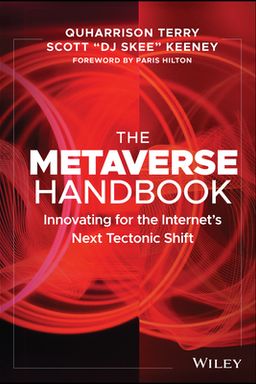
The Metaverse Handbook cover

The Metaverse Handbook

by QuHarrison Terry & Scott “DJ Skee” Keeney

The Metaverse Handbook guides readers through the transformative potential of the Metaverse, unveiling strategies to integrate this digital universe into business models. Discover how blockchain, NFTs, and virtual realities are shaping the future of commerce and creativity.

The Metaverse: Humanity’s Next Digital Frontier

What if your next office meeting, your favorite concert, or even your child’s classroom all existed in the same vast digital world? In The Metaverse Handbook, QuHarrison Terry and Scott “DJ SKEE” Keeney argue that we stand on the cusp of the Internet’s next great evolution—a shift from screens and scrolls to immersive worlds we inhabit. The book contends that the Metaverse isn’t just a technology trend, but a fundamental reorganization of digital life that will reshape identity, community, economy, and experience.

Unlike past tech movements defined by hardware or social platforms, the Metaverse is a convergence. It knits together virtual reality (VR), augmented reality (AR), blockchain, NFTs, gaming, AI, and digital culture into a shared, persistent environment. Terry and Keeney insist that understanding this transformation early—when it still feels speculative—offers enormous creative and economic advantages, much like understanding social media or mobile development before they became mainstream.

From Science Fiction to Reality

The authors trace the term to Snow Crash, Neal Stephenson’s visionary 1992 novel that depicted a virtual world called “the Metaverse.” What began as fiction has become blueprint: a collective, immersive space where avatars interact, own assets, and live full digital lives. Science fiction predicted much of today’s technology—from smartphones to 3D printing—and now drives innovation in XR (extended reality) and blockchain. Facebook’s transformation into Meta, Apple’s rumored AR devices, and billions of dollars invested in virtual platforms reflect this trajectory from dream to development.

Defining the Metaverse

Terry and Keeney define the Metaverse not as one place, company, or headset, but as an ongoing movement. Every time we substitute a physical habit with a digital one—sending money via crypto, collecting NFTs, attending virtual events—we edge closer to it. They quote entrepreneur Shaan Puri’s simple but gripping line: “The Metaverse is the moment in time when our digital life is worth more to us than our physical life.” The authors remind us that this shift is already happening—our photographs, bank accounts, relationships, and reputations increasingly live online. The Metaverse just makes this existence immersive, interactive, and owned.

The Three Digital Shifts

The book rests on three crucial transformations driving the emergence of this new reality:

  • Identity: Moving from usernames and passwords to self-sovereign digital identities stored in blockchain wallets.
  • Value: Establishing scarcity and ownership for digital goods through NFTs and tokens, ending the era where “copying” meant “worthless.”
  • Immersion: Transforming passive screen-based experiences into 3D, participatory environments where presence—and not scrolling—is the norm.

Each of these shifts signals profound change in how we express who we are, measure worth, and connect with others. Together, they lay the groundwork for the Metaverse as both an economic system and a social ecosystem.

Why the Metaverse Matters Now

According to the authors, this transformation is not some distant horizon. Smartphones have reached saturation, social media feels stagnant, and younger generations already spend more time in Roblox, Fortnite, and Discord than on Facebook or cable television. They build friendships, income streams, and value systems in digital-first environments. The Metaverse isn’t waiting for future generations—it’s emerging from current behavior.

Yet, Terry and Keeney caution that innovation always comes disguised as fiction before becoming necessity. They invoke a quote from Neal Stephenson, who once said his creation of the Metaverse was “just me making stuff up.” That playful imagination, they argue, is exactly what entrepreneurs must recapture to build the next chapter of the Internet.

From Builders to Metamates

Meta’s $10 billion investment, its rebranding from Facebook, and its renaming of employees as “Metamates” mark a cultural bet as massive as any since the invention of social media. But Meta isn’t alone. Microsoft, Decentraland, The Sandbox, and independent artists all define the Metaverse differently—some through VR workspaces, others through decentralized games or NFT economies. The key isn’t which version “wins,” but understanding that every digital builder today contributes to the collective writing of this still-fictional concept into existence.

What follows through the book is not science fiction or pure speculation, but a roadmap. Terry and Keeney offer a deeply researched look at the people, technologies, and creative movements turning imagination into infrastructure. They guide you through digital identity (wallets and DAOs), digital value (NFTs and tokenized economies), and immersive experience (VR and social worlds). By the final chapters, they show how brands, builders, and individuals alike can stake their claim—and how you can build your own “million-mile plan” for thriving in the Metaverse era.


Three Digital Shifts Shaping the New Internet

Terry and Keeney frame the Metaverse not as a product or software, but as a progression of how humanity interacts with technology. Like the evolution from Web1’s static “Read” era to Web2’s social “Read and Write” era, Web3 represents the “Read, Write, Own” era—an Internet defined by individual ownership of data, assets, and digital identity. This evolution, the authors explain, unfolds through three tectonic shifts already reshaping the digital world: identity, value, and immersion.

1. Digital Identity: The Self You Control

Today, you log in using emails and passwords—a process that fragments your online life across dozens of platforms. In the Metaverse, your wallet replaces the login. This “self-sovereign identity” links directly to your blockchain address, letting you interact across websites, games, or decentralized apps (dApps) seamlessly while maintaining privacy. It’s like owning your passport to the entire Internet.

In this structure, your wallet becomes both bank and biography. It stores cryptocurrencies, digital art, and proof of membership in communities or organizations. The authors highlight DAOs—Decentralized Autonomous Organizations—as the next frontier of collaboration. Instead of companies governed by executives, DAOs reward participants with tokens for contributions. These tokens act as both equity and voting rights. Groups such as Krause House even aim to buy an NBA team using this model. (As the authors note humorously, “you might actually help manage your favorite basketball team one day.”)

2. Digital Value: Owning What’s Online

Until recently, digital files—images, songs, memes—were infinitely copyable and therefore “valueless.” NFTs (nonfungible tokens) change that. They embed digital files with certificates of authenticity on the blockchain, proving ownership even as images circulate freely. The authors review multiple forms of NFTs: avatar collections like CryptoPunks and Bored Apes; art NFTs from creators like Beeple; and “Access NFTs” that serve as keys to special digital communities or events.

One striking example is musician Daniel Allan, who crowdfunded his album Overstimulated by selling tokens that entitled fans to streaming royalties. This is crowdfunding 2.0, where backers don’t just donate—they become co-owners. Likewise, brands use NFTs as membership passes, creators use them to fund projects, and collectors use them to signal belonging. Just as early luxury brands sold status through watches or cars, NFTs now sell digital status.

3. Immersion: The End of Flat Internet

If Web3 gives you ownership, immersion gives you presence. We are shifting from interacting with data to entering it. Games like Fortnite, Roblox, and Decentraland herald this shift by turning social experiences into interactive worlds. Fortnite’s virtual concerts with Travis Scott and Ariana Grande drew millions of fans—not just viewers, but participants. Nike and Balenciaga sell virtual fashion inside these games because people now value digital self-expression as much as physical style.

For adults, immersive workspaces like Horizon Workrooms or Gather evolve Zoom fatigue into playful collaboration. Even dating apps are experimenting: Tinder built “Singles Town,” a VR space where avatars meet and chat more naturally than static profiles allow. The authors call this the birth of the “Spatial Internet,” where you don’t scroll through experiences—you inhabit them.

Together, these three shifts make the Metaverse inevitable. They aren’t speculative science projects—they’re behavioral trends already happening: replacing physical presence with digital identity, redefining value online, and immersing ourselves in 3D experiences. The question now isn’t whether the Metaverse will exist, but how prepared you’ll be when it becomes the default way we live, work, and connect.


A Brief History of the Metaverse

The Metaverse did not appear overnight. Terry and Keeney trace its roots across a century of invention, from imaginative science fiction to digital experimentation. Understanding this lineage helps you see that the Metaverse is less of a disruption and more of a continuation—every generation taking one more step into shared digital reality.

From Theater to Cyberspace

The authors begin with Antonin Artaud, a French theater director who coined the term “la réalité virtuelle” in 1938 to describe how theater could make imagination feel real. That artistic vision would echo decades later when Ivan Sutherland introduced his 1965 concept of “The Ultimate Display,” the first theoretical description of a virtual reality headset. Through innovators like Jaron Lanier—often called the father of VR—the dream of altering human experience through digital immersion caught fire. Films such as Tron and The Matrix turned public fascination into expectation.

The Internet’s Role

Parallel to VR development, the Internet was forming its connective tissue. Projects like ARPANET in the 1960s and Tim Berners-Lee’s 1991 World Wide Web created a shared global network—a proto-Metaverse of information. Over time, online communities like Habbo Hotel, Second Life, and There.com added avatars, virtual economies, and user-generated spaces. By the mid-2000s, millions were living partial lives online, signaling that immersion and identity could blend seamlessly with everyday routine.

Blockchain and Ownership

Then came 2009. With Bitcoin’s creation, digital life gained something it had lacked—trust and scarcity. Blockchain introduced immutable records and enabled native digital money. Innovators like Vitalik Buterin expanded the vision with Ethereum in 2015, making “smart contracts” and NFTs possible. The blend of decentralized finance and virtual environments created fertile ground for the Metaverse to flourish beyond entertainment—into economy, governance, and art.

The result of this convergence—VR hardware, global connectivity, and blockchain technology—is today’s multi-verse of experimentation. From Roblox and Pokémon Go to Decentraland and The Sandbox, the line between gaming and digital life is blurring. Like the early Internet, it may feel fragmented now, but each platform echoes the start of something that once seemed implausible. History reveals this truth: every virtual step we’ve taken, from email to Bitcoin to VR, has been another login attempt into the Metaverse.


Building the Metaverse: Tools of Creation

If you’ve ever wondered who actually builds virtual worlds, Terry and Keeney take you behind the scenes. The modern Metaverse isn’t conjured by a single company but crafted by creators using powerful 3D design platforms, open-source standards, and a culture of collaboration. At its core, Metaverse construction combines art and engineering.

Unity and Unreal: Engines of Imagination

About two-thirds of all XR (extended reality) apps rely on Unity Technologies, while most others use Epic Games’ Unreal Engine. These 3D engines power everything from Fortnite to The Mandalorian. They allow creators to simulate physics, light, and interaction in real time. These same tools are now used beyond gaming: airports, car manufacturers, and architects employ Unity to build “digital twins”—virtual replicas of real-world environments used for testing and design. (Notably, Hong Kong’s international airport was designed and stress-tested entirely in Unity.)

Open Standards and Access

The authors highlight the importance of open standards like OpenXR, WebXR, and IPFS—protocols that ensure interoperability between devices and experiences. Because each company currently builds its own “mini-metaverse,” these standards act as translators, letting 3D assets and avatars travel between platforms. This mirrors how HTTP made the early Internet universal, creating a foundation for web designers to innovate freely.

From Hobbyist to Architect

Anyone can now begin building. Tools like Blender or Cinema 4D allow for free modeling and animation, while Unreal’s new AI-assisted artistry hints at a future where prompts, not code, will generate entire 3D scenes. The authors cite projects such as the Brooklyn “Netaverse,” where over 100 cameras recreate NBA games inside virtual space, giving fans unprecedented control over how they watch.

Terry and Keeney encourage readers to view themselves not as passive consumers but as potential builders. Whether designing a virtual storefront, a 3D meeting hub, or a Metaverse brand experience, your imagination—not your coding skill—is what matters most. The great digital cities of tomorrow, they argue, will be shaped by curious minds who start experimenting today.


Entering the Metaverse: Exploring New Worlds

When you finally step into the Metaverse, where do you go? The authors map out key environments already alive with experimentation—each with its own economy, culture, and purpose. They categorize them into Sandbox Metaverses (creative open worlds), Gaming Metaverses (mission-driven and reward-based), and Miscellaneous Metaverses (specialized digital spaces for work, art, or commerce).

Sandbox Worlds: Freedom and Ownership

Platforms like Decentraland and The Sandbox allow users to purchase land, construct buildings, and host events. In Decentraland, entire fashion districts host NFT-runways, and brands like Sotheby’s and Vice Media have built digital headquarters. Vegas City brings gambling, while “Meta Lite Bar” served beer-themed events for Miller Lite during the Super Bowl. All these lands operate through user-owned governance via DAOs, meaning players, not corporations, vote on what the world becomes.

The Sandbox took this ethos further by letting users design mini-games and assets using VoxEdit. Even Snoop Dogg has built a mansion inside, with someone paying $450,000 just to live next door. The buzz recalls early land-rush behavior on the 1990s Internet—only now, deeds exist as NFTs rather than URLs.

Gaming Metaverses: Play-to-Earn Economies

From Axie Infinity to Illuvium and Star Atlas, gaming Metaverses combine entertainment with income. The “play-to-earn” model lets users collect tradeable NFTs and cryptocurrency through gameplay. For instance, in Axie, users breed and battle NFT creatures to earn tokens convertible to fiat currency—creating real-world jobs for thousands in developing regions. It represents the first economic ecosystem where fun, labor, and investment blend seamlessly.

Miscellaneous Metaverses: Everyday Applications

For those uninterested in games, platforms like Spatial and Bigscreen provide ready-made VR meeting rooms, art galleries, and theaters. Matterport and Apple’s Object Capture tool even allow users to scan real-world spaces and objects for virtual interaction, bridging physical and digital. Social spaces like VRChat prove that virtual community can be emotionally real—documentaries such as We Met in Virtual Reality highlight how relationships born in VR can transform lives.

As Terry and Keeney note, there won’t be one Metaverse to rule them all. Instead, users will travel among many, guided by interests and communities. The mass migration will happen gradually, not through one “iPhone moment,” but through countless small steps—each experience luring more of us into digital worlds that feel worth returning to.


Owning Digital Life: The Rise of Metaverse Assets

If the physical world runs on real estate and property rights, the Metaverse runs on assets—digital items you can own, trade, and display. Terry and Keeney examine how NFTs and blockchain make this possible, reshaping our relationship with value and even emotion.

Identity, Community, and Status

The authors connect our attachment to virtual possessions to familiar human drives: identity, community, and status. Just as we express ourselves through clothes or cars, avatars display who we are through digital fashion and collectibles. Communities form around shared assets—the owners of Bored Apes or World of Women NFTs hold exclusive events, similar to social clubs. And as in luxury markets, rarity equates to prestige. A single “CryptoPunk” is now worth hundreds of thousands, functioning like a digital Rolex.

Metaverse Asset Types

Terry and Keeney organize virtual belongings into four categories: avatars (your digital self), accessories (what you equip), objects (items that fill spaces), and real estate (land and environments). Avatars may evolve from 2D NFTs like CryptoPunks into interactive 3D figures, while accessories range from fashion wearables to vehicles like Jadu Jetpacks. Objects include artwork, furniture, or even virtual pets—extensions of the Tamagotchi obsession for the NFT age. And virtual land, from Decentraland plots to The Sandbox estates, has become the new speculative frontier, mirroring Manhattan or Malibu in digital form.

New Roles and Professions

Managing these assets requires expertise. The authors predict new roles such as Metaverse asset managers—professionals handling NFT portfolios, renting virtual properties, and tracking blockchain value. Transparent ledgers already encourage self-policing: when NFT scams arise, “blockchain detectives” publicly expose bad actors. This transparency, Terry and Keeney argue, will help the Metaverse mature faster than any previous digital industry.

Ultimately, the attachment we feel to these digital possessions isn’t shallow—it’s deeply human. Just as pets, houses, or heirlooms carry emotion in the physical world, owning Metaverse assets lets people express identity and belonging in a medium that’s both art and investment.


Overcoming Challenges: Interoperability and Trust

No revolution comes without friction. The authors describe interoperability—the ability for assets, economies, and experiences to interact—as the Metaverse’s greatest technical and social challenge. Without it, we’ll be trapped in isolated “mini-metaverses,” repeating the walled gardens of early Internet giants.

Economic Barriers

Each gaming or virtual platform currently runs its own currency—V-Bucks, Robux, MANA, SAND. Fragmentation creates friction: users must constantly swap tokens, paying exchange fees and losing value. For seamless trade, fungible and nonfungible assets must travel freely, much like credit cards work across stores. Some innovators, like MetaMundo, are already generating multiple file and token versions of 3D assets, allowing them to function across Metaverses. But without unified standards, digital economies risk confusion and inequality.

Hardware and Graphics Compatibility

Beyond currencies, hardware itself poses limits. Meta’s Oculus, Sony’s PlayStation VR, and HTC all design competing ecosystems. Tim Sweeney of Epic Games argues that connecting users across devices will expand, not cannibalize, the market—as shown when Fortnite linked Xbox and PlayStation players. Yet, until major firms agree on cross-platform standards, experiences will remain fragmented. Even the look of Metaverses varies: some cartoonish like Roblox, others photorealistic like Unreal Engine 5 demos. The challenge is to bridge worlds without flattening creativity.

The Public Narrative Problem

Cultural skepticism compounds these technical issues. Many dismiss NFTs as scams or VR headsets as dystopian. Elon Musk jokes about strapping TVs to our faces; Jaron Lanier warns of “behavior modification empires.” Still, Terry and Keeney argue education—and transparency—will reverse these misconceptions. Every transformative technology, from the Internet to smartphones, was first ridiculed as unnecessary. Awareness campaigns, better storytelling, and genuine utility will win public trust.

Their conclusion? The Metaverse will only succeed if it mirrors the Internet’s founding principles: openness, collaboration, and freedom of movement. Without these, it’s just another game. With them, it becomes the stage for humanity’s next act online.


Designing Your Metaverse Plan

In the final chapter, Terry and Keeney shift from theory to action. Knowing how the Metaverse works is one thing—building your sustainable place in it is another. They urge readers to design what they call a “million-mile plan,” a strategy that blends vision, patience, and authenticity. As one anecdote illustrates, cars may rarely last a million miles, but digital creations—software, communities, and experiences—can if built right.

For Brands and Businesses

Corporations eyeing the Metaverse shouldn’t rush to drop flashy NFTs. Instead, they should educate their existing communities. Your customers are your launchpad, the authors say. Help them understand blockchain and digital ownership before selling it to them. Legendary companies reinvented themselves for new ages—like BlackBerry turning from smartphones to car software. You can do the same by reimagining your intellectual property as interactive spaces, not ads. For example, imagine Sears reviving its name by building a tower inside The Sandbox—a living symbol of corporate rebirth.

For Entertainers and Creators

Artists, musicians, and influencers already thrive on digital community—it’s natural for them to lead here. Terry and Keeney encourage “digital twins”: virtual counterparts that perform, teach, or co-create inside virtual worlds. DJ SKEE cites his collaboration with Paris Hilton on Paris World in Roblox as proof that authentic creativity beats hype. Take your time, they advise—build substance, not stunts. NFT cash grabs fade fast; immersive artistry endures.

For Interest Geeks and Everyday Builders

“You don’t need to be a billionaire or coder,” they remind readers. Niche communities—food bloggers, sneakerheads, educators—will drive the richest Metaverse subcultures. Tools like Unity, Blender, and Decentraland SDKs make entry accessible. And as Web3 matures, those who experiment early will be tomorrow’s experts. Learn, teach, and collaborate across interests. The future “Metaverse for X,” whether food, sports, or learning, starts with passionate individuals.

Terry and Keeney conclude with optimism. The Metaverse will not replace the real world—it will extend it. If you treat it as a playground for curiosity rather than quick profit, your presence—whether brand, artist, or individual—can go the digital equivalent of a million miles.

Dig Deeper

Get personalized prompts to apply these lessons to your life and deepen your understanding.

Go Deeper

Get the Full Experience

Download Insight Books for AI-powered reflections, quizzes, and more.