
Idea 1
Aristotle’s Search for Being Itself
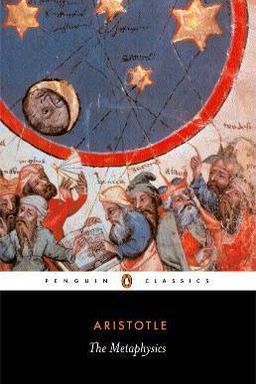
What does it mean for anything to exist? In Metaphysics, Aristotle takes up this radical question, aiming to understand being qua being—being as such, beyond any particular scientific domain. Whereas physicists study nature and biologists study life, Aristotle asks about what makes anything at all be what it is. His project, born in the Lyceum’s lecture halls, collects years of reflection on change, essence, causation, and intelligibility into one vast inquiry.
You should picture the book as a philosophical map: early books set out aims and logical foundations; central books (especially Zeta, Eta, Theta) tackle substance, form, and matter; and later ones (Lambda, Mu, Nu) rise to theology and mathematics. Beneath the disorderly surface lies a coherent arc—a journey from knowledge of ordinary causes to the discovery of the ultimate principle of all existence.
The Aim of Metaphysics
Aristotle calls metaphysics the “first philosophy” because it seeks the primary principles and causes. His Four Causes—material, formal, efficient, and final—form the core structure of explanation throughout the treatise. For any object, such as a bronze statue, you must identify what it is made of (the material), what it is (the form), what produced it (the efficient cause), and what purpose it serves (the final cause). This framework applies as much to natural creatures and the heavens as to artifacts. Through these causes, Aristotle rescues explanation from mere observation and connects it to rational inquiry.
The Historical and Intellectual Context
To understand his ambition, you must situate Aristotle amid predecessors. Heraclitus said everything changes; Parmenides denied change altogether. Atomists like Democritus explained things by indivisible particles; Plato posited eternal Forms beyond this world. Aristotle’s genius lies in synthesizing their insights: he keeps the need for intelligible structures (like Plato) but embeds them within the material world (like the naturalists). Growing up in a scientific medical tradition and trained in Plato’s Academy, Aristotle learned both the empirical and formal habits of mind. He thus crafts a system capable of explaining both permanence and change.
Being, Logic, and Definition
Aristotle reminds you that metaphysics requires logical stability. In Book Gamma he defends the Principle of Non‑Contradiction: the same thing cannot both be and not be at the same time in the same respect. Without this axiom, reasoning and truth collapse. He also upholds the Law of Excluded Middle—between A and not‑A there is no third—which connects logic to clear definition. Philosophy must safeguard logical coherence before it can define essence or discover causes. (For modern readers, this commitment remains foundational; both science and metaphysics presuppose non‑contradiction.)
Substance and the Problem of Change
From logic Aristotle moves to ontology. He asks: how can something change without ceasing to be? His solution is hylemorphism—the doctrine that every physical thing is a composite of matter and form. Matter provides the potentiality to be various things; form gives actuality and intelligibility. When you say “Socrates becomes musical,” the underlying matter (Socrates as human substance) persists while the form (musicality) is realized. This view reconciles Parmenidean permanence and Heraclitean flux.
Essence, Definition, and Scientific Knowledge
Books Zeta and Eta probe substance as essence. Aristotle redefines what counts as fundamental reality: not individual objects but the species‑form that makes them intelligible—man, horse, triangle. A true definition captures this essence (the “what‑it‑was‑to‑be‑that‑thing”). Where Plato imagined separate Forms, Aristotle shows Form is immanent in the composite itself. Definitions divide genera into specific differentiae until you reach the indivisible essence. Form thus becomes the real explanatory core: both what gives being and what makes rational knowledge possible.
Potentiality, Actuality, and the Highest Principle
In Theta and Lambda, Aristotle refines his account: actuality (realized form) is prior to potentiality in both time and explanation. You cannot know a possible builder without already knowing what building is. Even nature’s cycles presuppose prior actual forms—an actual human before possible offspring. This culminates in Aristotle’s argument for the Unmoved Mover: eternal motion requires a purely actual cause, a divine intellect whose thought is thought thinking itself. This principle anchors the cosmos, combining ontology, causation, and theology in one idea of pure actuality.
From Science to Theology
Later books (Mu, Nu, Iota) extend the same program. Mathematics is demystified: figures and numbers are abstractions from the sensible world, not independent substances. Unity and measure arise from the way we define wholes and quantities, not from separate Platonic Ones. Across these treatments, Aristotle returns again and again to the same conviction: explanation must be immanent and intelligible. The world’s order exists through forms realized in matter, grounded ultimately in a purely actual principle. By tracing being from logic to cause to divinity, Aristotle builds a coherent system where every act of knowing mirrors the structure of reality itself.