
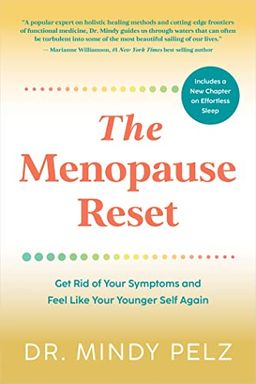
The Menopause Reset cover

The Menopause Reset

by Mindy Pelz

The Menopause Reset is your guide to overcoming menopause symptoms through sustainable diet, lifestyle, and mindset shifts. Dr. Mindy Pelz provides empowering strategies to balance hormones, improve metabolism, and enhance gut health, helping you feel revitalized and in control.

Reclaiming Your Power Through the Menopause Reset

Have you ever looked in the mirror during midlife and wondered, “Whose body am I living in?” That haunting question forms the emotional heartbeat of Dr. Mindy Pelz’s The Menopause Reset: Get Rid of Your Symptoms and Feel Like Your Younger Self Again. Pelz, a functional health expert and fasting pioneer, argues that menopause isn’t the disabling decline culture portrays but a biological opportunity—a chance to reset your health, longevity, and hormonal balance through conscious lifestyle design. Instead of seeing menopause as something to endure, she reframes it as an invitation to mastery: an era where women finally turn their nurturing instincts inward and embrace self-care as the ultimate form of empowerment.

Pelz’s thesis is simple yet radical: suffering through menopause is optional. The symptoms you feel—insomnia, depression, hot flashes, weight gain, anxiety—are not permanent punishments, but signals from your body asking for change. You can silence these symptoms by working with your biology, not against it. The key lies in five interlocking lifestyle shifts she calls the Menopause Reset Process: adjusting when you eat, improving what you eat, healing your gut microbiome, detoxing your environment, and restoring hormonal calm by slowing down the relentlessly rushing woman’s pace of life.

A Call to Redefine Midlife

The book opens with an intimate confession: in her early forties, Pelz—once a thriving clinician, mother, and athlete—imploded physically and emotionally. Depression, night sweats, brain fog, and panic attacks consumed her seemingly overnight. Her professional training hadn’t prepared her for what she calls this “decade-long hormonal roller coaster.” Doctors offered antidepressants or apathetic advice: “Welcome to perimenopause.” But one conversation with a candid OB/GYN changed her life. The physician admitted her medical textbooks provided no guidance for women like Pelz. That moment ignited Pelz’s mission to rewrite the menopause manual herself using nutritional science, fasting research, and cellular detox techniques.

The deeper Pelz dug, the more she discovered that menopause is not a medical malfunction. It’s a metabolic remodeling project. As the ovaries retire, the adrenal glands, liver, gut, and brain must recalibrate to manufacture the right balance of hormones. If these systems are clogged by toxins, poor nutrition, or chronic stress, chaos ensues. By using lifestyle interventions to heal each system, women can transition smoothly—and even reverse common midlife diseases that disproportionately affect postmenopausal women, such as heart disease, diabetes, dementia, and osteoporosis.

From Symptom Relief to Cellular Healing

One of the book’s guiding philosophies—borrowed from Dr. Daniel Pompa’s cellular biology framework—is that “if you fix the cell, you get well.” Pelz shows how cellular healing happens through precise nutritional timing, fasting variation, and toxin elimination. For example, fasting doesn’t simply burn fat; it triggers cellular autophagy, a rejuvenation process that removes damaged proteins and ignites hormone signaling pathways. Similarly, tuning into the body’s circadian rhythm—by eating and sleeping in alignment with daylight—helps the endocrine system regulate energy, mood, and temperature more effectively than any prescription.

She builds on these insights with compassion and practicality. Her five-step Reset framework gives readers structured hope: start by changing when you eat (through intermittent fasting), then what you eat (via a hormone-friendly ketogenic plan), heal your gut microbiome (supporting estrogen metabolism), detox your body and environment (to clear hormonal disruptors), and finally, address the emotional pace of your life (to tame cortisol and restore balance). When these pieces align, the body stops fighting itself and begins to flourish again.

Why This Matters Now

Pelz argues that today’s women face a hormonal storm unique to this century. We live amidst endocrine-disrupting chemicals, sleep deprivation, constant stress, and an industrial food system that floods our bodies with sugar and artificial ingredients. Against this backdrop, the traditional medical model—offering symptom-masking prescriptions—feels woefully outdated. Her approach provides not just symptom management, but metabolic reprogramming for longevity and vitality. She connects menopause to larger trends: rising autoimmune rates, infertility, thyroid disorders, and anxiety epidemics, all linked to environmental toxicity and blood-sugar instability.

The book blends hard science with storytelling, featuring women like Cathy, who reversed her cholesterol and insomnia through fasting and detox; Kimberly, who restored libido and peace by rebalancing cortisol; and Rebecca, who regained flexibility through the 15-Day Metabolic Reset. These narratives reinforce Pelz’s message: healing is a choice and a process. Every positive change—from delaying breakfast to replacing plastics—signals the body that it is safe, supported, and ready to heal.

What You’ll Learn in the Menopause Reset

Over twelve chapters and a bonus guide on effortless sleep, Pelz takes you on a journey that is equal parts education and empowerment. You’ll learn how declining hormones interact with stress and metabolism; how intermittent fasting flips the metabolic switch from glucose to fat-burning mode; how your microbiome’s “estrobolome” directly determines your estrogen balance; and how detoxification strengthens the very organs now managing your hormones. She also explores emotional resilience—teaching you to exit the “rushing woman syndrome” and replace cortisol spikes with oxytocin surges of joy, connection, and calm.

By the book’s conclusion, Pelz reframes menopause as the most profound biological feedback loop of a woman’s life. If puberty was the body’s initiation into creation, menopause is its initiation into wisdom. Every hot flash and moody night is your body asking for reconnection—to nature, nourishment, and rest. This compassionate lens transforms menopause from a medical event into a sacred reset, one that invites you to rebuild your life around what truly matters: mental peace, metabolic flexibility, and cellular vitality.

The core message: Menopause doesn’t break you—it breaks you open. With fasting, detoxing, mindful eating, and self-compassion, you can heal the imbalance, rediscover your joy, and design the second half of your life with strength and clarity.


Understanding the Hormonal Symphony

To reset your body, you must first understand the orchestra of hormones inside you. Dr. Pelz calls it a symphony because every hormone—like an instrument—must harmonize for your body to play its music of vitality. When one instrument falters, the entire piece sounds chaotic. During your 40s and 50s, several key players—estrogen, progesterone, and testosterone—start shifting, while backstage conductors like the hypothalamus and adrenals struggle to keep time.

Meet the Hormonal Hierarchy

Pelz introduces what she calls the Hormone Hierarchy, a pyramid that explains how upstream hormones dictate downstream balance. At the top sits oxytocin—your hormone of love and connection. Next comes cortisol, the stress hormone. Below that is insulin, the metabolic regulator. Finally, estrogen, progesterone, and testosterone form the base. When stress spikes cortisol or a sugary diet elevates insulin, your sex hormones crash. This is why you can’t simply supplement estrogen and expect relief—you must start at the top.

She shares stories like Kimberly’s, a Silicon Valley engineer who felt her vitality evaporate. Despite trying keto and fasting, her libido, muscle mass, and sleep didn’t recover—until Pelz helped her calm her adrenals and lift her depleted DHEA. Within weeks, Kimberly’s testosterone rose naturally, restoring her spark. Pelz uses such examples to prove that the path to hormonal health starts not with pills but with stress regulation and lifestyle alignment.

Test, Don’t Guess

Hormonal self-awareness begins with data. Pelz strongly recommends the DUTCH Complete Test, a urine-based analysis that maps estrogen metabolites, cortisol rhythms, melatonin levels, and detox capacity. She recounts how her patient Megan discovered dangerous levels of estrogen metabolites predicting cancer risk. A simple switch—swapping processed foods for whole, organic meals and balancing her methylation pathways—reversed her markers within months. (Note: Functional medicine pioneer Dr. Sara Gottfried and author Dr. Anna Cabeca likewise advocate hormone mapping to personalize interventions.)

Making Yourself the Priority

Hormonal harmony isn’t a spectator sport; it demands self-focus. Pelz’s patient Debbie, a 45-year-old executive and mother, learned that lesson when her extreme workload crippled her progesterone. No supplement rescued her until she learned to say no, schedule recovery time, and set boundaries. When self-care became non-negotiable, her hormonal chaos calmed. The deeper invitation here is emotional: menopause is nature’s way of calling you back to yourself.

Key takeaway: Balance your hormones from the top down. Calm stress, steady insulin, and test intelligently—then your sex hormones will respond with vitality and grace.


Mastering Fasting and Meal Timing

One of Pelz’s most transformative tools is intermittent fasting—a strategy she calls “the most powerful reset a menopausal woman can do.” By adjusting when you eat instead of obsessing over calories, you allow insulin levels to stabilize, giving your body a break from constant fat storage and energy crashes.

Breaking the Breakfast Myth

Remember the mantra “Breakfast is the most important meal of the day”? Pelz exposes it as a marketing myth invented by food corporations. She argues that skipping breakfast—or delaying it by several hours—teaches your body to burn stored fat instead of glucose. For women entering perimenopause, this can mean less bloating, steady energy, and sharper focus. She encourages readers to start small: push breakfast back by an hour each week until you comfortably fast 13–15 hours daily.

Scientific enthusiasm backs her up. The New England Journal of Medicine found intermittent fasting reduces inflammation, insulin resistance, and cognitive decline. But Pelz pushes further, introducing a variety of fasting modes—autophagy fasts (17–72 hours for cell regeneration), dinner-to-dinner fasts for gut repair, and 36-hour fasts to overcome stubborn weight-loss plateaus.

Building a Fasting Lifestyle

Pelz simplifies fasting through her “5-1-1” formula: five days of intermittent fasting, one day of a longer fast, and one day with no fasting at all. This cyclical pattern prevents adaptation and mirrors the ancestral feast-and-famine rhythm. Her online community, the Resetter Collaborative, shares success stories from across the world—people dropping weight, sleeping soundly, and rediscovering mental clarity.

Yet fasting isn’t one-size-fits-all. Pelz cautions against long fasts the week before your period, when progesterone production peaks. Ignoring this can worsen insomnia or anxiety. For postmenopausal women, however, longer fasts become rejuvenating—they promote ketone production and trigger stem cell growth. Stories like Theresa’s, who healed chronic gut issues by combining 24-hour and 72-hour fasts, show fasting as both science and art.

The fasting philosophy: Your body was designed for times of scarcity. When you honor that rhythm, it rewards you with energy, clarity, and hormonal harmony.


Fueling Hormones with Ketobiotic Nutrition

After mastering meal timing, Pelz turns to the fuel itself. Her message: stop counting calories and start counting macros. Hormonal health, she insists, depends far more on what you eat than how much. Her “Ketobiotic” approach merges ketogenic fat-burning principles with gut-supportive probiotics to create metabolic balance without hormonal depletion.

The Macro Blueprint

Ketobiotic eating flips conventional wisdom: keep net carbohydrates under 50 grams, protein under 50 grams, and let healthy fats make up 60% or more of your intake. Unlike extreme keto diets that neglect vegetables, Ketobiotic includes high-fiber, plant-rich carbs to feed gut bacteria. Olive oil, avocados, and grass-fed butter heal cell membranes, allowing hormones like estrogen and thyroid signals to enter cells cleanly. This nutrition isn’t restrictive—it’s restorative.

Eating for Your Cycle

Pelz brings an innovation few nutritionists address: cycle syncing. During estrogen peaks (days 12–14), eat estrogen-boosting foods—flaxseeds, berries, and broccoli. During progesterone-building phases (days 21–28), enjoy tropical fruits and squashes to calm the nervous system. Even if your period is irregular or gone, she recommends following a 28-day rhythm to cue your body’s memory of balance. This cycling of macros keeps hormones fluid rather than stagnant—a principle echoed by Dr. Jade Teta’s “metabolic flexibility” concept.

Real-World Results

Consider Rebecca, a 59-year-old traveler who couldn’t stick to strict keto. By alternating fasting and ketobiotic days, she lost 25 pounds, strengthened her muscles, and regained vibrant energy. “When life derails me,” Rebecca said, “I do a 15-Day Women’s Metabolic Reset, and my body snaps back.” Pelz weaves such case studies throughout her book, underscoring that discipline need not be rigid when guided by intelligent variation.

Key principle: Your diet should evolve with your biology. Eat to fuel hormone phases, not diet fads.


Healing the Gut and the Estrobolome

One of Pelz’s most eye-opening revelations is that your gut microbiome—the trillions of bacteria within you—rules your hormonal destiny. She names your estrogen-metabolizing bacteria the estrobolome. When nourished, these microbes deactivate harmful estrogen and activate protective forms, guarding against mood swings, cancer risk, and stubborn fat.

Stop Killing Your Microbes

Modern life is antimicrobial. Constant use of antibiotics, hand sanitizers, processed foods, and artificial sweeteners devastates your microbial diversity. Even antibacterial toothpaste or chemical lotions weaken your gut ecosystem. Pelz urges readers to protect their internal environment like a beloved pet: stop feeding it toxins, start feeding it life.

Feed the Good, Starve the Bad

She categorizes your microbial nutrition into three pillars: polyphenols (from berries, nuts, and dark chocolate), prebiotics (chia, flax, hemp), and probiotics (fermented foods like sauerkraut, yogurt, and kombucha). Together, they nurture estrogen-balancing bacteria such as Lactobacillus reuteri and Lactobacillus rhamnosus. Pelz highlights the supplement Femicrine, which contains these strains, and the Gut Zoomer test, which identifies microbiome imbalances.

She also introduces the Microbiome Reset: swapping antibacterial soaps for probiotic skin lotion, using prebiotic toothpaste, and taking Ion Gut Support to replenish soil-depleted bacteria. These small rituals, she insists, communicate safety to your gut-brain axis, calming inflammation and stress hormones simultaneously.

Mary’s Transformation

Mary’s story brings the concept home. Plagued by migraines, hair loss, and crippling fatigue, she discovered through testing that she had a leaky gut and low estrogen. By healing her microbiome, her hormones—and life—stabilized. This mirrors findings from scientists like Dr. Terry Wahls (author of The Wahls Protocol) who proved plant diversity can reverse chronic illness. For both Wahls and Pelz, thriving bacteria mean thriving women.

Message: You are half human, half microbe—and your microbes are the midwives of your hormones.


Detox for Hormonal Clarity and Longevity

Pelz declares detoxification the nonnegotiable fourth step of the Menopause Reset. Modern women are swimming in over 87,000 man-made chemicals—from plastics to pesticides—that clog hormonal receptors and overwhelm the liver, thyroid, and brain. Unless you actively remove these toxins, no amount of fasting or dieting can sustain balance.

Understanding the Toxic Trio

She identifies three major offenders: forever chemicals (PFAs in water, packaging, and cookware), endocrine disruptors (plastics, parabens, fragrances), and heavy metals (lead and mercury). Lead hides in bones and releases during menopause, accelerating osteoporosis and brain fog. Mercury agitates the nervous system, magnifying anxiety and sleeplessness. Both hijack the same hypothalamic cells that regulate hormones.

Safe Detox Pathways

Pelz insists that detox must be methodical. First, open up your elimination organs—liver, kidneys, gut, lymph, and skin—through dry brushing, infrared saunas, coffee enemas, red light therapy, and hyperbaric oxygen. Then remove toxins with binders like activated charcoal, zeolites, or DMSA. Finally, restore the brain using minerals (zinc, magnesium), alpha-lipoic acid, and clean fats to rebuild cell membranes. This cellular approach is consistent with research from detox experts like Dr. Dietrich Klinghardt.

Stories of Recovery

Rachel’s story illustrates detox’s power. After 18 years of hypothyroidism, she learned heavy metals were sabotaging her thyroid function. Once she followed Pelz’s detox protocol—opening pathways, binding toxins, and supplementing minerals—she lost 55 pounds, regained energy, and even prepared detox plans for her daughters to break generational toxicity. Transformation begins, Pelz asserts, when you stop asking “What pill will fix me?” and start asking “What toxins are blocking my body’s natural genius?”

Essential insight: You cannot heal a toxic body with a healthy lifestyle alone. Detox first, and your hormones will find their melody again.


Ending the Rushing Woman’s Syndrome

Even with clean food and balanced hormones, Pelz noticed women remained anxious and fatigued. The culprit? Chronic busyness. Inspired by Dr. Libby Weaver’s Rushing Woman’s Syndrome, Pelz dedicates a chapter to releasing overdrive culture. A body perpetually in “go mode” floods cortisol, flattening progesterone and testosterone. The cure is not quitting life but reclaiming rhythm, presence, and oxytocin.

Steps to Slow Down

Her five-step plan mirrors lifestyle medicine prescriptions: (1) Schedule sacred downtime—Friday and Sunday afternoons with no plans; (2) Prioritize self-care—book the massage and facial as “health appointments”; (3) Adapt your workout—swap punishing HIIT sessions for yoga or nature walks when fatigued; (4) Practice vacation—train your nervous system to rest; (5) Chase oxytocin daily through laughter, hugs, pets, and gratitude.

When Pelz finally tested her own hormones after months of rushing, they mirrored those of a postmenopausal woman—yet she was still cycling. She made self-care a nonnegotiable discipline, proving that relaxation isn’t lazy; it’s reparative biology. Her patient Katie, a former competitive skater and executive coach, combined her stress mastery with fasting and ketosis and achieved record-breaking mental clarity after 60. Her recovery exemplifies how managing stress chemistry can be the final key to menopause freedom.

Wisdom: You can’t supplement or fast your way out of stress. The slow woman heals.


New Age Biohacks for the Modern Menopausal Body

After mastering the basics, Pelz introduces the era of biohacking—natural technologies that enhance cellular performance. Unlike lifestyle foundations, biohacks are accelerators, amplifying energy, longevity, and rejuvenation when your habits are already aligned.

Tools for Cellular Renewal

She highlights six: red light therapy (stimulates collagen and thyroid healing), infrared saunas (detoxifies and rejuvenates skin), hyperbaric oxygen chambers (oxygenates cells to reverse aging), PEMF therapy (cellular recharging through electromagnetic pulses), vibration therapy (builds bone density and muscle), and BrainTap neurotraining (shifts brainwaves from fear to focus). Each tool, she explains, restores mitochondrial function—the cellular batteries that fade with age.

The Reset Room Revolution

In her clinic, Pelz built a “Reset Room,” blending these therapies so patients can stack benefits—infrared sweat before red light, followed by BrainTap meditation. The combined effect can restore energy faster than medication ever could. Researchers like Dr. Patrick Porter (creator of BrainTap) and Dr. Heidi Havvik (chiropractic neuroscientist) validate these neuroplastic benefits, showing even a single chiropractic adjustment boosts prefrontal cortex blood flow by 30%.

Pelz’s broader point: midlife health is no longer about fighting aging but optimizing it. With biohacking and the foundational reset habits, women can not only live longer but stay vibrant, mentally clear, and hormonally balanced through every decade.

Perspective: You’ve upgraded your phone a dozen times—why not upgrade your biology?


From Surviving to Thriving

By the book’s end, Pelz transforms hormone management into a philosophy of self-evolution. The goal isn’t merely surviving menopause but thriving through wisdom. She reminds readers that you can’t heal overnight; every new habit—fasting, detoxing, slowing down—is a puzzle piece. The magic happens when all pieces interlock and you rediscover ownership of your body.

Build the Lifestyle One Step at a Time

Pelz offers a simple roadmap: start with your most urgent imbalance (sleep, weight, mood), follow the steps in that chapter, master it, then move to the next. This modular approach encourages patience and continuous progress. She reminds high-achieving women that transformation is incremental: “The slower you go, the faster you’ll heal.”

Her client Lisa, a 45-year-old drowning in anxiety and exhaustion, used this layered process to rebuild herself. Within a year of fasting, detoxing, and microbiome repair, Lisa became the calmest version of herself and entered postmenopause symptom-free. This story closes the loop: women can age into power when they collaborate with their physiology instead of resisting it.

Final truth: You are not broken; you’re being upgraded. Menopause isn’t an ending—it’s the reset your body has been waiting for.

Dig Deeper

Get personalized prompts to apply these lessons to your life and deepen your understanding.

Go Deeper

Get the Full Experience

Download Insight Books for AI-powered reflections, quizzes, and more.