
Idea 1
Menopause Reconsidered: Biology, Culture, and Empowerment
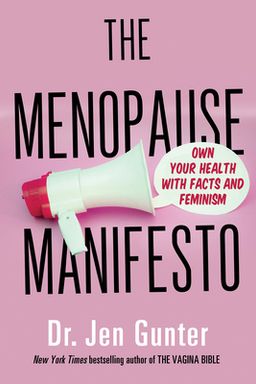
Dr. Jen Gunter’s The Menopause Manifesto opens with a countercultural declaration: menopause is not a disease but a biological transition. You are not broken, hormonal failure is not your destiny, and the changes of midlife can be understood and managed through evidence, not shame. Gunter reframes menopause as 'puberty in reverse'—another developmental phase governed by the brain–ovary connection and marked by its own biological rhythms and cultural misconceptions.
Menopause as a Biological Phase
Medically, menopause begins twelve months after your last menstrual period and marks the exhaustion of ovarian follicles capable of ovulation. The years before (premenopause or perimenopause) show erratic bleeding and hormonal chaos; the years after are postmenopause. Most women spend one-third to one-half of their lives in this continuum, so understanding its physiology isn’t optional—it’s a cornerstone of long-term health planning.
Through the depletion of estradiol-producing follicles, cascade effects unfold: changes in bone metabolism, cardiovascular risk, glucose regulation, and even cognitive processing. Gunter emphasizes that menopause’s unpredictability—the hallmark of this transition—demands flexibility and realistic expectations rather than panic.
History and Language: How Words Shape Experience
Gunter excavates medical history to show how male-dominated discourse shaped menopause as decline. Terms like 'hysteria' and 'toxicity' painted a normal process as pathological. While early voices like John Fothergill (1776) and Edward Tilt (1857) argued for neutrality, marketing and pharmaceuticals later turned 'menopause' into an anxiety-fueled brand. Even linguistic nuances matter: 'pause' sounds static, while Dutch 'overgang'—meaning transition—implies movement and growth. (Note: language choice mirrors the framing shifts in other feminist health texts such as Barbara Ehrenreich’s work on medical narratives.)
Evolutionary Purpose: The Grandmother Hypothesis
Why do human females live long past fertility? Gunter draws on Dr. Kristen Hawkes’s Hadza research and killer whale studies to argue that postreproductive longevity evolved as adaptive social strategy—the 'grandmother hypothesis.' Grandmothers enhance survival for grandchildren by contributing care, food, and knowledge. This evolutionary view reframes menopause as an achievement of humanity’s cooperative design, not a biological accident.
The Knowledge Gap and Empowerment
Despite centuries of documentation, menopause remains under-discussed, under-researched, and surrounded by misinformation. Gunter’s manifesto insists on education and medical literacy as tools for autonomy. Her M diagram situates menopause within broader contexts—the macroenvironment (nutrition, toxins, exercise) and microenvironment (social determinants of health). Recognizing these layers enables you to interpret symptoms, seek timely care, and resist being dismissed as simply 'aging.'
The Book’s Core Promise
Across every chapter—from hormone physiology to sexual desire—Gunter delivers a feminist, data-driven guide to understanding menopause as transformation. Her goal is agency: helping you make choices about therapy, contraception, sexuality, and prevention with informed confidence. Instead of saying 'this happens to women,' she insists 'women are active participants in managing transition.' By combining science with empathy, Gunter converts taboo into power—redefining menopause not as a medical failure but as a fundamental part of human evolution and self-knowledge.