
Idea 1
Unlocking the Brain’s Natural Way to Learn
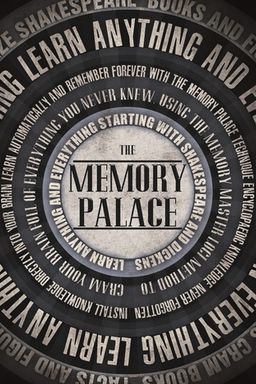
If you could install knowledge directly into your mind—like downloading a file onto a computer—what would you learn first? In The Memory Palace: Learn Anything and Everything (Starting With Shakespeare and Dickens), Lewis Smile argues that you already possess the mental technology to achieve something close. Your brain is designed for remembering physical spaces, not raw data, and once you harness that fact through the Memory Palace technique, you can learn vast amounts of information quickly and retain it vividly.
Smile suggests that our traditional approaches to memorization—rote repetition, note-taking, or drilling facts—are painfully mismatched to how memory evolved. For millions of years, humans navigated forests and hunted by remembering locations and paths, not lists or numbers. Memory, he explains, is a spatial phenomenon. When you attach abstract knowledge to vivid, emotional, and visual places, your recall becomes instantaneous. That’s the foundation of this book: using imagination and familiar locations to transform the dull into unforgettable.
From Evolution to Imagination: Why This Works
Your brain is bad at remembering lists precisely because it wasn’t built to. Smile humorously notes that you could barely remember a twenty-digit number, but you have no problem picturing your home and walking through it mentally. The solution is to play to your strengths—to translate what you want to learn into spatial, sensory-rich images. When you visualize something absurd, emotional, or colorful along a route you already know, the memory sticks. The Memory Palace isn’t complicated: it’s simply learning through purposeful, playful imagination.
Smile builds his case through practical demonstrations rather than theory. He shows how to memorize all thirty-seven of Shakespeare’s plays and all twenty of Dickens’ novels in less than an hour, using nothing but creativity and mental navigation. You learn not by repeating, but by walking through imaginary scenes built atop real-world locations—streets, houses, or museums—and by dropping outrageous images at each stop.
Rewiring How You Think About Learning
The first step, Smile says, is understanding that memory is a skill, not a gift. There are no bad memories—only untrained ones. Once you start using spatial encoding, abstract knowledge becomes physical in your mind. Rather than ‘fishing around’ for facts in your brain, you can walk to them like books in a neatly organized library. Instead of saying “I know this, I just can’t remember,” you’ll know exactly which mental shelf holds it.
For example, learning Shakespeare’s plays begins with a surreal story. You wake up in your bedroom with two men in bowler hats with V’s on them—The Two Gentlemen of Verona. You encounter a hoop-jumping shrew (The Taming of the Shrew), a hen laying eggs in bizarre numerical order (Henry VI Parts 2, 3, and 1), and Richard Nixon with three heads (Richard III). Each absurd vignette locks a title into place along your mental route. It’s memory through theater; your own brain becomes the stage.
Why Shakespeare and Dickens?
Smile deliberately chooses Shakespeare and Dickens because they offer both beauty and challenge. Some titles are easy to visualize (The Taming of the Shrew), while others—like Troilus and Cressida—require creative effort. Learning this list proves that with imagination, even the most abstract words can become vivid. It teaches not only facts but the confidence that any domain of knowledge is learnable.
Once you’ve conquered literature, the author expands the technique to other subjects: geography (Ten Tallest Mountains), history (Presidents of the United States), science (Geological Time Periods), and more. It’s a modular method—each journey becomes a mental map, each map a new universe of information.
Why It Matters Today
In an age of digital overload, knowing how to retain information is power. Smile’s approach rewires how you interact with ideas: instead of scrolling, you’re sculpting memories in personal spaces. This technique gives you ownership of your learning process. Whether you’re a student, professional, or lifelong learner, the Memory Palace transforms passive reading into active recall. It’s mental architecture built on creativity.
“There is no such thing as a bad memory—only an untrained one.”
Smile’s book is more than a manual; it’s an invitation to rediscover your cognitive potential. It’s witty, practical, and surprisingly profound: the act of building memory palaces doesn’t just improve recall, it deepens understanding. You start to see learning not as data collection, but as art—a creative endeavor that brings knowledge to life. And in doing so, you unlock not just information, but imagination itself.