
Idea 1
Power, Integration, and the Making of Industrial Meat
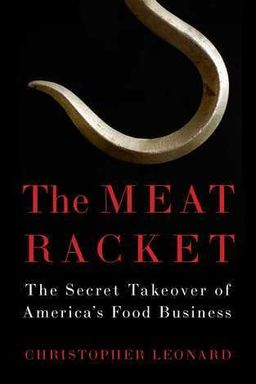
How can you trace the invisible machinery that feeds millions while draining rural life? In this book, the author guides you through the evolution of Tyson Foods and the broader meat complex to show how vertical integration and corporate consolidation transformed food production into a system of centralized control. It’s an anatomy of modern capitalism inside agriculture: from hatchery to hamburger, from local barn debt to Wall Street profit.
At its core, the book argues that meat companies didn’t just aim for efficiency — they built a hierarchy of power. By absorbing every layer of production except land ownership, firms like Tyson created a structure where they own inputs, dictate standards, and control outputs. The model leaves farmers independent on paper but captive in practice, an arrangement some call “chickenization.”
Integration as Architecture of Control
Tyson’s operations illustrate how integration consolidates leverage. Each complex — hatchery, feed mill, slaughterhouse, and branded product line — funnels toward Springdale, Arkansas, where corporate decisions override local autonomy. Farmers maintain barns mortgaged at high cost while Tyson supplies chicks, feed formulas, and pick-up schedules. You might picture this as efficiency; the book frames it as domination through logistics.
In Waldron, Arkansas, the Tyson plant embodies this architecture. Trucks with the company’s emblem shuttle feed and pallets in a closed loop, while locals see jobs but not profits. (Note: The author’s framing recalls Upton Sinclair’s and Eric Schlosser’s earlier portraits of meat industries, only with data, contracts, and debt replacing muckrakers’ grime.)
The Tournament and Financial Dependency
To enforce compliance, Tyson developed the “tournament system,” which pays farmers relative to each other, ensuring that losses are always local while corporate profit remains secure. Farmers compete blindly; their bonus or penalty depends on averages manipulated by company schedules and feed grades. Donna Owens in Waldron learned the hard way — repeated mid-pack scores led to contract cancellation despite diligent care. This system pushes farmers into costly upgrades and endless debt, dramatized through the Yandells’ bankruptcy.
Financially, the structure depends on taxpayer-backed loans. Through Farm Service Agency guarantees, banks can lend freely knowing defaults will be reimbursed. These credit conduits converted small family operations into debt-fueled industrial clients, enabling the spread of Tyson’s model across states.
Consolidation and Expansion: The Bigger Game
Behind every barn stands a larger economic logic: “Expand or Expire.” Tyson bought rivals like Garrett Poultry and Valmac during downturns, using cycles of collapse to accumulate market share. After each acquisition, it standardized methods, reduced overhead, and absorbed competitors’ plants and genetics. Tyson’s 1994 purchase of Cobb-Vantress extended control from the mechanical into the biological — owning the genetic lines of industrial chickens themselves.
This pattern mirrored the old Meat Trust of the early 1900s but unfolded in an era with weaker antitrust vigilance. The result was not just a big company but a system where a handful of integrators coordinate feed, genetics, and slaughter across species.
Surveillance and Data as Power
In the corporate offices, power operates through data. Real-time metrics track mortality, feed conversion, and weight. Field veterinarians and technicians become enforcement instruments; a keystroke can alter payouts or cancel a contract. Farmers like Geraldine Henson realized managers could favor certain houses with healthier chicks. Secrecy sustains the imbalance: Tyson’s settlement sheets are proprietary, denying farmers full visibility into their performance metrics.
Biology Meets Industry
You also see biology reshaped to serve the machine. Chickens grew faster, larger, and more fragile. The same breeding breakthroughs that reduced feed per pound created birds with weak legs and immune problems. Pigs and cattle followed suit, engineered for yield and uniformity until health and welfare costs began to surface. (Note: this intersection between genetic optimization and industrial limits is comparable to Michael Pollan’s critiques of monoculture efficiency.)
The Human Cost and Countermoves
Behind the ledger numbers are human stories — families like the Owens and new immigrant farmers such as Boonau Phouthavong and the Yangs taking over bankrupt farms. Their hope for stability collides with systemic precarity. On Main Streets in towns like Waldron, jobs persist but profits migrate to Springdale and Wall Street. Rural civic life hollows out under perpetual dependence.
Some reformers fight back. Iowa’s Attorney General Tom Miller won a settlement against Smithfield that banned secret contracts and punitive pay, demonstrating what enforcement could look like. Yet national reform failed when GIPSA’s 2010 rule was gutted by congressional defunding after heavy industry lobbying. Meyerhoeffer’s cooperative in Hinton, Virginia offers another rare hopeful model — farmers pooling resources to own a plant — though such victories demand capital and deep community organization.
The Central Argument
Ultimately, the book reveals a coherent system rather than scattered abuses. Vertical integration centralizes power, data amplifies oversight, debt underwrites expansion, and consolidation secures markets. Efficiency becomes a paradox: local prosperity withers even as national profit grows. Understanding Tyson’s blueprint is understanding how modern capitalism colonized the countryside — one contract, one tournament, and one mortgaged barn at a time.