
Idea 1
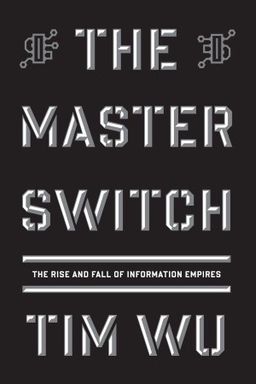
The Master Switch: The Rise and Fall of Information Empires
What happens when the flow of information becomes the most powerful force in society? In The Master Switch, Tim Wu argues that every major communication medium—from the telephone and radio to film, television, and the Internet—follows a predictable cycle of openness, consolidation, control, and reformation. This pattern, which Wu calls the Cycle, explains why our information environment swings between entrepreneurial freedom and monopolistic domination—and why recognizing that pattern is key to preserving open networks.
The book traces the history of twentieth‑century communications empires, showing how they grew from scrappy tinkering and garage experiments into centralized monopolies that shaped culture, speech, and politics. Through detailed case studies—AT&T, RCA, Hollywood, the studio system, and later cable and Internet corporations—Wu demonstrates that technological optimism often gives way to control once a medium becomes central to society. The promise of universal access becomes a rationale for monopoly, and innovations that begin free and decentralized end up regulated, homogenized, or privately censored.
The Cycle of Openness and Consolidation
Wu’s Cycle begins with bursts of creativity—Bell and Watson experimenting with telephony, De Forest broadcasting amateur radio, and Laemmle rebelling against Edison’s film trust. In these open periods, invention is contagious, prices are low, and anyone can enter the field. But soon, economies of scale and political alliances favor consolidation. Moguls such as Theodore Vail (AT&T) and David Sarnoff (RCA and NBC) argue that rational, centralized control is the price of reliable service—what Vail dubbed “One System, One Policy, Universal Service.” Once accepted by regulators, these monopolies lock out competitors and define how we communicate.
The cycle continues as concentration enables new forms of influence and censorship. Hollywood’s Production Code shows how private industry can suppress content without overt state involvement. Meanwhile, the FCC’s clear‑channel radio policies and AT&T’s tariff system constrained speech and innovation under the guise of uniformity. Over decades, these closed systems grow brittle and inefficient—until technological or legal disruption cracks them open again. Cable television, antitrust lawsuits, and personal computing reopened markets, giving birth to new periods of experimentation and diversity.
The Internet: A New Hope at Risk
Wu paints the Internet as the latest stage of that long drama. Built around open design principles—encapsulation and the end‑to‑end philosophy—its architecture empowers users rather than network owners. Those choices let information travel freely across different networks and gave rise to innovations from email to the World Wide Web. Yet Wu warns that engineering neutrality doesn’t guarantee political or economic neutrality. The cycle threatens to recur as old telecom giants, device manufacturers, and platform monopolies seek to reassert control through throttling, exclusive deals, or app store censorship.
A Constitutional Solution for Communication
To break the cycle, Wu proposes the Separations Principle: a structural safeguard akin to a constitutional separation of powers. Just as government divides legislative, executive, and judicial roles, society must separate carriage (infrastructure ownership), content (media creation), and tools of access (like search engines or app stores). No single entity should dominate all three. Examples such as the Hush‑A‑Phone and Carterfone decisions show how regulatory interventions can preserve freedom by ensuring that networks remain platforms rather than monopolies.
Wu’s broader argument invites you to see the technologies you use daily not as neutral tools but as arenas of power. When openness is protected, invention and free speech thrive; when control consolidates, creativity shrinks and civic discourse suffers. Recognizing the Cycle—and designing institutions to fight its monopolistic turn—is the only way to keep the Master Switch in democratic hands.
In Brief
The book weaves history, technology, and law into a single lesson: the openness of our communication networks is fragile, cyclical, and dependent on deliberate structural protections. You can’t stop the Cycle—but you can understand and design against its darkest turns.