
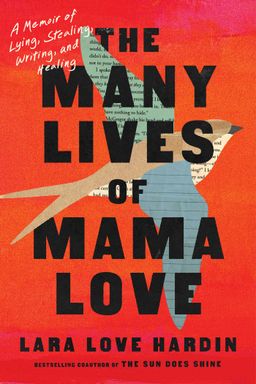
The Many Lives Of Mama Love cover

The Many Lives Of Mama Love

by Lara Love Hardin

The ghostwriter describes being convicted of thirty-two felonies and the life she built after her release from jail.

Escape, Shame, and the Long Road Home

How do you stop running from yourself and still find your way home? In The Many Lives of Mama Love, Lara Love Hardin argues that addiction is a functional escape from pain that spirals into crime, stigma, and institutional control—and that recovery requires more than sobriety. It demands new structures, honest story, and communities that turn accountability into belonging. She contends that you cannot fix a life with punishment alone; you must redesign environments, practice forgiveness, and reclaim voice.

You watch a pattern unfold: reading as an early refuge turns into opiates and then heroin; tiny lies expand into an operational lifestyle of theft; the desire to be a perfect mother collides with the chaos of addiction; and a single arrest opens the door to CPS timelines, bail math, and public shaming. Then, inside jail, you see a second pattern: how status, barter, and informal leadership can become survival—and how a new identity, "Mama Love," seeds the possibility of repair.

Addiction as a survival strategy

From childhood, Lara learns to disappear into books (Scarlett O’Hara, Nancy Drew) to survive violence, hunger, and instability. Opiates later deliver a faster, riskier version of the same promise: peace on demand, "shiny-foil moments" when pain and shame go silent. The drug is the tool; escape is the function. (Note: This echoes trauma-informed models in works like Gabor Maté’s In the Realm of Hungry Ghosts.)

Motherhood under pressure

The love that fuels Lara’s best intentions becomes the lever addiction pulls. She steals a credit card, books a hotel at the Seaside Inn so Kaden has heat when their power is out, and tells herself it’s maternal duty. The story exposes the contradiction: protect the child materially while abandoning him emotionally to the drug. When deputies arrest her as Kaden watches Wonder Pets, CPS moves instantly. The judge’s reunification clock (one year because he is four) starts ticking; love now has deadlines and proof points.

Crime as emergency logic

You enter the mechanics of deception: gift cards bought with stolen numbers to prepay hotels; dog urine to pass tests; performed normalcy (a Miranda Priestly swagger) to evade scrutiny. These are not heists; they are survival moves that scale into 32 felonies, $19,000 restitution, and a $250,000 bail. The plea dilemma is stark: plead to regain your child faster or risk trial and lose everything. (Note: The compression of choice under bail and public outrage mirrors themes from Michelle Alexander’s The New Jim Crow.)

Two jails, two worlds

G block teaches fear, barter, and coded rules (kites, trustees, "roll-ups," the "freeway" vs. door rooms). Blaine Street offers bathtubs, gardens, classes, and a chance to change routines. The move from G to Blaine shows you how environment shapes behavior. Where G uses coercion (Christina’s threats), Blaine uses incentives (work release, programs). Structure with dignity opens space for hope.

Becoming Mama Love

Inside this ecosystem, Lara finds a new role. She orients newcomers, resolves conflicts, and writes for women who need words. "Mama Love" is not a title; it’s a social contract that exchanges service for safety and meaning. Leadership here is relational and restorative: she earns privacy and protection by making herself indispensable.

Writing as repair and profession

When opiates stole her craft, she lost herself. In Blaine she writes again—short stories, an essay on anger that Tracy photocopies, and letters that move judges (Jacinda’s transfer to treatment). Ghostwriting becomes a discipline of empathy—learning others’ syntax and fear—skills she later brings to work with Anthony Ray Hinton, Archbishop Desmond Tutu, and the Dalai Lama.

The bureaucratic gauntlet

Reentry is a Jenga tower of requirements: Drug Court, Family Preservation Court, CPS therapy, random tests on three hotlines, and full-time work—often scheduled in conflict. False reports can trigger instant penalties; reversals drag. Lara survives by hyper-documenting her life, building alliances with Elizabeth (public defender), Cassandra (Gemma), and Lonnie (deputy). Compliance becomes a second job.

Economics and the long tail of punishment

Blaine Street runs on unpaid women’s labor—food, laundry, cleaning—for the entire jail. If women succeed and leave, counties must pay wages outside; the system, as Lara states, "wins when inmates lose." After release, punishment lingers: a drug felony blocks welfare, collections wrecks credit for seven years, housing lists stretch for years, and employers screen out applicants with records. The sentence continues via policy.

Forgiveness and public truth

Restoration is spiritual and structural. In Gemma, Lara teaches Mpho Tutu’s "Prayer Before the Prayer" even before she fully believes she’s forgivable; the room weeps. Working on The Book of Forgiving and The Book of Joy grounds her in embodied practices of truth-telling and repair. Finally, she owns her story publicly (TEDx, national media) and founds True Literary to lift other voices. Vulnerability becomes a lever for personal freedom and social change.

Key Idea

The book’s core claim: escaping pain is rational in a life without safety, but only new structures—disciplined routines, empathetic community, spiritual practice, and public truth—transform escape into agency and shame into service.


Addiction as Escape Function

Lara Love Hardin frames addiction not as a taste for excess but as a reliable technology of escape. As a child, she dissolves into Alcott and Tolstoy to survive a home where safety is inconsistent. In college, drugs double as reinvention—mushrooms, cocaine, LSD—before pain pills offer a clean, prescribable exit from anxiety. Heroin arrives as the most efficient solution: immediate stillness, a respite from a crowded inner life. You watch a pattern: the object changes, the function remains the same.

Mapping the escalation

The progression is precise: books → writing → performative normalcy → Vicodin/Percocet → heroin. Each step narrows the gap between stimulus and relief. Books deliver hours of transport; pills compress relief into milligrams; heroin collapses time to seconds. The system works until it breaks; the dose that erases pain also erases judgment, money, and memory. (Note: This echoes the "choice architecture" of addiction described by Maia Szalavitz in Unbroken Brain.)

Why escape feels like survival

If your childhood trains you to distrust comfort, relief becomes a survival skill. Lara learns early that disappearing—through pages, sex, food—avoids harm. Opiates later let her perform motherhood and neighborhood respectability while anesthetizing fear and shame. She calls heroin’s calm "shiny-foil moments" as if the life inside them is sealed against air and judgment. The drug replaces self-regulation she never learned to trust.

The perfect mother myth

Perfectionism turbocharges addiction. Volunteering, coaching, showing up early—these mask fraying seams and ward off scrutiny. The mask becomes heavy, the pill lightens it, and the pattern cements: take just enough to perform. The irony is brutal: standards meant to protect her kids raise the emotional stakes so high that failure feels unthinkable—and more drugs become the only way to defer collapse.

From coping to criminality

When the medicine cabinet becomes the bank, the next step is survival unsanctioned. Lara steals a credit card from an unlocked car, buys online gift cards to prepay a hotel, and performs a "Miranda Priestly" affect to blend in. She rationalizes: corporations can absorb the hit, and her kids need warmth. The coping function blurs moral lines; the habit now manages both mood and logistics.

Interrupting the function, not just the substance

If addiction is an escape function, recovery must replace that function. In jail, Lara learns substitute technologies: structured routines, service to others, and writing that metabolizes emotion. You see small swaps with big dividends: reading Mark Nepo instead of using; writing a letter to a judge instead of lying; mediating a fight instead of seeking an opiate’s numbness. The function—relief, control, belonging—gets new, safer tools.

What you can use

If you, or someone you love, uses escape to cope, start by naming the function you need most: to quiet anxiety, to feel held, to stop rumination. Then design replacements you can realistically execute under stress: peer groups with daily contact, movement or garden routines, and a simple writing habit that translates feelings into language. Support must be low-friction and available at the moment of urge. (Note: Compare to contingency management and habit substitution in cognitive-behavioral approaches.)

Key Idea

Treat the escape function as the real dependency. Replace it with repeatable practices—structure, service, and story—that give you the same relief without the collateral damage.


Motherhood at the Breaking Point

Motherhood is the story’s most tender force and its sharpest weapon. Lara insists she steals to keep her kids safe—Dylan, Cody, Ty, Hailey, Logan, and especially Kaden. But the same impulse that says "do anything for them" also rationalizes crimes that crack the family in two. You watch maternal love clash with opioid logic until law and community step in to decide what love now requires.

The staycation and the lie

When the power goes out, Lara checks into a resort with a stolen card so Kaden has light and heat. She tucks him into crisp sheets, feeds him, and promises they’re safe—then sneaks off to use. The scene is a microcosm: physical caregiving perfectly executed while emotional presence disappears. Safety, it turns out, needs both.

Arrest in front of a child

Deputies swarm the house. Lara stuffs drugs behind toothpaste, tells Kaden to "watch your show," and gets cuffed. Child Protective Services arrives; an officer warns, "You will never see him again." Whether policy or theater, the message lands. CPS makes immediate decisions based on risk signals, not intentions. In emergency court, the reunification window is one year because Kaden is four. The clock begins before Lara catches her breath.

The perfectionism trap

To stave off judgment, Lara overperforms: she volunteers at school, coaches, manages blended-family logistics with Bryan, Darcy, and DJ. The veneer buys time and goodwill—until it cracks. Then neighbors mobilize, the DA fields calls, and the narrative flips from "supermom" to "neighbor from hell." Perfectionism, meant to avoid scrutiny, raises the stakes of exposure.

Systems don’t weigh love; they weigh compliance

Family court speaks a language of calendars and tasks. To reunify, Lara must stack clean tests, attend parenting classes with positive-discipline models, secure housing with a separate bedroom, and show up to supervised visits and therapy. Love is assumed; proof is procedural. If you think love should trump everything, the bureaucracy will teach you otherwise. (Note: This echoes themes in Dorothy Roberts’s work on family policing.)

Helping a parent in crisis

If you support a parent like Lara, target the two biggest enemies: shame and logistics. Shame blocks disclosure; logistics break compliance. Offer nonjudgmental help that prevents secret-keeping (rides to tests, babysitting, meals, small cash for copays) and stay close enough to de-escalate a bad day. Compassion is not softness; it’s a strategy to keep families intact while a parent stabilizes.

What Lara learns

Later, when she orients new women as "Mama Love," she gives the help she needed: clear steps, small dignities, and practical workarounds that reduce panic. The maternal instinct that once rationalized theft becomes a caregiving practice that restores people without lying for them. Motherhood doesn’t end; it changes target and method.

Key Idea

Love without structure can rationalize harm; structure without love can sever families. Reunification demands both: honest support that lowers shame and precise logistics that make compliance possible.


Lies, Theft, and Survival Logic

The book teaches you how petty deception becomes a full-time operating system. Lara’s tactics—harvesting unlocked cars for credit cards, buying digital gift cards, using dog urine to pass tests, feigning upscale ease—are not cinematic capers. They’re emergency logistics executed under constant cortisol. The system works until the tally—32 felonies, $19,000 restitution—commands attention she can no longer charm away.

The moral reframing engine

To keep stealing, you must redesign your empathy. Corporations become faceless; neighbors become abstractions. In one scene, Lara imagines the victim as a "crunchy mom with five kids" to diffuse guilt—then spends the night at a resort. This is not sociopathy; it’s partitioning. She protects the identity "good mom" by shifting blame to systems she already distrusts.

From small lies to structural consequences

Aggregated petty crime triggers heavy machinery: a $250,000 bail kills the possibility of immediate release; media attention invites prosecutorial resolve; public outrage narrows plea options. Elizabeth, the public defender, explains the bargain: take a year in county plus Drug Court or risk much longer. Plead to crimes you didn’t commit precisely to get home to your child faster. Justice compresses into calculus.

Why survival logic scales

When a tactic solves real problems—heat for Kaden, food, the dissociation that lets you function—you reuse it. The brain learns: this works. But every reuse normalizes deception and widens risk. By the time deputies knock, you don’t just have bad choices; you have a bad system of choices. The collapse feels sudden; the ledgers show it’s been accruing for months.

Interrupting the slide

The book offers an early-warning heuristic: notice when a lie protects a self-image (good parent, good employee) instead of protecting a person. That’s the pivot from embarrassment to endangerment. Ask for help at the first slip—someone to check your bank app, hold your cards, sit with you during a craving, or manage the conversation with a landlord. (Note: This mirrors relapse prevention’s "seemingly irrelevant decisions" concept.)

A better path to accountability

When the court focuses on restitution and supervision alone, it measures debts, not change. Lara’s transformation begins when she’s given a role to play—orienting women, writing letters—and a context (Blaine) that rewards pro-social behavior. Accountability deepens when the things that made you dangerous now make you useful.

Key Idea

Deception scales because it solves real problems. Replace the problem-solving function with transparent supports before the ledger explodes into legal identity.


Inside Jail Worlds

County jail is not a monolith; it’s an ecosystem with distinct microclimates. In G block, you survive by decoding social codes and avoiding mistakes. In Blaine Street, you rehearse a different future through order, work, and small dignities. The contrast shows you how institutional design shapes behavior more than lectures ever will.

G block: vigilance and barter

G block is the "freeway" of open bunks, where door rooms signal status and privacy. Power circulates through trustees, kites (folded notes), and a commissary economy measured in ramen and honey buns. Unwritten rules govern everything: don’t snitch, don’t stare as the sally port opens, help with a shower intervention if hygiene fails. Country music becomes collective punishment. Christina coerces Lara into meth to ensure control; Kiki’s betrayal stings. Reputation is armor.

Blaine Street: order and opportunity

Blaine feels like another country. Dorm quads, better beds, bathtubs, a small gym, gardens, and volunteer-led classes create the psychological space to think. You see routines—beds made military-tight, a "double scrub" cleaning ritual—that convert chaos into competence. The stakes remain high: a dirty test sends you back. When someone tries to set Lara up, she panics, drinks gallons of water, and barely clears the threshold. But the environment consistently rewards prosocial behavior.

Learning to lead: “Mama Love”

Lara earns a door room and a nickname by making herself useful. She teaches new arrivals the phone system, S-number protocols, and commissary hacks; mediates disputes with "quiet power"; and writes letters that move judges (Jacinda’s transfer). Power here is relational, not positional. The more she serves, the safer she becomes—and the more she believes she can be someone different outside.

Design, not just willpower

The move from G to Blaine proves a policy point: if you want people to change, make the better behavior easier and more rewarding. Blaine’s bath, books (Mark Nepo circulates), gardening, and kitchen work turn idle time into mastery. With Tracy’s relapse prevention and Cassandra’s Gemma pipeline, the institution aligns incentives with growth—something punishment alone rarely achieves. (Note: This mirrors behavioral design in prisons like Norway’s Bastøy.)

The double edge of community

The same peer power that rescues you can wreck you. The women who tuck a blanket, make a bed for the grieving Jacinda, and share from commissary also enforce brutal codes: snitch and you’re done; slip and someone will use it. Lara navigates the tension by turning competence into care—and care into cover.

Key Idea

Environments teach behavior. G block teaches vigilance; Blaine teaches capability. Recovery accelerates when institutions make dignity and discipline the default.


Writing, Empathy, and Rebuilding Identity

Addiction stole Lara’s writing; service returns it. In Blaine, she rediscovers words as a way to metabolize feeling and to help others speak. That double move—healing self while serving others—becomes the engine of her return. Empathy is not sentiment; it’s a practiced craft that turns survival stories into a vocation.

Writing as therapy and proof

Lara begins with small pages—short stories, an essay on anger. Tracy, a counselor, photocopies the essay and passes it around. The feedback loop matters: words help; people say so; you write again. In a place where identity is reduced to a file and an S-number, narrative becomes evidence that you still exist.

Ghostwriting as empathy training

When women ask for help—letters to judges, eulogies, apologies—Lara learns to become them on the page. She listens to cadence, registers fear, codeswitches between slang and court formality. Writing Jacinda’s letter unlocks a transfer to treatment; the pen alters a trajectory. This is apprenticeship: empathy honed through constraints and consequences. (Note: Compare to Vivian Gornick’s insistence on earned authority in memoir.)

From local service to global projects

Post-release, the craft scales. Lara brings the same listening to Anthony Ray Hinton (exonerated after 30 years on death row), Archbishop Desmond Tutu, and the Dalai Lama. The skill that decoded kites and commissary chatter now decodes sacred voices. The throughline is respect: let the other person’s syntax teach you how to see the world.

Practical exercises you can try

Start a 10-minute daily write with a constraint (one scene, one feeling). Then practice "voice theft" ethically: rewrite the scene as if you’re your grandmother, your boss, or the judge who sentenced you. Notice word choices that shift. Offer your skill to someone—polish a resume, draft a hard apology, help with a eulogy. Service restores dignity because it proves usefulness.

Why this rebuild works

Addiction narrows self to the next dose; craft widens self to include others. When your words map someone else’s fear honestly, trust gathers around you. Trust begets opportunity; opportunity begets stability. That sequence—craft → trust → opportunity—replaces the old loop of craving → lie → crisis.

Key Idea

Empathy is a muscle you build by writing for, not just about, other people. When your skill alleviates someone else’s fear, your own life stabilizes.


The Bureaucratic Gauntlet

Reentry looks like freedom; it functions like probationary project management. Lara faces a labyrinth of overlapping systems—Drug Court, Family Preservation Court, CPS, probation—each with its own calendars, acronyms, and random tests. A single misstep (or a false accusation) can topple weeks of perfect compliance. She survives by becoming her own case manager.

The Jenga of requirements

Drug Court promises expungement but demands near-daily accountability. Family Preservation Court focuses on parenting but doesn’t clean your criminal record. CPS requires classes, supervised visits, and housing benchmarks. Work release expects full-time employment. Meanwhile, three hotlines announce random tests. Schedules conflict by design, not malice; fragmentation is the norm. (Note: This aligns with research on "compliance burden" in community corrections.)

Surveillance that never sleeps

Anonymous calls to Probation can trigger sanctions. One report claims Lara drove past Kaden’s daycare; video later disproves it. The damage is the time lost to defense. She adapts by building a paper shield: receipts, lobby sign-ins, camera walk-bys, meticulously logged timelines. Freedom becomes a performance of innocence.

Allies and workarounds

Elizabeth (public defender) translates risk; Cassandra (Gemma director) creates programming cover; Lonnie (deputy) provides human discretion when policy is rigid. Lara learns to stack wins—clean tests, punctual therapy, documented employment—so that a later wobble is seen as an outlier, not a pattern. She also builds redundancy: ride backups for tests, childcare backups for court, hydration protocols to avoid false positives.

Judicial choices with long tails

A judge shifts Lara from Drug Court to Family Preservation Court—a move framed as protective for her parenting, yet it leaves her record intact and restitution in collections, which sinks credit for seven years. Probation extends beyond success; it becomes an indefinite sentence of "prove it again." Policy often solves for today’s optics and mortgages tomorrow’s options.

What would a humane system do?

Coordinate calendars across agencies; mutualize drug-test results; fast-track housing for reunifying parents; fund navigator roles that earn trust instead of multiplying surveillance. Measure progress with composites (attendance + tests + employment stability) rather than punishing a single missed bus. The book’s policy stance is pragmatic: reduce failure points born of logistics, not relapse.

Your survival kit

If you’re in a similar maze, set up a compliance dashboard: one page with every requirement, due date, and contingency. Pre-authorize three rides; save cash for test fees; assemble a "proof folder" on your phone (photos of sign-ins, receipts). Treat documentation as a daily hygiene habit. It’s boring—and it works.

Key Idea

In fragmented systems, logistics are destiny. Build evidence as you build sobriety, or the paperwork will erase your progress.


Money, Stigma, and Punishment’s Afterlife

Behind every moral narrative sits a budget. Lara shows you how county jails depend on unpaid women’s labor for critical operations—food service, laundry, cleaning—turning recidivism into an unspoken financial model. Then, once you’re out, punishment continues through policies that restrict welfare, housing, credit, and jobs. The system externalizes costs onto families while celebrating fiscal prudence.

The invisible workforce

Blaine Street supplies the main jail’s labor. If women leave and stay out, counties must pay market wages or raise taxes. That’s the economic subtext of "The only way for the government to win is for the inmates to lose." You see it in micro: banana bread traded for favors, lighters for commissary treats, gardens that brighten days but also feed the institution. Dignity and exploitation live side by side.

Stigma engineered into policy

Because one of Lara’s felonies is drug possession, welfare is denied—on the assumption she’d spend aid on drugs. Restitution moved to collections wrecks credit, which blocks housing and employment; background checks mute her resume. Even after she becomes a bestselling collaborator and builds True Literary, probation trails her, and threats reappear when she speaks publicly. The sentence never really ends; it shape-shifts.

Who pays, who saves

Households absorb the real costs: grandparents (Bryan, Darcy) shoulder childcare; partners lose wages driving to tests and court; kids lose routines. Governments save on labor and claim accountability wins. When the economics align to prefer people inside, any reform must reprice freedom—fund transition wages, hire non-incarcerated staff, and create budget lines that shrink when recidivism drops. (Note: See also corrections realignment debates and pay-for-success pitfalls.)

Practical reforms

End welfare bans for drug felonies; automate Clean Slate expungement after compliance; prohibit credit reporting of court debt; fund rapid rehousing for reunifying parents; pay living wages for in-custody labor and convert a portion to a post-release nest egg; tie sheriff budgets to reduced returns, not headcount. These aren’t soft; they’re cost-realistic and family-centered.

How you can respond

As an employer, adopt "ban the box" and skills-first hiring. As a neighbor, offer practical sponsorship: cosign a lease, provide childcare for court dates, or underwrite a month of transit. As a voter, scrutinize jail budgets and ask where labor comes from. Compassion grows teeth when it reads a ledger.

Key Idea

Recidivism is not merely a personal failure; it is a rational outcome of a system that saves money when people return. Reform the incentives, and you change the stories.


Forgiveness, Restorative Practice, and Public Truth

Lara’s final move is the most dangerous: tell the truth publicly and let the worst thing stand in daylight. Forgiveness here is not a pardon from others; it’s a discipline she practices while consequences persist. She teaches Mpho Tutu’s "Prayer Before the Prayer" to women in Gemma, weeps with them, and only later realizes she was speaking to herself. Then she works on The Book of Forgiving and The Book of Joy—learning how Tutu and the Dalai Lama embody grace as work, not wish.

Restorative, not performative

In circles, women often prefer judges to restorative dialogues because courts are predictable and shame feels survivable at a distance. Lara respects that instinct yet keeps offering practices: truth-telling, witnessing, amends, and a sober acceptance that forgiveness may never come. The value is internal freedom and external responsibility, not absolution on demand.

Owning the worst thing

A TEDx talk, neighborhood meetings, national media—each step risks jobs and relationships. Anonymous emails threaten business partners; whispers ripple; yet every disclosure reduces the power of secrecy. She reframes shame as testimony: the same voice that once wrote letters for survival now writes publicly for repair. With Doug’s steady presence, and friendships with Anthony Ray Hinton and others, she builds a safety net strong enough to bear exposure.

Turning story into structure

True Literary is both a business and a philosophy: platform those who were dismissed, translate pain into craft, and pay people. It is the structural answer to a personal problem—create the conditions you needed: trust, deadlines, and editors who see more than a record. Impact shows up as bestseller lists—and in quieter wins, like keeping a door open for the next woman with a file.

Your practice plan

Try a four-step ritual: write the harm in plain words; tell it aloud to a safe witness; ask what amends you can make now; accept that forgiveness is a gift, not a right. Then design a public disclosure scaled to your life—a meeting with neighbors, a letter to a community, or a talk to a class. Anchor the risk with relationships that won’t flinch.

What changes when you tell

Secrecy makes you a hostage to imagined reactions. Truth-telling reorganizes your world around the people who can handle it—and strains those who can’t. Lara chooses alignment over universal approval; in return, she gets a life that matches her values and the work to which she can give her gifts fully.

Key Idea

Vulnerability is strategy. When paired with competence and service, owning your story stops being confession and becomes leadership.

Dig Deeper

Get personalized prompts to apply these lessons to your life and deepen your understanding.

Go Deeper

Get the Full Experience

Download Insight Books for AI-powered reflections, quizzes, and more.