
Idea 1
The Mathematics of Market Mastery
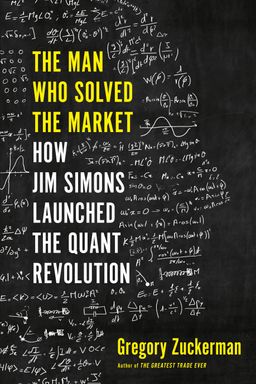
How can mathematics decipher a world as messy and human as financial markets? In The Man Who Solved the Market, Gregory Zuckerman tells how Jim Simons—a world-class mathematician and codebreaker—translated his geometric intuition into algorithms that transformed global trading. The argument at the book’s core is that rigorous science, data cleaning, and collaborative culture can outperform the intuition-driven approaches that dominated finance for centuries.
Simons’s story begins far from Wall Street. He’s a prodigy in geometry—his work on minimal manifolds and the Chern–Simons theory earned him one of mathematics’ top prizes. Yet the same curiosity that led him to abstract proofs pushed him to decode market chaos. He learned in Cold War codebreaking that patterns lie beneath noise and that algorithms—not feelings—uncover them. This conviction became Renaissance Technologies’ DNA.
The intellectual evolution: from pure math to empirical science
Simons approached price data the way a mathematician examines a difficult manifold: by finding invariants and building models that can be tested. At the Institute for Defense Analyses (IDA), he and colleagues learned to treat noisy signals as outputs of hidden states—an approach later mirrored in hidden Markov models. This shift let him imagine markets as coded sequences whose regimes could be inferred, not guessed.
(Note: This logic underpins not only quantitative finance but also modern machine learning and speech recognition.) Once he founded Monemetrics in 1978, he applied that logic to data tapes purchased from exchanges. The first models were crude—the infamous Piggy Basket even accidentally over-allocated to potato futures—but they clarified what mattered: data quality, algorithmic discipline, and systemic thinking.
Building culture and hiring minds
Simons realized breakthroughs don’t come from lone geniuses but from the collective cognition of people who think algorithmically. He recruited mathematicians, physicists, linguists, and computer scientists—not bankers—to join Renaissance. People like Lenny Baum, Henry Laufer, Sandor Straus, and later Peter Brown and Bob Mercer built not just models but an ecology that mixed academia’s openness with industry’s speed. Straus’s obsession with collecting and cleaning intraday data transformed possibilities: you can’t see five-minute patterns if you only track daily closes.
This hiring model defied convention. Simons didn’t want traders; he wanted researchers. He learned to manage conflicts—Ax’s volatility, Baum’s stubbornness—and to design incentives so collaboration would thrive. Freedom and shared ownership kept brains engaged, while tight nondisclosure rules prevented leaks. The result was an organization that treated data cleanliness as sacred and creativity as collective property.
The technology arc: data, models, and ‘The Devil’
Renaissance’s genius lay not in one formula but in layering engineering precision onto scientific discovery. They combined kernel methods, stochastic modeling, and inferential statistics with relentless attention to transaction costs—the "Devil" that devours theoretical profits. Laufer and Patterson quantified every slippage to ensure strategies worked in reality, not just in code. This pragmatic stance—treat data engineering, model building, and execution as one unified system—was revolutionary.
(For comparison: When other funds collapsed under friction, Renaissance thrived because of this obsession with implementation.) Medallion’s shift to short-term, high-frequency signals and unified model architecture confirmed that countless small, repeatable edges could compound into extraordinary returns if executed with care.
Setbacks, resilience, and philosophy
Simons’s journey includes turmoil—technical mishaps, personality blowups, broker collapses, and personal tragedy. Each failure forced Renaissance to refine: tighter controls, better data, secure brokers, and procedures for human override. These lessons were crucial when crises hit—LTCM’s implosion, the 2007 quant quake, or internal conflicts. Simons taught that survival is part of success: “Our job is to survive.” Models can fail; discipline must not.
Scale, leverage, and legacy
The later chapters show the firm’s sophistication and peril. Basket options from banks boosted Medallion’s effective leverage, delivering unmatched returns but later drawing IRS scrutiny. Meanwhile, internal culture faced strain—defections, lawsuits, and political controversy from Mercer’s activism jeopardized reputation. Simons responded by redirecting his own influence toward philanthropy—founding Math for America and funding autism research—demonstrating how intellectual success can mature into civic responsibility.
A central takeaway
Simons’s story proves that data and algorithms can decode even the most human systems—but only if embedded in cultures of curiosity, collaboration, and humility. Markets may look random, but pattern-seekers armed with persistence and disciplined empiricism can build machines that approach understanding itself.