
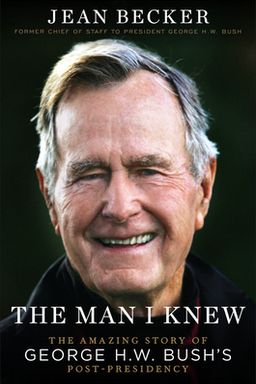
The Man I Knew cover

The Man I Knew

by Jean Becker

The Man I Knew reveals the heartwarming and surprising story of George H. W. Bush''s life after the presidency. Discover how this remarkable leader continued to impact the world through acts of kindness, family legacy, and friendships, demonstrating that true leadership extends far beyond political accomplishments.

From Power to Purpose: The Reinvention of George H. W. Bush

How do you reinvent yourself after leading the most powerful office in the world? In From Power to Purpose, Jean Becker explores George H. W. Bush’s journey from Commander-in-Chief to citizen, revealing a manual on moral leadership, service, and identity renewal. The book unfolds from the silence of January 20, 1993—when executive authority vanished—to the creation of a post-presidential life rooted in family, civic engagement, and humor.

Losing power without losing purpose

When a president becomes a private citizen, daily crises vanish but the existential question looms: who am I now? Becker describes that abrupt transition with domestic clarity—the dropped jar of sauce, tourists at the gate, calling for pizza, grieving a dog more than the election loss. Yet these tender scenes reveal emotional resilience. Bush understood that without identity anchored in purpose, loss easily becomes drift.

His response was pragmatic and inward: he drafted a private memo outlining post-presidential priorities—make money for Barbara’s comfort, build the presidential library and public service school, cherish the “grandchild business,” serve a few causes with genuine follow-through, and stay fit and have fun. This document, Becker notes, became the moral architecture of his next 25 years.

Building a life shaped by service

Bush embraced volunteerism as identity. The memo’s line—“Any definition of a successful life must include serving others”—found tangible form in thousands of letters, charitable visits, and institutional building: Points of Light, C‑Change for cancer collaboration, and the Bush School for Public Service. If power had defined the presidency, service defined the life that followed. (Compare this arc to Jimmy Carter’s transition; both rebranded influence through humanitarian missions rather than political schemes.)

By replacing spectacle with routine—answering mail, chairing boards, fundraising, and mentoring—he enacted a quiet model of sustainable service. Becker’s details—700 letters a day, 43,500 congratulatory messages, 560 public service announcements—illustrate how small acts accumulate into social legacy.

Reinvention through relationships

Bush reoriented his influence outward—toward others rather than backward toward lingering status. He healed through family, humor, and partnerships, especially his unlikely friendship with Bill Clinton, the man who succeeded him. Together they raised hundreds of millions for tsunami and Katrina victims, modeling bipartisan compassion. Becker’s portrait shows how reconciliation, not rivalry, restores dignity after loss.

Equally transformative was his willingness to evolve morally—seen in his quiet acceptance of same-sex marriage and care for staff regardless of background. Such growth grounded his late years in empathy, not doctrine. Leadership here becomes moral education: stay open, admit error, serve freely.

The private becomes profound

Becker grounds the grandeur of statesmanship in domestic truth: pranks with coffee cups, memos about toilet seats, calls to strangers. These, she insists, reveal more about character than ceremonies do. His practical humor made the post-presidential office functional—not as a bureaucracy, but as a family with letters, laughter, and volunteer labor.

When illness and aging came, that same ethos guided him home. The Bushes embraced hospice with courage and orchestrated farewell rituals with precision—choosing Houston over spectacle, giving Barbara permission to pass peacefully, and designing their funerals as civic lessons in dignity. The same disciplined service that shaped his public life prepared him to face decline with grace.

A legacy of character, not office

Across Becker’s chronicle, you learn that true power resides in moral continuity. The book’s thesis is simple but profound: influence lasts when grounded in humility, humor, and generosity. Bush’s reinvention wasn’t about reclaiming titles—it was about reframing leadership as citizenship. He proved that life after power can be deeply purposeful when guided by service, family, and authentic humanity. Becker’s vivid storytelling becomes a compass for anyone facing identity loss or transition—choose purpose, stay kind, laugh often, and work for others.


Running an Office Without a Throne

Jean Becker’s years as chief of staff illuminate a paradox: how a small, volunteer-powered operation managed global demands with presidential precision. The Office of George Bush operated more like a mission-driven startup than a bureaucracy—eight to ten people orchestrating thousands of correspondences, fundraising events, and public appearances. You learn how efficiency and humanity coexist in leadership after the spotlight fades.

Logistics as moral work

Behind ceremonies stood spreadsheets, interns, and tireless volunteers from Texas A&M. Becker documents the avalanche: 149,700 Eagle Scout letters, 491 honorary chair events, and annual mail loads exceeding 70,000 pieces. Managing those details became a moral act—proof that responding to ordinary citizens mattered more than maintaining elite networks. (Note: this differs from many modern foundations that outsource correspondence entirely.)

Protecting dignity and discretion

Becker’s strategy was to preserve Bush’s guiding rule—“Stay out of the way, stay out of the news.” That meant turning down lucrative interviews, setting boundaries for convention appearances, and defusing media storms when the family’s words stirred controversy. The Mandela condolence misfire or Barbara Bush’s candid remarks taught the team the cost of a single error in a hyperconnected world. Communication became an exercise in verification, compassion, and tone.

Crisis management and rapid adaptation

Becker’s “deep-end training” converted ordinary office work into state-level crisis response. She learned budgeting, scheduling heads of state, securing toilet paper for official restrooms (as Rose Zamaria quipped), and defending congressional funding for former presidents’ operations. When Congress threatened to cut budgets, Becker’s quantified defense—half a billion dollars raised for charities—transformed the office from cost center to civic engine.

Her lesson applies universally: record your impact, value small results, and prove that lean teams can deliver immense social return. The Bush office became a case study in scaling purpose beyond payroll—its strength lay in volunteers’ devotion, humor, and shared sense of meaning.

Human connection beats protocol

Amid deadlines and crises, what persisted was kindness. Calls to prisoners, widows, and hospitalized strangers became rituals of empathy. Bush’s ethic—“Call people when they’re down”—instructs every leader to value personal outreach over press releases. Even mistaken calls created joy; a misdial to a hospital patient turned into a story she cherished for life. Becker shows that leadership at any level starts with responsiveness and humility.

By blending operational precision with compassion, Becker’s portrayal of the office teaches you to build organizations that are lean, deliberate, and human—where excellence is measured not by scale but by sincerity.


Family, Legacy, and Moral Growth

At its core, George H. W. Bush’s post‑presidential journey is a family story. Becker shows how home, humor, and humility became his anchors when the public stage dimmed. His relationships—spanning children, grandchildren, and fellow presidents—reveal a blueprint for legacy built not on inheritance but on influence through love and example.

Family as recovery

The pain of the 1992 defeat was soothed by watching George W. and Jeb pursue governorships. Their simultaneous campaigns created family pride and stress in equal measure. When George W. won and Jeb lost, Bush senior felt both triumph and heartbreak, locking himself in his office to grieve privately. Becker makes clear that public families feel political results as emotional weather.

Defining legacy through restraint and support

Bush’s approach to his sons’ presidencies embodied humility: avoid overshadowing, offer counsel privately, rejoice publicly. The nickname system—“41” and “43”—became both humorous and essential for clarity in press coverage. In letters and cufflink gifts, Bush advised George and Jeb to define themselves rather than emulate him. Legacy meant yielding space, not capturing credit.

Moral evolution and empathy

Over decades, Bush’s moral vision widened. Becker traces his change on LGBTQ inclusion from confusion to affirmation—culminating in his attendance at a same-sex wedding and his gentle declaration: “People have a right to be happy.” Such evolution was relational, born of listening to staff and friends, not politics. For you, that’s the heart of growth: let life teach conscience.

The family philosophy of service

Walker’s Point, their Maine compound, embodied their creed: family first, hospitality always. Summers packed 40 relatives into bunk rooms; rituals like rubbing a bust for luck and boat naming contests fostered intergenerational connection. Becker shows that domestic chaos nurtured character—the Bushes built moral resilience in laughter, letters, and traditions. Family became Bush’s answer when George Plimpton asked how he endured loss: “Family.”

For any leader or parent, this posture holds: create belonging before ambition, encourage independence, and recognize legacy as something you let others carry forward.


Service Beyond Office: The Global Citizen

If power ends at the White House gate, influence does not. Becker’s accounts of George H. W. Bush’s global diplomacy and civic partnerships reveal a model of leadership that transcends election cycles. He mastered the art of being useful without being official—what Becker calls “statesmanship without a portfolio.”

Volunteering as foreign policy

Bush transformed his presidential rhetoric—“a thousand points of light”—into a world network of volunteer energy. Points of Light and its offshoots mobilized citizens toward community activism, disaster response, and education. Through actions like sweeping Philadelphia lots or reading to hospitalized children, he proved service was not symbolic; it was practical citizenship. (Note: This echoes Robert Putnam’s emphasis on social capital in Bowling Alone.)

Presidents in partnership

The Bush–Clinton collaboration became a signature of civic unity. Their work after the 2004 tsunami and Hurricane Katrina married divergent styles: Bush’s strategic focus on infrastructure with Clinton’s grassroots engagement. Together they raised over $130 million for relief and reshaped public faith in bipartisan action. Their empathy converted rivalry into friendship—a powerful lesson in reconciliation.

Global respect and institutional legacy

International honors—knighthood from Queen Elizabeth, medals from Kuwait and Germany, visits to capitals and funerals—demonstrate sustained admiration for his quiet diplomacy. Naming landmarks like the George Bush Airport and USS George H. W. Bush carrier anchored that esteem in public memory. Becker emphasizes that such honors are platforms for service continuation, not mere commemoration.

Listening as diplomacy

Bush’s foreign trips—often risky, as when a car bomb was found near his route in Kuwait—showed that humility amplifies influence. By listening, traveling, and thanking allies, he modeled a diplomacy of respect rather than assertion. Becker’s narrative teaches that a post-leadership role done right extends credibility globally because it prioritizes people over politics.

Through these initiatives, Bush carved a global citizenship that fused empathy and pragmatism—a reminder that meaningful international engagement begins with local service and personal humility.


Humor, Humanity, and Resilience

Jean Becker’s portrayal sparkles with levity: prank memos, coffee‑cup complaints, and playful surprises at Walker’s Point. Humor threads through the Bush years as both relief and leadership tool. Becker insists that laughter was not superficial; it kept a demanding team sane and made humanity visible in power’s shadow.

Humor as management style

President Bush’s faux‑formal memos—on dirty coffee mugs or misaligned toilet seats—turned petty annoyances into community in‑jokes. Instead of reprimands, humor delivered respect. Staff learned that laughter could replace command and defuse stress, proving that joyful culture sustains long-term teams better than hierarchy can.

Playfulness as authenticity

Light-hearted acts—inviting Taylor Swift to lunch, teasing Dana Carvey, hiding “fart essays” from old files—frame a universal truth: serious leaders need not take themselves seriously. Becker’s anecdotes mirror Lincoln’s famous use of jokes for morale during war; humor humanizes authority. In Bush’s world, even failure invited self‑mockery—a parachute jump revisiting wartime fear turned into symbolic courage tempered by play.

Joy as resilience

As illness advanced, humor persisted. Becker recounts Bush telling jokes from a wheelchair, signing autographs between oxygen breaks, and staging birthday parachute jumps despite Parkinson’s. These acts, both comic and brave, reframed fragility as participation in life rather than withdrawal from it.

You learn to see humor not as distraction but as endurance strategy. Becker’s insight is timeless: laughing together is how teams, families, and leaders survive grief and uncertainty with grace.


Grace in Aging and Farewell

The final chapters of Becker’s account transform logistical mastery into moral guidance on aging. From hip surgeries to hospice, she chronicles a progression marked by acceptance and preparedness. Her story of the Bushes’ final years teaches how leadership extends even into how one dies—with clarity, patience, and gratitude.

Health challenges as leadership tests

Hip and back surgeries, Parkinson’s, and a broken neck forced incremental surrender. Becker coordinated care through veterans like Evan Sisley, turning medical work into companionship. Leaders decline differently when their teams embody trust and shared purpose—Becker’s caregiving network proved that emotional intelligence matters as much as medical skill.

Hospice and permission

When Barbara entered hospice, doctors advised George to give verbal “permission to go”—one of Becker’s most poignant moments. That act of release encapsulates their lifelong ethos: service through love, not control. It’s a lesson in letting go with grace, equally relevant to leadership transitions and end-of-life care.

Planning the last ceremony

The Bush funerals—spanning multiple cities and thousands of attendees—were operations of compassion and precision. Becker’s anecdotes about hotel blackouts and Boy Scouts filling empty pews show that even closure demands teamwork. Bush’s final words, “Let’s go home to Houston,” signified peace earned by preparation.

Through Becker’s perspective, aging becomes an act of stewardship. You confront frailty not by resisting it but by organizing life’s final chapter with intentionality and tenderness. Bush’s farewell reminds you that leadership’s last metric is how calmly and kindly one exits the stage.

Dig Deeper

Get personalized prompts to apply these lessons to your life and deepen your understanding.

Go Deeper

Get the Full Experience

Download Insight Books for AI-powered reflections, quizzes, and more.