
Idea 1
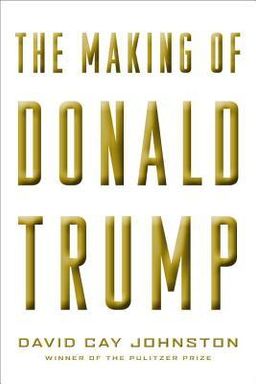
The Making of Donald Trump: Power, Deception, and American Myth
What happens when power, ego, and media manipulation collide in a single person? In The Making of Donald Trump, Pulitzer Prize–winning journalist David Cay Johnston invites you into the decades-long story of a man who mastered the rules of fame, wealth, and intimidation—then broke them to his advantage. Rather than offering partisan attacks, Johnston reveals through investigation how Donald Trump crafted his myth of success, often through deception, litigation, and connections with corrupt figures. Trump’s career, Johnston argues, embodies not just one man’s ambition but a modern American fascination with wealth, celebrity, and ruthless self-promotion.
Johnston contends that Trump’s rise wasn’t luck or genius—it was persistence in exploiting loopholes, laws, and social insecurities. He portrays Trump as a master of the art of manipulation: a businessman who calls himself self-made despite being buoyed by family wealth, government favors, and partnerships with mob-controlled firms. To Johnston, Trump is less an anomaly than a mirror for American culture—a society that rewards spectacle over substance, branding over competence. The book unfolds chronologically, building a portrait of inherited privilege reshaped into a persona of crude charisma and relentless aggression.
A Legacy of Power and Lawlessness
Johnston begins with Trump’s ancestors, tracing a family pattern of opportunism and ethical flexibility from Friedrich Drumpf’s bordellos in the Klondike to Fred Trump’s shady dealings with government housing programs. This legacy of bending rules, Johnston explains, set the tone for Donald’s worldview: that the only real crime is getting caught. From a young age, Trump learned that social power and wealth insulated him from consequences—a theme Johnston returns to repeatedly when recounting his tax evasions, business frauds, and later political tactics.
Money as a Measure of Worth
Trump’s obsession with wealth permeates every page. Johnston reveals that Trump has used wildly fluctuating net worth claims—often tied to his feelings rather than facts—to project power. The author exposes how Trump fabricated the illusion of success through real estate deals backed by debt, government bailouts, and branding arrangements. Trump’s empire, he writes, thrives on pretending growth where losses multiply—a dynamic resembling corporate “image-making” explored by journalists such as Jane Mayer in Dark Money.
The Professor of Public Mythmaking
What Johnston finds most fascinating isn’t Trump’s business acumen but his command of the media. Decades before Twitter, Trump used planted stories, fabricated alter egos like “John Barron” and “John Miller,” and lawsuits to control his narrative. Whether boasting about his wealth or feuding with celebrities, he learned that outrage guarantees attention. Johnston likens this mastery of modern publicity to the showmanship of P.T. Barnum—where the spectacle itself is the product. Yet behind this theatricality lies a disturbing lesson: in America’s media economy, attention can eclipse accountability.
The Moral of the Investigation
Johnston’s goal isn’t just to expose wrongdoing but to ask why it worked. He challenges readers to question how illusions of success shape American ambition. Trump’s story, the author suggests, is a cautionary tale about what happens when self-interest and vengeance replace civic duty. His motto, “Always get even,” turns business and politics into warfare, making compromise seem like weakness. Through decades of investigation—including tax cases, casino scandals, and familial feuds—Johnston pieces together a portrait of a man who learned to manipulate law, media, and emotion as instruments of personal gain. And by extension, he asks us to reflect on ourselves: why do we admire those who break the rules as long as they look confident doing it?
Across the book’s 24 chapters, Johnston pairs factual detail with narrative momentum, unveiling Trump’s complicity with mobsters, tax evasion, real estate deceit, Trump University fraud, and family vendettas. Ultimately, The Making of Donald Trump is less about one person than about the America that enabled him—a nation dazzled by gold-plated ambition and hypnotized by spectacle. It reminds you that every myth of success hides a system of manipulation underneath—and that seeing the machinery is the first step to resisting its pull.