
Idea 1
Great Managers Are Made, Not Born
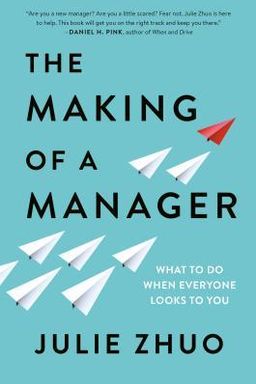
Have you ever found yourself promoted into a leadership role and suddenly felt you were bluffing your way through it? In The Making of a Manager, Julie Zhuo takes readers into that very moment—the dizzying transition from doing great work alone to being responsible for a team’s success. Zhuo argues that management isn’t an innate gift bestowed on the lucky few; it’s a craft that can be learned, honed, and practiced. Great managers, she insists, are made, not born—and anyone curious enough to learn can become one.
Drawing from her decade at Facebook—starting as an intern and rising to Vice President of Product Design—Zhuo distills management into its essence: a manager’s job is to get great outcomes from a team of people working together. That deceptively simple idea underpins everything else in the book. Whether your domain is design, education, sales, or engineering, your role is to elevate your team’s collective output rather than to crank out more of your own. The art is in magnifying others’ impact through clarity of purpose, care for people, and effective processes.
From Individual Contributor to Leader
Zhuo begins by recounting her own unexpected promotion at age twenty-five, when her manager told her, “We need another manager, and you get along with everyone.” Like many first-time leaders, she had no map, only instincts, and began with nervous one-on-ones where former peers gazed skeptically at her new title. Through failures—arriving late to her first meeting, fumbling through giving feedback, and doubting her authority—she learned that management isn’t about control or charisma. It’s about helping others succeed.
(Note: Zhuo’s journey mirrors those chronicled in management classics like Andy Grove’s High Output Management and Daniel Pink’s Drive, where motivation and clarity of purpose outweigh hierarchy.)
The Three Pillars of Management
Zhuo identifies three questions that occupy every manager’s mind: Why are we doing this (purpose)? Who is doing it (people)? And how are we working together (process)? These form the blueprint for effective leadership. The purpose gives meaning; people unlock potential; process ensures coordination. If any pillar collapses—if the team lacks alignment, the right skill mix, or smooth collaboration—performance falters.
Purpose asks: what outcomes define success? For Zhuo, whether designing Facebook’s interface or running an education nonprofit, purpose provides motivation beyond the daily grind. People asks: do we have the talent and relationships for the work at hand? A manager’s time is best spent coaching, hiring, and empowering others—not doing their jobs. Process asks: what systems help us move efficiently? Meetings, planning, and communication are not bureaucratic chores but structures that allow creativity and speed.
Why Management Feels Hard (and Why That’s Okay)
The transition to management can feel overwhelming—a theme Zhuo revisits often. She describes her first years as restless and self-doubting, plagued by “fear, confusion, and am-I-crazy-for-feeling-this?” Yet she argues that discomfort signals growth. Management is inherently messy because it deals with people—diverse, complex, emotionally driven humans—rather than code or design pixels. Unlike a project plan that obeys logic, people demand empathy and adaptation.
Zhuo encourages new managers to embrace imperfection, experiment, and learn through feedback. She herself learned mostly by trial and error—the same way one learns any creative pursuit. The tools she cites, such as Crucial Conversations and How to Win Friends and Influence People, serve as scaffolding, but ultimately experience is the real teacher. What’s important is not avoiding mistakes but reflecting on them to refine your approach.
The Long Arc of Growth
Over time, Zhuo came to see management as a journey, not a destination. Early challenges—learning to give tough feedback, handling conflict, hiring wisely—eventually gave way to larger questions about culture and vision. Her mantra, “The journey is 1% finished,” embodies perpetual learning. Her point is that becoming a better manager is never complete; each success opens new blind spots and opportunities.
The book offers practical tools for every stage: how to diagnose problems (“Is it skill or motivation?”), how to have effective one-on-ones (“Don’t waste them on status updates”), and how to build trust (“If a conversation feels awkward, it’s probably the right one”). But beneath all the tactics lies a moral thread: managing is caring. If you genuinely respect and support your people, you’ll lead not by authority but by trust—a lesson echoed by Simon Sinek’s Leaders Eat Last.
Why This Matters to You
Whether you lead two people or two thousand, Zhuo’s message applies: management is how progress happens in any collective human enterprise. Teams, businesses, schools, and nonprofits all depend on people working well together. And since people aren’t perfectly predictable, management will always be art as much as science. Zhuo’s gift lies in making that art accessible and reassuring. You don’t need to be born with it. You simply need to want to help others achieve great outcomes—and commit yourself to learning what works. As she puts it, “If you care enough to be reading this, you care enough to be a great manager.”