
Idea 1
The Magic of Reality—Science as the True Wonder
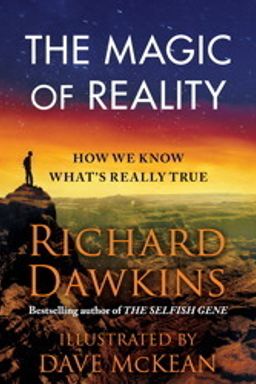
Have you ever wondered whether the world is more magical because of fairy tales or because of the things we can actually prove? In The Magic of Reality, Richard Dawkins shows that the deepest, most genuine magic isn't found in supernatural stories at all—it lives in the astonishing truths uncovered by science. Dawkins argues that myths and legends once gave humans a way to understand the world, but today, our most thrilling mysteries find real answers through evidence, experiment, and imagination grounded in reality.
He contends that what people once explained with gods, spirits, and miracles—the rising of the sun, the birth of species, and the changing of the seasons—science now explains far more beautifully. This is not an attack on imagination, but an invitation to use it the right way: to see poetry in truth. Dawkins introduces you to the vivid detective story that connects the wonder of ancient curiosity with the breathtaking detail of modern discovery.
Myths, Magic, and the Human Search for Meaning
Human beings have always tried to explain the world in creative ways. Early civilizations saw sunsets as heavenly feasts, rainbows as divine bridges, and earthquakes as battles of gods. Those stories were colorful but wrong. Dawkins opens with tales from Egyptians, Vikings, and Aboriginal Australians to show that before science, myths were our best attempt at explanation. He then distinguishes three kinds of magic: supernatural magic (believing in miracles and spells), stage magic (the artful trickery of illusion), and poetic magic (the deep emotional wonder we feel when encountering reality itself). The last form, he insists, is the only kind worth holding onto—because it celebrates truth.
Truth Through Evidence and Imagination
Dawkins rewrites the story of progress: the way we moved from myth to knowledge. Reality, he explains, is what truly exists—rocks and galaxies, atoms and organisms—and we know it through direct sensory evidence, extensions of our senses (like telescopes and microscopes), and models tested by science. These models are acts of disciplined imagination. Scientists ask, “If this model were real, what should I observe?” and then check whether those predictions come true. The beauty of science lies in its cycle of questioning, testing, refining, and occasionally being surprised—a process that makes our understanding of the world not fixed by authority but alive through discovery.
The Awe That Replaces Superstition
The book’s title captures its message: reality itself is magical. From the swirling storms of Jupiter to the elegant structure of DNA, Dawkins shows how natural laws—once thought dull or mechanical—are actually filled with awe-inspiring complexity. When we explore the origins of life, the movement of the stars, or the formation of rainbows, we find “poetic magic” that outshines any myth. What makes this magic superior is that it can be tested and shared. Everyone can experience it. When Newton split light with a prism or Darwin saw the gradual unfolding of species, that was real magic captured by human minds.
Why It Matters
The stakes are high for Dawkins: our understanding of nature shapes how we think, feel, and act. Accepting myth as literal truth limits curiosity; embracing science expands it. He invites readers young and old to learn not only how the world works but why understanding makes life richer. You don’t lose wonder when you abandon superstition—you gain a new, permanent form of it, one that grows with every discovery. Dawkins calls this “the magic of reality,” and he wants you to see it every time you look at the stars, at the beating of your own heart, or at the endless stories told by fossils, atoms, and genes. It’s in these things, not in miracles or myths, that the world’s true enchantment lives.