
Idea 1
The New Biology of Luck
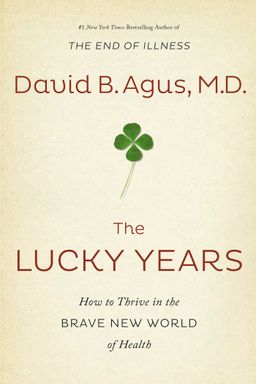
What if your health results were not just about fate or even genes—but about *how you use your biology in time*? In The Lucky Years, Dr. David Agus argues that luck is shifting from chance to choice. We now live in an era when you can measure, adjust, and steer your biology using data, science, and habits that were unthinkable a generation ago. Luck favors those who participate in the science of their own lives.
From passive patient to active participant
Agus’s central argument is that medicine has entered a participatory era. Instead of waiting for disease to strike, you can collect your own data—small streams from wearables or logs—and combine them with medical knowledge and massive datasets to predict and prevent disease. The old model of doctor’s-office snapshots is yielding to a continuous, contextual model of care. That shift—empowering you to act—is what makes this the “lucky” generation.
He weaves together stories from breakthroughs across genetics, stem-cell biology, immunotherapy, the microbiome, and data science. Each field shows how context and timing personalize health in ways that used to seem impossible. For Agus, these converging sciences no longer sit in silos—they empower a new kind of health intelligence.
Genes tell a story; context writes the plot
Precision medicine opened the door to tailoring treatments at the genetic level. Yet Agus emphasizes that DNA is only one layer of your health. Behavior, environment, and timing modulate what those genes express. A genome sequence may indicate risk, but whether that risk becomes reality depends on sleep, diet, infection, microbiome composition, and lifestyle. (Note: This argument echoes the principles of epigenetics, the “software” that interprets your “hardware.”)
Instead of treating genes as destiny, Agus urges you to see sequencing as guidance—useful but incomplete. Precision medicine works when you combine genetic data with context: tumor sequencing that informs treatment timing, for instance, or CRISPR’s long-term promise paired with ethical discipline to avoid heritable harm.
Your body as a dynamic ecosystem
Another revolution emerges from the microbiome—the trillions of microbes that share your body. Research shows that gut bacteria communicate with your immune and nervous systems, influencing metabolism and mood. What you eat, and how consistently you eat it, changes those microbial partners. Processed foods, artificial sweeteners, and unnecessary antibiotics disrupt them; diverse, natural diets reinforce them. Agus calls this a reminder that you are an ecosystem, not a machine. (Élie Metchnikoff saw this early in the 1900s; today’s sequencing only confirms it.)
This insight connects daily behaviors with high-tech medicine: if your microbes help modulate inflammation or even affect how you metabolize medications, then lifestyle becomes as powerful as any prescription.
Inflammation: the quiet destroyer
Through every chapter runs a throughline—chronic inflammation drives aging and disease. From cancer and heart disease to neurodegeneration, low-grade inflammation erodes function slowly. Agus shows how old drugs such as aspirin and statins provide widespread benefit not just by thinning blood or lowering cholesterol, but by calming inflammatory pathways. Combined with anti-inflammatory behaviors—adequate sleep, regular exercise, nutrient-dense food, and microbiome stability—the result is biological resilience. In these interventions, modern and traditional medicine converge.
Cellular rejuvenation: young blood and stem-cell reactivation
Perhaps the most cinematic discoveries are in rejuvenation science. Parabiosis experiments—where young and old animals share circulation—show that young plasma contains molecular signals that reactivate stem cells and reverse aging markers. Human trials now test plasma-based therapies for dementia and cancer. Agus urges excitement with caution: translation to safe, scalable therapies demands rigorous oversight to prevent exploitation or immune risks. Still, the lesson is profound—aging may be modifiable through biochemical tuning rather than invasive reconstruction.
Data as the new stethoscope
Technology transforms the doctor visit from reactive to predictive. Agus envisions integrating your “small data” (sleep, steps, heart-rate variability, glucose, mood logs) with population-scale “Big Data” to generate early warnings. AI systems like IBM’s Watson or tests such as VirScan already link personal samples to massive biomedical libraries. The challenge is governance: who owns and protects that data? Agus calls for nonprofit data custody and citizen awareness to ensure that the benefits of data-driven care remain fair and private.
Redefining real prevention
Agus’s pragmatic ethos culminates in self-measurement and behavior. The Two-Week Challenge invites you to record sleep, meals, exercise, mood, and vitals. Over time, patterns become insight. Likewise, respecting timing—consistent wake and meal windows, aligned medication schedules—helps regulate hormones and metabolism. Coupled with movement (breaking up sitting, building strength) and mindful nutrition (favoring variety, whole foods, moderation), these habits translate molecular science into daily practice. The habits are simple; their payoff compounds.
A morally guided revolution
Agus ends with ethics. The same tools that rewrite cancer biology or rejuvenate tissue can also be misused—through black markets, counterfeit therapies, or reckless genetic editing. He calls for collective stewardship: stronger regulation, public education, and awareness of the tradeoffs between privacy and progress. Luck should not belong only to the rich or the reckless; it should be distributed through fairness, transparency, and shared responsibility.
Core Message
In the new biomedical era, the “lucky years” are not about chance but about informed engagement. If you measure, adapt, and contextualize your biology—guided by science and ethics—you can extend not just life span but health span. Your data, your routines, and your choices make you an active participant in the biology of luck.