
Idea 1
Small Things Often: The Science of Love in Action
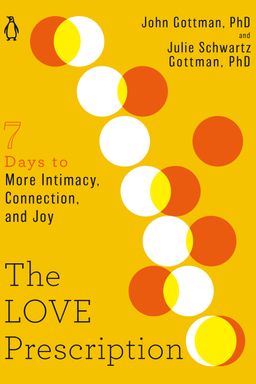
Have you ever wondered if lasting love can truly be built—or if it’s just something that happens, mysteriously, to lucky people? In The Love Prescription: Seven Days to More Intimacy, Connection, and Joy, world-renowned relationship researchers Drs. John and Julie Gottman argue that long-term love is not about grand gestures or flawless compatibility. Instead, it’s about tiny, consistent actions—small things done often—that create emotional connection, trust, and joy. Their decades of data in the famous “Love Lab” proves that intimacy and stability come from the everyday details of how partners respond to each other’s bids for attention and care.
The Gottmans, known as the “Einsteins of Love,” base this book on 50 years of research involving thousands of couples across every demographic. Their message: you don’t fix or fortify a relationship by tackling big conflicts first. You do it by choosing daily habits of connection—simple, practical steps that anyone can implement in just a week. The book’s seven-day plan covers behaviors like making contact, asking deep questions, expressing gratitude, giving compliments, asking for what you need, reaching out through touch, and declaring date nights.
Love as Daily Practice
One of their most radical claims is that love is not a feeling but a practice. Feelings ebb and flow, but habits can sustain connection through any season of life. The Gottmans observed couples over decades and found that long-term happiness depends on how partners interact in the ordinary moments—whether they “turn toward” or “turn away” when the other reaches out. Love thrives in micro-interactions: smiles, questions, touches, and thank-yous that continually reinforce intimacy.
These findings contradict romantic myths from movies and literature. Instead of waiting for passion or fate, couples must nurture love intentionally. Data revealed that even distressed couples can completely shift their dynamic by adopting certain small, consistent habits—because every positive interaction deposits “emotional money in the bank.” Over time, these deposits shape resilience and trust.
From Love Lab to Life Lessons
When John Gottman founded the Love Lab at the University of Washington, he applied mathematical modeling to predict relationship outcomes with over 90% accuracy. The results stunned the field: what predicted divorce or stability was not the scale of conflict, but everyday patterns of engagement. Couples who turned toward each other’s bids for connection—small remarks, sighs, touches—86% of the time stayed happily together. Those who turned toward only 33% of the time were likely to divorce. This insight reframed love as interactional rather than emotional.
The Love Prescription compresses decades of longitudinal research into a seven-day habit-reset that distills the Gottmans’ most effective interventions. For example, one simple exercise—asking each morning, “Is there anything you need from me today?”—builds trust, empathy, and collaboration. Another—saying thank you for something routine—rewires your brain to scan for what’s right, not what’s wrong. (Neuroscientist Richard Davidson’s work on mindfulness supports this, showing that focusing on positivity activates left frontal brain regions associated with approach, compassion, and joy.)
The Transformative Shift: From Grand Gestures to Micro-Moments
According to the Gottmans, couples often mistakenly think happiness lies in solving big problems—money, parenting, sex, career—before attending to small daily moments. But true transformation begins with retraining attention. Just as a river changes its course from a single rock, small positive actions shift the emotional climate of a relationship. They emphasize that successful couples don’t fight less—they fight better, using humor and repair attempts fueled by the emotional bank account of positive moments.
The result is a deeply hopeful message: even relationships that seem depleted or damaged can rebloom with consistent practice. The Gottmans have seen couples on the brink of divorce turn around simply by applying “small things often.” It’s accessible science for everyone—from new couples to long-married partners—distilled into a practical guide that balances data with warmth and storytelling.
Why This Matters
In an era when relationships are strained by busyness, technology, and stress, this book offers clarity: intimacy isn’t lost because love fades—it fades because we stop practicing connection. The Love Prescription’s micro-habits act as antidotes to what the authors call the Four Horsemen of relationship apocalypse: criticism, defensiveness, contempt, and stonewalling. When you replace these with gratitude, curiosity, touch, and trust, you inoculate your marriage against disconnection.
“Love is all about the small stuff. And it’s time to sweat that small stuff,” the Gottmans remind us. In other words, everyday kindness and presence—not grand romance—create lasting intimacy.
By the end of this summary, you’ll see how seven days of small changes can reset a lifetime of patterns: how to make contact with empathy, ask big questions to build love maps, express gratitude to dissolve contempt, admire each other genuinely, ask for needs without criticism, reach out through touch, and rediscover play through date nights. These daily doses of connection form the prescription for enduring love—and a reminder that, scientifically speaking, romance is measurable, teachable, and infinitely renewable.