
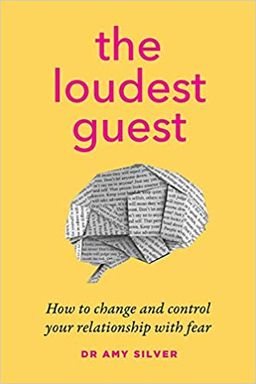
The Loudest Guest cover

The Loudest Guest

by Amy Silver

The Loudest Guest is a transformative guide that provides a six-step framework to understand and control fear. It teaches readers to recognize fear''s presence, evaluate its messages, and use it as a tool for personal growth, ultimately empowering them to make courageous decisions and lead more fulfilling lives.

Transformation, Trust, and the Wild Within

Have you ever wondered how an ordinary life can unravel overnight, leading you into a world of danger, fascination, and supernatural transformation? Amy Star’s The Bear’s House Guest draws you into just such an experience through the eyes of Elizabeth Marston, a young woman whose predictable, solitary existence is shattered by the discovery that shapeshifters—bears and wolves locked in ancient territorial battles—are not just fairy tales but living, breathing creatures right in her backyard.

At its core, this paranormal romance is about trust, love, and rediscovering one’s courage in the midst of chaos. Star contends that transformation—both literal and emotional—is the ultimate test of human adaptability. Through the bond between Elizabeth and Ambrose Baxter, a bear shifter who rescues her, the novel explores how intimacy, vulnerability, and moral choices emerge in situations that bend the boundaries between human and animal instinct.

The Call: Ordinary Beginnings Meet Extraordinary Forces

Elizabeth begins as an archetype of independence. She bought and repaired her crumbling Victorian house through sheer determination, representing modern self-reliance—an echo of protagonists like Bella from Twilight or Mercy from Patricia Briggs’s Mercy Thompson series. But Amy Star quickly disrupts that stability, using the moment when Elizabeth stumbles upon a battle between immense wolves and bears to launch a metamorphosis story. Her once-normal world implodes, forcing her to redefine survival and belonging beyond her human limits.

This motif—where ordinary women encounter hidden supernatural realms—anchors the Simply Shifters series. Yet Star’s version adds tenderness and quieter realism: Elizabeth is not a destined warrior or a chosen one; she is simply courageous in small, everyday ways. That relatability makes her entrance into the shifter world feel earned rather than contrived.

Ambrose Baxter: Protector, Paradox, and Passion

When Ambrose saves Elizabeth from the frenzy, he embodies both safety and danger. His duality—gentle billionaire in human form, massive grizzly in his other—becomes a metaphor for restrained power and moral control. Unlike more domineering heroes (compare to Christine Feehan’s Carpathians or Nalini Singh’s Psy-Changeling alphas), Ambrose respects boundaries. He offers protection without claiming territorial ownership, reflecting Star’s recurring theme that love should be grounded in mutual choice rather than predation.

At his luxurious woodland estate, Ambrose introduces Elizabeth to the reality of shifters: people who balance civility against instincts. His honesty and empathy—paired with his wealth and allure—challenge Elizabeth’s defenses. Their growing relationship raises questions about class, biology, and emotional hunger: Can comfort coexist with primal passion? Can attraction survive fear?

Fear and the Ethics of Humanity

Star uses conflict with the wolves to explore a philosophical question: What does it mean to remain human when instinct threatens to consume reason? Ambrose and his allies like Yusuke (a feline shifter) and Mara (a canine) illustrate that civilization among shifters is fragile—a balance of power and loyalty. Meanwhile, Elizabeth acts as a moral compass, reminding Ambrose that empathy and restraint are worth preserving even among predators.

Star’s central argument is clear: love that spans worlds—human and supernatural—must be built on consent and compassion, not dominance. True transformation, whether magical or emotional, demands vulnerability and trust.

The Journey: From Isolation to Intimacy

As Elizabeth’s relationship deepens, she faces escalating threats: Maxwell, a feral wolf whose obsession with her turns deadly, and the moral tension of living within a world ruled by hidden hierarchies. The story’s rhythm alternates between danger, discovery, and erotic tenderness. In these moments, Star’s prose emphasizes sensory vulnerability—sight, scent, and touch—to blur the lines between beast and lover, fear and longing.

Her connection with Ambrose resurrects her capacity to trust. Interestingly, Elizabeth is never merely a damsel. She challenges Ambrose’s wealth-tinged detachment and insists on equality—seen when she demands to pay for her clothes herself and when she questions moral implications of shifters hiding from humans. Star thus crafts a heroine who embodies quiet strength and emotional intelligence rather than brute power.

Resolution and Renewal

The book concludes with catharsis. Maxwell kidnaps Elizabeth, sparking a climactic rescue by Ambrose and his allies. The violent confrontation allows Elizabeth to internalize what courage means beyond survival—it means choosing peace. The ordeal clarifies Ambrose’s moral position and confirms that Elizabeth’s intuition was right to trust him. They end as partners forged through fear, passion, and truth.

Ultimately, The Bear’s House Guest argues that transformation—whether turning into a bear or discovering one’s voice—is a journey through chaos toward balance. The novel reminds you that vulnerability and strength coexist. In trusting others after trauma, and in reconciling the wild within, you reclaim the power of connection—a lesson that echoes far beyond paranormal romance.


Elizabeth Marston’s Arc of Self-Reliance

Elizabeth’s evolution stands as a model of human resilience. From her first introduction, she symbolizes independence—buying her decrepit Victorian home at sixteen and repairing it over years demonstrates her deep desire for autonomy. Amy Star uses this backstory not just as character detail but as commentary on emotional survival: when life hardens you early, self-reliance becomes armor.

The House: Symbol of Identity and Safety

Elizabeth’s home is more than a setting; it’s a metaphor for her emotional state. Its renovation mirrors healing from a fractured childhood. When the shifter war ravages her yard, it feels personal—like reality upending the sanctuary she built. Her forced displacement to Ambrose’s mansion reflects how trauma can suddenly force you to redefine what safety means.

(Comparable to Sarah J. Maas’s heroines in A Court of Thorns and Roses, Star repositions domestic space as a stage for recovery and rebirth.)

Survival and Adaptation

When Elizabeth encounters supernatural violence, her reaction—shock followed by composure—illustrates pragmatic courage. She does not faint or rely solely on rescue; instead, she processes fear rationally. Her decision to follow the bear into the woods stems from audacious pragmatism: faced with chaos, she acts instead of freezing.

Star’s detailed internal monologue displays the psychology of adapting to sudden change. Elizabeth’s survival instinct carries her into Ambrose’s world, and her curiosity evolves from anxiety into fascination. Her resilience empowers her to question the ethics of shifters rather than merely admire them.

The Shift from Solitude to Connection

Over time, Elizabeth releases solitude’s grip. Initially distrustful, she gradually embraces community with Ambrose, Mara, and Yusuke. Each represents different facets of trust: Ambrose as protector, Yusuke as humor and levity, Mara as empathy and mentorship. By the final chapters, Elizabeth’s autonomy transforms from isolation into interdependence—a mature evolution of independence that no longer rejects intimacy.

Through Elizabeth, Star teaches that strength need not mean being alone. True resilience allows vulnerability, letting others stand beside you when your home—literal or emotional—crumbles.

Her arc ultimately reconciles autonomy with love, suggesting that independence enriched by trust is far sturdier than independence defended by loneliness.


Ambrose Baxter’s Moral Duality

Ambrose Baxter transforms the trope of the alpha shifter into an exploration of decency and restraint. His dual nature—a grizzly bear and a refined businessman—embodies Star’s theme: power must exist alongside compassion. Ambrose’s wealth and strength might have made him domineering, but instead, he becomes the story’s ethical anchor.

Gentle Strength

Unlike the typical possessive heroes seen in paranormal romance, Ambrose’s gentleness serves as rebellion against stereotype. He rescues Elizabeth without objectifying her. He offers her comfort and shelter but also emotional space. For example, when Elizabeth insists on paying for her new clothes herself, Ambrose supports her autonomy rather than overriding it—demonstrating a moral maturity rare in alpha narratives.

Civilization Versus Instinct

Ambrose’s internal conflict between civilized identity and animal instinct mirrors the core philosophical tension of the shifter genre: What separates the beast from the man? He acknowledges that some shifters lose touch with their humanity—wolves and rogue bears driven purely by instinct. His decision to retain empathy redefines strength not as domination but as discipline.

(Star’s moral framing recalls Anne Rice’s vampire ethics: immortality and power without conscience breed corruption.)

A Protector Who Listens

Ambrose’s protection is never authoritarian. He listens to Elizabeth’s fears and choices, offering help without condescension. His conversations about identity—like explaining that being a shifter is genetic, not contagious—build trust through honest vulnerability. His relationship ethic contrasts sharply with Maxwell, who represents obsession and coercion; Ambrose demonstrates love through patience and choice.

Ambrose shows that strength tempered by empathy leads to true leadership—both in supernatural hierarchies and human relationships.

Ultimately, Ambrose’s moral restraint redefines masculinity, presenting kindness as the most radical courage in a world ruled by predatory instinct.


The Ethics of Shifter Society

Amy Star constructs an intricate social world around shifters—bears, wolves, and others—rooted in rules, hierarchies, and moral choices. The bear and wolf war outside Elizabeth’s home is more than spectacle; it symbolizes ancient territorial power struggles and the cost of survival when communities deviate from empathy.

Territory and Nature

Ambrose explains the conflict as a territory dispute: the county belongs to the bears, yet wolves resist their expansion. Each clan clings to primal instincts of land and hierarchy. By placing the fight literally in Elizabeth’s backyard, Star juxtaposes human property law against organic sovereignty. This clash makes humans collateral damage—revealing how power, even supernatural, rarely respects innocents.

Civilization’s Fragile Line

Among shifters, civilization is voluntary. Ambrose differentiates between those who remain self-aware and those who surrender entirely to animal instinct. Maxwell’s descent into ferality becomes tragedy—a cautionary tale that freedom without ethics leads to chaos. In contrast, Ambrose’s network of civilized shifters (Mara and Yusuke included) preserves humanity collectively. They run rescue operations, aid others discovered by non-shifters, and create a hidden moral code akin to humanitarian work.

(This mirrors modern allegorical series like True Blood, where supernatural beings struggle with ethical coexistence among humans.)

Integration and Secrecy

Shifters choose anonymity to preserve peace. Ambrose’s side business—helping shifters relocate when exposed—symbolizes the moral grayness of secrecy: protection versus deception. Elizabeth’s reactions expose the human dilemma: ignorance keeps worlds safe but also perpetuates division. Star uses this secrecy to discuss cultural prejudice—how fear of difference drives hiding and how empathy bridges understanding.

The shifter world acts as allegory for marginalized communities: coexistence demands concealment until compassion outweighs fear.

Through territory, civility, and anonymity, Star transforms supernatural politics into reflections of human ethics—where power, empathy, and secrecy define belonging.


Love and Desire as Transformation

In The Bear’s House Guest, physical intimacy serves as emotional revelation. Amy Star treats sexuality not as mere indulgence but as spiritual integration—a way to merge human tenderness with primal instinct. Each erotic scene mirrors the trust developed between Elizabeth and Ambrose, translating vulnerability into empowerment.

Intimacy and Trust

Elizabeth’s first encounter in bed with Ambrose comes after trauma, and its gentle pacing communicates healing. Rather than conquest, sex functions as rediscovery. Star portrays the act with care and equality; Elizabeth initiates as often as Ambrose. Through this balance, the author reframes eroticism as dialogue—a mutual exploration of power and safety.

Sensual Empowerment

Sex becomes Elizabeth’s agency reclaimed. Her body, formerly a vessel for survival stress, becomes a site of choice. In explicit yet intimate scenes, Star normalizes female pleasure as a declaration of freedom. Post-coital conversation reflects companionship rather than subservience. By giving Elizabeth language—humor, teasing, critique—Star shapes consent as ongoing communication.

Transformation Through Desire

Ambrose’s shapeshifting parallels physical union: both require surrender and self-acceptance. When Elizabeth invites him to show her the woods in his bear form, she symbolically embraces his whole identity. Their eventual intimacy in the treehouse fuses erotic and natural imagery—stars overhead, earth beneath—turning sex into communion between species and souls. Desire thus becomes metamorphosis, blending instinct with love.

Star suggests that genuine desire dismantles fear. When both partners reveal their literal and emotional nakedness, transformation completes.

Love and sensuality are therefore not escape but evolution—the moment when bear and woman, wealth and vulnerability, finally meet as equals.


Conflict, Fear, and the Antagonist Maxwell

Maxwell Beyer, the feral wolf shifter, personifies destructive obsession. His gradual fixation on Elizabeth culminates in abduction and violence, forcing every character’s values to surface. Amy Star uses him to contrast distorted desire—possession without consent—against Ambrose’s ethical love.

Ferality and Lost Humanity

Maxwell’s seven years as a wolf symbolize loss of identity. Like addicts in recovery, his reentry into human form challenges moral coherence. His inability to integrate empathy marks him as cautionary mirror to Ambrose’s restraint. Where Ambrose listens, Maxwell manipulates, revealing how obsession masquerades as affection when divorced from morality.

Fear and Survival

Elizabeth’s kidnapping and confinement in a dark closet dramatize psychological resilience under terror. Instead of panic, she uses pragmatic reasoning—an evolution from her first encounter with supernatural violence. Her calm belief that Ambrose will find her signifies trust as emotional armor. It turns victimhood into endurance.

The Climactic Confrontation

The final battle offers moral closure. Ambrose, Mara, and Yusuke face Maxwell together, unity defeating solitude. Maxwell’s death is brutal but symbolic—instinct void of conscience inevitably self-destructs. Elizabeth’s refusal to revel in revenge underscores Star’s ethical point: courage means surviving without losing humanity.

The monster dies not because he is wild but because he rejects empathy. Star equates cruelty with devolution—when instinct rules, civilization collapses.

Through Maxwell, Star explores obsession’s dark underside and the redemptive strength found in choosing compassion over vengeance.


Community, Friendship, and Modern Belonging

Friendship emerges as the unsung hero within the novel. Yusuke and Mara, Ambrose’s allies, inject humor and compassion into Elizabeth’s journey. Together, they create a surrogate family—a concept common in romance as emotional home-building when blood ties fail.

Mara and Yusuke: Mirrors of Loyalty

Each friend embodies traits Elizabeth must learn. Mara’s pragmatic optimism and canine sensitivity help Elizabeth process trauma. Yusuke’s feline independence and teasing assert boundaries without cruelty. Through text exchanges—like nature-photo “tolls” and light banter—Star illustrates digital companionship as modern connection. Elizabeth learns to interpret friendship not as obligation but chosen family.

Building a Network of Safety

After years of solitude, Elizabeth experiences true community. Ambrose’s home becomes a refuge for shifters who need anonymity, functioning like a social service. Elizabeth’s participation—helping him understand clients’ humanity—reflects emotional labor often unseen but vital. Her empathy transforms this covert enterprise into a moral collective.

Modern Belonging

Star’s blend of text messages, humor, and rescue missions redefines family beyond species. In a digital, fragmented age, communication sustains proximity. Friendship bridges isolation for shifters and humans alike. Through shared experiences of secrecy and care, belonging becomes emotional geography rather than physical address.

Community, not romance alone, saves the heroine. Love may heal the wounds, but friendship keeps them closed.

Star’s depiction of collective support converts paranormal risk into universal metaphor—the need for chosen families when survival depends on trust.


Healing, Courage, and Emotional Maturity

By the novel’s conclusion, Elizabeth embodies emotional maturity—born from trauma, shaped by love. She learns that healing is not a return to normal but a journey toward acceptance. Amy Star guides readers through subtle psychological recovery masked within adventure.

From Survivor to Partner

Starting as an isolated survivor, Elizabeth becomes an active participant in harmony. Her decision to return home after Maxwell’s death signifies closure—choosing to reclaim her space without fear. Unlike the escapist finale of many romances, Star restores Elizabeth’s autonomy. She invites Ambrose to visit rather than relocate—coining love as complement, not confinement.

Maturity Through Empathy

Her forgiving nature after witnessing violence proves inner steadiness. She rejects vengeance, acknowledging pain but preserving compassion. Ambrose’s surprise at her faith in his rescue becomes heartfelt proof of growth: her trust stems not from naivety but resilience.

Symbolic Renewal

Returning home marks rebirth—her dusty house mirrors a psyche in need of airing. As she cleans, opens windows, and reconnects with her environment, Star visualizes emotional detox. The domestic ritual completes full circle: self-reliance paired now with interdependence.

Healing doesn’t erase scars; it teaches living with them openly. Courage lies in reopening windows—literal and emotional—after the storm.

Elizabeth’s journey closes not with conquest, but with peace. Star’s philosophy of recovery emphasizes emotional strength as quiet confidence—the bravery to rebuild a home and heart simultaneously.

Dig Deeper

Get personalized prompts to apply these lessons to your life and deepen your understanding.

Go Deeper

Get the Full Experience

Download Insight Books for AI-powered reflections, quizzes, and more.