
Idea 1
The Paradox and Power of Silence
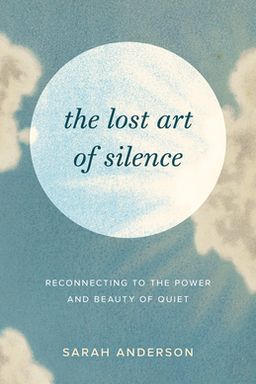
Why does silence, an apparent absence, exert so much influence over attention, meaning, and human experience? In Sarah Anderson’s exploration of silence, you learn that quiet is never simple emptiness—it is a layered presence, both external and internal, that can heal or conceal, reveal or distort. The book moves through history, religion, art, nature, and psychology to show how silence functions as an ethical stance, a spiritual practice, and even a social necessity. You come to see silence as paradoxical: it is simultaneously refuge and confrontation.
Silence as more than absence
Early thinkers like Plato and the medieval writers of Ancrene Riwle viewed silence as moral restraint, while Wittgenstein treated it as the limit where language fails. Anderson takes these roots and expands them: silence can be presence, mercy, discipline, or oppression depending on context. When external noise ceases, internal noise appears—you face the true texture of your thoughts. (Note: this theme echoes Rainer Maria Rilke’s belief that art teaches listening to what words cannot express.)
A universal phenomenon
Anderson shows that silence permeates all human domains—religion, nature, art, and politics. It connects Gandhi’s meditative pause with Vermeer’s still domestic scenes, and a monk’s vow with a moment of public remembrance after war. Across these examples, silence serves a moral and creative function: it deepens perception and heightens empathy. Kierkegaard called it the cure for distraction; Ram Dass, the door to presence. Silence, then, becomes not passive quiet but active engagement with reality.
From outer hush to inner discipline
Personal silence begins as control over external stimulus—turning off devices, going into nature—but matures into inward focus. The author’s experience of Antarctic stillness or snow-muted New York shows that external quiet reveals internal vibration. Thinkers like Aldous Huxley and Erling Kagge prove that deep solitude rewires perception: Kagge’s fifty days alone in Antarctica brought him from sound deprivation to profound awareness. You learn that silence reshapes consciousness through stillness.
The double-edged nature
Silence can also be coercive. Anderson recalls childhood silence about illness as self-protection turned into taboo. Societies enforce silences around trauma—the Holocaust, the abuses of prisoners in solitary confinement—where non-speaking becomes complicity. The ethical call throughout the book is to recognize when silence heals and when it harms. You are asked to cultivate silence deliberately but not to accept silence that suppresses truth. In that balance lies freedom: inner quiet paired with moral voice.
A journey through forms of silence
Anderson structures the book as a journey—from wild landscapes and temples to art galleries and city streets, testing how silence changes meaning in each space. You move from natural quiet (mountain snow, desert solitude) through constructed and aesthetic silences (cathedrals, paintings, music) toward ethical and political silence (war memorials, solitary confinement, and social activism against noise). The cumulative message is that silence, rightly understood, restores connection: to the world, to art, to others, and to yourself.
Why silence matters now
Modern life—dominated by digital noise and public chatter—leaves little room for reflection. Anderson asserts that recovering silence is a civic and spiritual act. It is both public good and private practice: a way to reinhabit attention and resist fragmentation. To learn silence, you adopt disciplines of listening, presence, and moral courage. In short, silence, properly understood, is not retreat but return—a reconnection with meaning beyond words.