
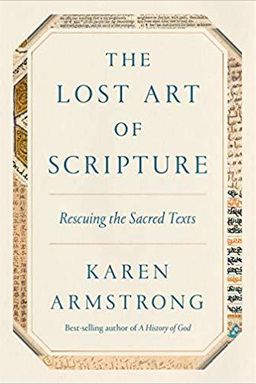
The Lost Art of Scripture cover

The Lost Art of Scripture

by Karen Armstrong

In ''The Lost Art of Scripture,'' Karen Armstrong explores the evolution of sacred texts over five millennia. The book reveals how scriptures have been interpreted to inspire compassion and address societal challenges, and warns against the dangers of literalism.

Scripture as Living Art and Human Transformation

How can you recover the power of sacred texts in an age that reads everything literally? In The Lost Art of Scripture, Karen Armstrong argues that scripture functions as an art designed to change consciousness—not as a repository of factual propositions. You are asked to see scripture as poetry, ritual, and performance that awakens empathy and awe—the capacities of the right hemisphere of the brain. Armstrong demonstrates that from prehistoric cave art to modern liturgies, scripture’s essence lies in its ability to reshape perception.

Mythos and Right‑Brain Reception

Armstrong begins with humanity’s earliest symbols—the Lion Man figurine and Lascaux’s paintings—to show how imagination and metaphor formed sacred expression. Neuroscience helps explain this: the right hemisphere perceives unity and metaphor, while the left analyses and classifies. Reading scripture with your left hemisphere alone—seeking literal meaning—misses its purpose. When scripture is sung, recited or danced, it activates holistic awareness. (Note: she draws on William James and Bede Griffiths to link mystical experience to right-brain empathy.)

Performance and Ritual

Across cultures, scripture originally meant performance. The Rig Veda hymns, the Psalms, the Chinese Odes, and Quranic recitation were chanted, not read silently. Sound and rhythm were themselves transformative technologies. Ritual makes words bodily—through gesture, breath and synchronization—creating communal empathy. To "read" scripture properly, you enact it; you become part of its creative loop. (In this sense, scripture resembles music: inert on the page until voiced.)

Kenosis and the Art of Transformation

The ultimate work of scripture is to enact kenosis—the emptying of the ego for compassion. From the Buddhist renouncer to the Hebrew prophet, from Confucian ritual to Christian liturgy, each tradition prescribes disciplines to reduce self‑centredness and expand empathy. Scripture’s myths, symbols and rites are performative programs for moral transformation. You are changed not by believing doctrines but by practicing empathy and self‑forgetfulness through the scriptural arts.

Canon, Politics, and Human Shaping

Armstrong reminds you that every canon—whether the Pentateuch, Confucian Classics, or Quran—emerges through human editing under social pressure. Scribes, priests and rulers institutionalize sacred texts to preserve communal memory during crisis. Exile, conquest or reform repeatedly ignite editorial activity: Ezra’s Torah readings, Han academies, or Buddhist councils codify fluid oral traditions. Canonization is thus creative memory, not divine dictation, and its authority depends on ongoing interpretation.

Modern Loss and Possible Renewal

Modernity, dominated by left‑brain rationalism, has lost scripture’s transformative art. The Enlightenment’s turn to analysis and the Reformation’s sola scriptura fragmented communal ritual into private proof-texts. Armstrong calls for recovery through ritual reading—chant, meditation, artistic midrash, and compassionate action. Scripture’s goal was always moral practice, not dogma: to cultivate empathy, justice, and imaginative vision. To reclaim its power, you must learn again to read with both hemispheres—reason and reverence united.

Core message

Scripture is humanity’s oldest art of transformation: a collaborative performance that trains perception, dissolves the ego and binds communities in shared compassion. Its recovery requires returning from argument to enactment—from literalism to living practice.


From Sound to Sense: India’s Early Revelation

Armstrong’s journey through India reveals how sacred language began as sonic event rather than logical statement. The Vedas, Brahmanas and Upanishads embody a trajectory from external ritual to internal awakening. In Indian scripture, sound itself is divine: Vac, the Goddess of Speech, is a cosmic force. You are invited to hear rather than analyze.

Vedic Sound and Ritual

The Rig Veda’s hymns were chanted with tonal precision by hereditary priests. Armstrong emphasizes that their sonic structure mattered more than literal meaning. Through mantra and yajna (sacrifice), practitioners enacted bandhus—connections between word, gesture, cosmos and identity. Ritual became a microcosm of creation; the patron symbolically transformed into the victim and gained temporary transcendence. The purpose was experiential—a right‑hemisphere encounter with unity.

The Inward Turn: Upanishadic Insight

The Upanishads convert this external ritual into inward practice. Teachers like Yajnavalkya guide students toward realizing that atman (self) equals Brahman (ultimate reality). Silence and disciplined meditation replace sacrifice. As you recite and breathe, you uncover the inner altar—your consciousness as the locus of the sacred. Armstrong notes that compassion and non‑violence naturally follow when all beings are recognized as extensions of the same cosmic Self.

Continuity and Compassion

This section exemplifies Armstrong’s pattern of continuity: later reformers democratize the insight. Bhakti and Puranic devotion extend dharma to ordinary life—loving Krishna or reciting Purana stories becomes salvific. The spiritual elite of Brahmanic ritual gives way to communal song and storytelling. What remains constant is the performative logic: sound, rhythm and emotion transform awareness beyond ego and distinction.

Central lesson

In India, scripture proves that revelation is not found in argument but in vibration—the chanted syllable that turns body and cosmos into one rhythm of awareness.


Ritual and Harmony: China’s Sacred Pedagogy

In China, Armstrong finds a civilization where scripture functions as social choreography. Ritual (li) and the Mandate of Heaven together teach that moral order and cosmic order are inseparable. The sacred is not detached theology but disciplined action performed repeatedly until it becomes second nature.

Ritual Origins and Statecraft

From Shang oracle bones to Zhou scrolls, writing begins as divinatory record—questions to Heaven etched, cracked and interpreted. When the Zhou overthrow the Shang, they justify it through ethical theology: the Mandate of Heaven rewards justice and removes tyrants. Scripture thus becomes constitutional—tying cosmic legitimacy to ethical conduct.

Confucian Embodiment

Confucius, Mencius and Xunzi refine this into a pedagogy of virtue. The Classic of Rites trains posture, gesture and speech to cultivate ren (benevolence). Empathy is learned through physical precision—bowing, listening, walking correctly. Through ritual you internalize humility; through social music you realize harmony. Armstrong interprets this as the embodiment of right‑brain awareness through discipline: you behave your way into empathy.

Institution and Renewal

Later dynasties canonize these classics to sustain bureaucracy, linking scripture and governance. Yet philosophical renewal persists—in Neo‑Confucian quiet‑sitting, Han evidential learning, and modern ecological spirituality that reclaims reverence for nature. What endures is a ritual logic: conduct transforms consciousness, and scripture serves as manual for embodied ethics.

Practical corollary

Treat ritual as a technology of empathy—by choreographing moral order in your body, you align with the Way, echoing Confucian and Armstrong’s shared view that behavior precedes belief.


Prophecy, Exile, and Israel’s Transformative Story

Armstrong uses Israel as the model for scripture’s birth through crisis. From the covenant traditions of the hill tribes to the prophetic calls for justice and the editorial reworking during exile, Israelite scripture displays how trauma and moral imagination forge sacred narrative.

Prophets and Ethical Revolution

Prophets such as Amos, Hosea, and Isaiah channel kenosis into social action. Amos demands justice for the poor, Hosea dramatizes divine love through his painful marriage, and Isaiah globalizes hope in visions of peace. For Armstrong, prophecy turns religion outward: empathy is political, and worship equals justice. These voices convert ritual into ethical conscience.

Exile and Canon Formation

Babylonian captivity forces a monumental editorial effort. Priests and scribes weave scattered oral tales into a national theology of loss and renewal. Ezekiel’s eating of the scroll symbolizes ingesting pain and transmuting it into teaching. Ezra’s public Torah reading later restores identity as a civic act: hearing the law becomes communal rebirth.

From Temple to Text

After the Temple’s destruction, Judaism pivots from cultic space to rabbinic discourse. The Mishnah and Talmud ensure continuity through argument: revelation proceeds through debate—“It is not in heaven.” Every student joins the process of Sinai. This hermeneutic resilience transforms catastrophe into creativity.

Ethical meaning

Israel illustrates scripture’s adaptive genius: disaster becomes dialogue; justice becomes worship; text becomes temple—the enduring pattern of survival by reinterpretation.


Revelation and Recitation: The Islamic Experience

When you reach Islam, Armstrong emphasizes revelation as sound and experience. Muhammad’s first command—“Recite!”—marks scripture as performance. The Quran, hadith and Sufi traditions continue this oral, transformative mode: you encounter the sacred in sound, community, and memory.

Quran as Event

The Quran’s primary mode is recitation. Its verses evoke awe (huzn) that softens hearts and draws listeners into communal empathy. Caliph Uthman’s codex standardized text but did not erase sonic diversity; oral performance remains central. (Note: Armstrong explains that Western readers miss this by treating the Quran as a book rather than an experience.)

Law, Ethics and Interpretation

Hadith and fiqh later translate revelation into practice. Armstrong highlights reformers who reopen interpretation—Shah Wali Allah, Muhammad Abduh, and Fazlur Rahman—invoking ijtihad to read contextually. Ethical intent, not rigid literalism, defines true fidelity. Women scholars like Amina Wadud and Asma Barlas advance this reform by critiquing patriarchal readings and restoring compassion to law.

Mystical Depth and Sufism

Sufi practices—dhikr, sama and ecstatic poetry—carry revelation inward. Rumi’s Masnawi becomes “Quran in Persian,” a call to see divine presence everywhere. Ibn al‑Arabi insists the Quran is ever‑renewing; each recitation manifests a new divine face. Armstrong presents this as Islam’s art of continuous revelation, where ritual sound merges law and love.

Essential takeaway

To understand the Quran, you must listen, not merely read—revelation unfolds as rhythmic compassion, a living sound that binds community and awakens heart.


From Reform to Resistance: Modern Crises of Scripture

Armstrong’s later chapters trace how modernity fragmented scripture through printing, colonialism and rationalism. What began as devotion turned into ideology. Yet renewal remains possible when ritual and imagination are re‑embraced.

Printing and Protestant Literalism

The Reformation’s sola scriptura made the page the new shrine. Luther and Calvin democratized reading but stripped away communal context. Literalism hardened in reaction to scientific criticism—Darwin and German Higher Criticism triggered counter‑movements of inerrancy and separatism. Fundamentalists built parallel institutions anchored in textual absolutism, echoing similar defensive reformations among Sikhs and Hindus facing colonial pressure.

Colonialism and Sectarian Identity

Imperial classification redefined traditions as fixed "religions" and provoked reformist literalism: Dayananda Saraswati’s Arya Samaj read the Vedas as proto‑science; Sikh and Muslim communities rigidified boundaries under oppression. Armstrong notes how trauma often breeds scriptural defensiveness, turning living texts into symbols of resistance or exclusion.

Reason and Romantic Response

The Enlightenment’s sola ratio subjected scripture to historical criticism, liberating minds but draining ritual power. Nietzsche declared God dead, proposing creative mythology in place of dogma. The Romantics—Blake, Wordsworth, Keats—sought re‑enchantment through art and emotion. Armstrong aligns with them when advocating the recovery of mythos and imagination as the missing dimension of modern life.

Historical insight

When reason dethrones ritual, scripture loses its power to transform. Armstrong invites modern readers to combine critical scholarship with the practiced empathy once cultivated by chant, meditation and art.


Recovering the Sacred Imagination

Armstrong closes with an appeal: to rescue scripture from literalism and secular indifference by reactivating its artistic, ritual and ethical dimensions. Modern humans can still learn to read and live scripturally—with imagination directed toward compassion and justice.

Ritual and Affective Reading

Scripture’s revival depends on embodied attention—chant, liturgical participation and contemplative listening. Such practices awaken awe, the emotion that antidotes egocentrism. Armstrong compares Benedictine chant, Sufi recitation, and Confucian reverence as parallel techniques for expanding empathy. Without ritual, religion devolves into sentimental therapy or ideological warfare.

Ethics and Compassionate Action

All scripture aims at compassion turned outward: Amos demands justice; Paul elevates charity; Buddha teaches loving‑kindness; Confucius instructs ren. Armstrong insists that any scriptural revival must address social wounds—poverty, migration, ecological collapse—by transforming intellect into moral will. Reading becomes ethical practice.

Art as Modern Midrash

Artists like Thomas Mann and David Grossman exemplify “post‑scriptural” creativity—reimagining biblical dramas to confront modern violence and isolation. Their literary midrash continues the ancient art of reinterpretation, merging scholarship and empathy. Art thus becomes scripture’s contemporary twin: the ritual of imagination that restores shared humanity.

Final insight

The future of scripture depends on recovering its function as a ritualized art of transformation—reading not for proof but for practice, and living imagination as moral courage.

Dig Deeper

Get personalized prompts to apply these lessons to your life and deepen your understanding.

Go Deeper

Get the Full Experience

Download Insight Books for AI-powered reflections, quizzes, and more.