
Idea 1
Transforming Organizations from Within
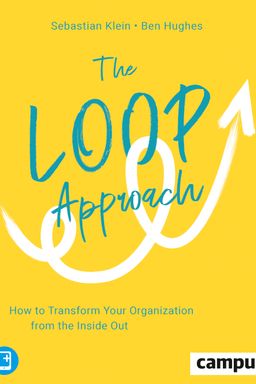
How can you turn a rigid, slow-moving company into an agile, purpose-driven organism that thrives in constant change? In The Loop Approach by Sebastian Klein and Ben Hughes, the authors argue that the future of organizations lies not in top-down restructuring or miracle management techniques, but in helping teams transform themselves from the inside out. The central claim is breathtakingly simple yet radical: true organizational change happens through a continuous, team-based loop of clarity, results, and evolution. This cycle enables people to sense what’s happening around them and respond intelligently—a mindset shift from the old corporate dogma of "predict and control" to the new paradigm of "sense and respond."
The Crisis of the Hierarchy
The authors start with a clear diagnosis of the old model—the pyramid-shaped hierarchy that dominated businesses for centuries. In this model, commands flow downward and compliance flows upward. It worked well in stable environments where predictability was prized. But as the pace of change accelerates, this structure falters. Today’s employees—especially younger generations—are unwilling to spend years waiting for permission to make meaningful contributions. They seek autonomy, purpose, and agility, conditions the old pyramid model stifles. Klein and Hughes compare these legacy companies to rusty tankers unable to navigate the stormy, digital waters of modern markets.
This mismatch has created pressure on organizations to evolve into more flexible, network-like structures. The authors call these next-generation organizations “living organisms” that continuously reshape themselves to meet new conditions. This evolution can’t be imposed from the top—it must emerge from the daily habits and practices of teams.
The Loop Paradigm: Clarity, Results, Evolution
At the heart of the book is the recurring sequence known as the Loop. Each team moves through three phases: Clarity, Results, and Evolution. These aren’t linear steps but an ongoing cycle—a perpetual movement of learning and adapting. In the Clarity phase, teams define why they exist, discover individual strengths, and create transparent roles. Results turns that clarity into effective collaboration and measurable outcomes. Then Evolution transforms the organization again through continuous feedback, conflict resolution, and the ability to reinvent structures when needed. It’s a living framework rather than a static blueprint.
The Loop Approach is based on a set of seven habits of highly effective organizations—frameworks inspired by but distinct from Stephen Covey’s personal development approach. These habits include clear alignment, fully used potential, distributed authority, individual and team effectiveness, high adaptability, and competence in both feedback and conflict management. Together they create what Klein and Hughes call organizational evolution from within.
Transforming Mindsets: Sense and Respond
The authors emphasize that transformation isn’t about introducing shiny new tools—it’s a mindset shift. Traditional organizations think in terms of predict-and-control: leaders construct elaborate plans and force teams to execute them. But modern, effective organizations work under sense-and-respond logic: teams independently sense tensions—defined here as the gap between what is and what could be—and act to resolve them. Every employee becomes an intelligent sensor in a self-organizing network. This change of worldview transforms company culture far more deeply than any superficial reform.
Tools Grounded in Real Practice
Klein and Hughes aren’t just theorists—they’ve tested these ideas in leading European corporations like Audi, Deutsche Bahn, and Telekom. Each success story underscores that corporate agility comes not from massive reorganizations but from empowering individual teams to loop continuously. Borrowing principles from frameworks such as Holacracy, Scrum, Getting Things Done (David Allen), Nonviolent Communication (Marshall Rosenberg), Design Thinking, Positive Psychology, and Systemic Organizational Development, the authors weave together a practical curriculum for teams that want to evolve organically.
Why This Framework Matters Now
What makes the Loop Approach compelling is how it bridges personal development and organizational design. Rather than treating employees as resources to be managed, it positions them as autonomous contributors whose daily interactions drive transformation. For professionals frustrated by bureaucracy, this book offers a roadmap to reshape work from the inside—team by team, habit by habit. (Similar in spirit to Aaron Dignan’s Brave New Work.) It’s both technical and human, laying the foundation for a new generation of adaptive organizations that can learn faster than they plan.
Core Message
You can’t change an organization merely by issuing commands. You change it by cultivating behaviors, habits, and language that empower people to sense tensions, respond intelligently, and evolve together. In essence, The Loop Approach teaches organizations how to teach themselves to change.
By the end, Klein and Hughes invite you to see transformation not as a project but as a living process—an infinite loop where every cycle through clarity, results, and evolution makes your team and organization more intelligent, adaptable, and alive.