
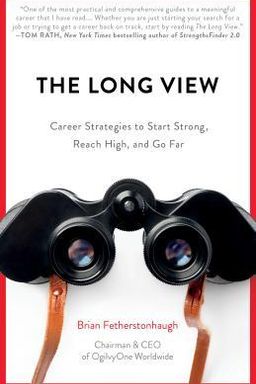
The Long View cover

The Long View

by Brian Fetherstonhaugh

The Long View offers a roadmap to crafting a meaningful and enduring career. By focusing on long-term goals, developing essential skills, and finding balance, readers can achieve both emotional fulfillment and financial success. This guide provides practical strategies for navigating career stages, building networks, and planning for a rewarding professional journey.

Building a Career That Lasts a Lifetime

Have you ever paused to really think about how long your career will last—and whether you’re building it to endure? In The Long View: Career Strategies to Start Strong, Reach High, and Go Far, Brian Fetherstonhaugh argues that most of us radically underestimate the length and complexity of our work lives. We approach our careers as if they’re short sprints toward the next promotion rather than long marathons that can span forty to fifty years. The result? People burn out, stall out, or fall behind because they never learn how to pace themselves, refuel, and reinvent.

Fetherstonhaugh contends that a truly successful career—one that remains fulfilling for decades—demands strategic, long-term thinking. It’s not enough to collect jobs; you must cultivate a full career system fueled by transferable skills, meaningful experiences, and enduring relationships. This book reframes career success as a journey of continuous growth, discovery, and reinvention, broken into three major stages: Stage One: Start Strong, Stage Two: Reach High, and Stage Three: Go Far.

Rethinking the Career Journey

Instead of the narrow focus on job titles, salary raises, or annual reviews that dominates most workplaces, Fetherstonhaugh proposes a holistic approach that connects career ambitions with life goals. He reminds us that work is not a separate compartment of life—it’s woven into the very fabric of who we are. This means that your professional life must align with your personal values, relationships, and health if it is to be sustainable over decades.

Drawing on more than thirty-five years as a global CEO and mentor at Ogilvy, Fetherstonhaugh uses vivid cases and real people to show how long-view career planning transforms lives. He describes employees at every level—students like Tara starting their first job hunt, executives like Tim Penner reinventing themselves after corporate retirement, and entrepreneurs like Alex White and David Wilkin discovering their passions through trial and error. Each story demonstrates how patience, curiosity, and adaptability can turn fragmented careers into coherent life narratives.

The Three Stages of a Career

The core framework of The Long View rests on three distinct, recurring phases of a full career—each about fifteen years long:

  • Stage One—Start Strong: the foundational years focused on exploration, learning, and fuel accumulation. The goal here isn’t just getting a job but discovering what you love and building strong, versatile skills.
  • Stage Two—Reach High: the period where you focus and differentiate yourself, doubling down on strengths and defining your unique value. This is when you match your skills with your passions and take responsibility for magnifying your impact.
  • Stage Three—Go Far: the mature stage of contribution and renewal. Rather than winding down, this is the time to mentor, consult, teach, or start something new, extending your career and finding fresh purpose.

Each stage requires its own strategy, energy, and mindset. In Stage One you take on fuel; in Stage Two, you spend it wisely; and in Stage Three, you transform it into wisdom and impact for others. The continuity between stages is key—every choice you make early on fuels your later possibilities.

Managing the Marathon

Fetherstonhaugh insists that what separates resilient professionals from fragile ones is how they invest in their future. He uses a concept he calls the “career math exercise” to emphasize long-term perspective: most of your wealth, wisdom, and influence accumulate after forty, not before. This stark realization reframes your early years as investment seasons rather than culmination points. Like a marathon runner who paces for endurance rather than bursts, you need to feed your learning curve, guard your energy, and cultivate mentors who will help you cross life’s later career finish lines strong.

Fueling a Meaningful Career

One of the book’s most enduring ideas is the metaphor of fuel. According to Fetherstonhaugh, high-performing, long-lived careers depend on three renewable energy sources: transportable skills (adaptable competencies like problem-solving, persuasion, and emotional intelligence), meaningful experiences (projects that challenge and stretch you), and enduring relationships (your personal ecosystem of teachers, peers, mentors, and champions). Run out of fuel, he warns, and you’ll stall mid-journey, no matter how talented you are. But those who keep replenishing their supply build “career equity”—momentum, trust, and optionality that make reinvention possible at every stage.

He uses countless stories—from a young scientist developing emotional intelligence in consulting to a returning parent using a “returnship” program—to show that fuel accumulation never stops. Even when careers stall or shift, you can rebuild energy through learning, connection, and adaptive experimentation.

Why It Matters Now

We live in what Fetherstonhaugh calls the career revolution: a world of fluid roles, constant technological change, and global competition. Lifelong employment security is gone, replaced by the need for lifelong employability. That shift makes The Long View especially timely. Borrowing from thinkers like Adam Grant (Give and Take), Susan Cain (Quiet), and Daniel Goleman (Working with Emotional Intelligence), Fetherstonhaugh synthesizes research from business, psychology, and sociology into a practical playbook for navigating uncertainty.

The ultimate question, he suggests, isn’t “How can I get ahead?” but “How can I build a life that evolves gracefully with me?” A career designed for endurance is also a career designed for happiness—where you maintain curiosity, contribute to others, and keep your sense of purpose alive long after the first fifteen-year sprint.

“Careers are not fifty-meter dashes. They are marathons that reward the prepared, the curious, and the connected.” —Brian Fetherstonhaugh

By the end of The Long View, you begin to see your work life not as a single ladder to climb, but as a long, evolving journey built on discovery, mastery, and contribution. Whether you’re a student anxious about your first job, a mid-career professional hungry for meaning, or a seasoned leader seeking renewal, Fetherstonhaugh’s framework helps you stay energized and inspired—forty-five years and beyond.


The Three Stages of a Long Career

Fetherstonhaugh divides the modern career into three connected fifteen-year stages—each with its own challenges, focus, and purpose. This simple framework helps you see your professional life not as a chaotic succession of jobs, but as a purposeful narrative that evolves with you.

Stage One: Starting Strong

Stage One is all about learning, exploration, and self-discovery. Spanning your first fifteen years, this stage sets the foundation for everything that follows. You’re expected to experiment, fail, and figure out not only what you’re good at but also what kind of work gives you energy. As Fetherstonhaugh notes, “Stage One is about getting in the game—not picking the perfect final destination.”

He compares these early years to building a portfolio of transportable skills. You’ll accumulate problem-solving capacity, emotional intelligence, and persuasive communication—the universal tools you’ll need later in life. Fetherstonhaugh’s examples illustrate that careers evolve through discovery: Alex White went from aspiring rock star to data entrepreneur by experimenting at the intersection of math and music. David Wilkin built a mentorship platform after realizing a single coffee meeting could change a life. Both stories underscore a key message: curiosity and hustle count more than clarity.

Stage Two: Reaching High

Roughly spanning your mid-thirties to late forties, Stage Two is when you consolidate experience and differentiate yourself. Instead of spreading your bets, you double down on the intersection between what you’re great at, what you love, and what the world rewards. This becomes your sweet spot—the magnetic zone of mastery where passion meets market need.

Fetherstonhaugh presents case studies of people hitting their stride—like Todd Herman, who turned his failures in sales into mastery of performance coaching, or Rachel Moore, a ballerina who seamlessly transformed into a top arts executive by merging creativity with business acumen. Each demonstrates how mastery isn’t about innate genius but a combination of time, perseverance, and focus (echoing Malcolm Gladwell’s “10,000-hour rule” from Outliers). In Stage Two, the challenge shifts from learning everything to flying higher—scaling impact, leading teams, and extending your reach globally.

Stage Three: Going Far

By Stage Three, somewhere around your fifties or beyond, the game changes completely. Fetherstonhaugh calls this era the age of active wisdom. With longer lives and extended careers, this stage can now last decades. The focus is less about ambition and more about impact—passing the torch, teaching, advising, or launching entrepreneurial or community ventures that fulfill higher meaning.

Examples like Tim Penner, former president of P&G Canada, illustrate the transition from corporate leadership to mentorship and philanthropy. Similarly, Sue Piper left a 30-year IBM career to found a boutique retail business inspired by travel and culture. In every case, reinvention comes from curiosity and contribution. As Fetherstonhaugh writes, “Stage Three isn’t about coasting—it’s about finding purpose that keeps the flame alive.”

Across all three stages, one truth stands out: success depends on continuous adaptability. Longevity without growth leads to stagnation; but continuous curiosity ensures vitality. Treating your career as a living organism that renews itself through learning and mentoring is Fetherstonhaugh’s central prescription for thriving across decades.


Fuel: The Energy That Sustains a Career

Fetherstonhaugh’s metaphor of career fuel provides a powerful way to think about what drives long-term success. Just as an engine can’t run on an empty tank, a career can’t survive without the right energy sources. The author identifies three renewable types of fuel: transportable skills, meaningful experiences, and enduring relationships.

Transportable Skills

Transportable skills are the lifelong capabilities that travel with you from one job, industry, or country to another. These include problem-solving, communication, persuasion, emotional intelligence, and the ability to get things done. They’re your personal toolkit for reinvention. Fetherstonhaugh argues that developing these skills early is a hedge against disruption—because industries may vanish, but skills endure.

He cites examples like Raymond, a young nanoscientist who realized that mastering emotional intelligence (EQ) would multiply his technical strengths in consulting. Likewise, the author highlights how companies like Procter & Gamble instill durable methods for problem-solving that alumni carry for life. The lesson: cultivate skills that make you valuable anywhere, not just somewhere.

Meaningful Experiences

Experiences broaden you—especially ones that push you out of comfort zones. Fetherstonhaugh advocates accumulating a rich mix: working abroad, launching new projects, joining start-ups, managing crises, or volunteering. Each builds “career muscles” that expand your range. He even recommends spending a season in e-commerce because it fuses analytical, creative, and managerial learning in one fast-moving lab of business.

Borrowing from behavioral economist Rory Sutherland, he explains how variance—trying new methods in unpredictable environments—creates resilience and better decision-making. Diversity of experience, not narrow specialization, builds antifragility (a concept paralleling Nassim Taleb’s work in Antifragile).

Enduring Relationships

Finally, enduring relationships form the most potent, lasting fuel. Your career ecosystem—bosses, mentors, colleagues, clients, and friends—creates an invisible safety net. Fetherstonhaugh draws from Adam Grant’s Give and Take to show how generosity strengthens these bonds. True professionals cultivate champions who advocate for them even when they’re not in the room. These networks of trust enable career mobility and mental resilience.

Fuel accumulation, he insists, is never a one-time exercise. It’s an ongoing practice that keeps your career engine humming for decades, making reinvention possible even when industries collapse or companies fade away.


Foundations of Stage One: Discovery and Action

Most people try to find a perfect job early on, but Fetherstonhaugh flips this thinking. Stage One isn’t about discovering your dream job—it’s about discovering yourself. The essential goals: get in the game, embrace learning, and build early momentum through purposeful experimentation.

Getting in the Game

For new graduates like Tara, the job market feels chaotic. Questions like “Am I qualified enough?” or “What if I choose wrong?” immobilize many. Fetherstonhaugh’s pragmatic advice: start somewhere. Build a battle plan with a short list of target companies and execute systematically—network, apply broadly, track leads, and view rejection as training. Getting in the arena beats endless strategizing outside it.

He advocates using school years to stockpile fuel—cultivating skills, experiences, and personal connections. The trio of transferable skills, meaningful internships, and enduring relationships creates a launchpad that’s far more valuable than a flawless résumé.

Discovery Through Experience

In Stage One, curiosity is your compass. Like entrepreneur Alex White, who pivoted from music performance to data analytics, success emerges from experimentation. Fetherstonhaugh frequently quotes Robert Greene, who argues that mastery begins with ten trials and nine errors. The early years are your laboratory—test, fail, adapt, repeat. Through those iterations, patterns of passion and talent begin to form.

Networking and Mentorship

Relationships are boosters for discovery. Fetherstonhaugh encourages creating connections through alumni networks, social media, and genuine curiosity. He even provides sample outreach messages for requesting informational interviews. This isn’t about manipulation but humility and learning—asking smart questions like “What skills matter most in your field?” and “Who else should I talk to?”

He highlights David Wilkin’s Ten Thousand Coffees platform, which shows how simple conversations over coffee can transform careers. Wilkin demonstrates that mentorship doesn’t have to be formal; it’s about access, curiosity, and reciprocity. Those coffee conversations create momentum and luck—a contemporary refresh of the “old boys’ club” for a digital age.

Building Confidence Through Strengths

Fetherstonhaugh features Goodwill Industries’ strength-based employment model to show that even people with enormous barriers can succeed by focusing on their abilities before addressing deficiencies. By extension, in career building, confidence precedes competence. When you recognize and reinforce what you’re already good at, you create an upward spiral of progress and resilience.

Stage One ends not with certainty but with fuel. You exit it with experience, confidence, and momentum—equipped for the steeper climbs of Stage Two.


Stage Two: Hitting Your Sweet Spot and Scaling Up

By Stage Two, roughly your mid-thirties onward, it’s time to harness your accumulated experience and sharpen focus. This is the stage to define your personal “brand” and magnify your impact. As Fetherstonhaugh puts it, you must discover “the intersection of what you love, what you’re great at, and what the world values.”

Finding Mastery

Referencing author Robert Greene’s principles of mastery, Fetherstonhaugh argues that success at this stage comes from patience and deep concentration. Desire multiplied by time equals mastery. Todd Herman’s transformation from failed salesman to elite performance coach illustrates this perfectly. Through extensive trial, mentorship, and relentless practice, he converted setbacks into expertise and later global recognition as “The World’s Greatest Salesperson.”

Differentiation and Personal Brand

To thrive, you need to become known for something specific—just as companies build brand differentiation. Rachel Moore, former CEO of the American Ballet Theatre, did this by blending artistry with management, guiding one of the toughest arts organizations through growth and diversity. Defining your “sweet spot” means spotting intersections others overlook—where your strengths meet unmet market needs.

Fetherstonhaugh also encourages managing “cruising altitude”—learning when to zoom in on operational details and when to zoom out for strategy. Great leaders act like “dive-bombers,” alternating between high-level vision and hands-on precision. This adaptability fuels performance far beyond raw hours worked.

Leading and Scaling Impact

Stage Two demands moving from doer to leader. You can’t just deliver tasks—you must deliver outcomes through others. Fetherstonhaugh’s advice to new leaders is beautifully simple: presence matters; vision must be repeatable; surround yourself with complementary strengths; and act as a trusted problem-solver, not a boss. Humility anchors authority.

Recruiters seeking CEOs, he notes, look for five things: integrity, intellectual curiosity, performance track record, authenticity, and passion. These align closely with Daniel Goleman’s findings on emotional intelligence, reinforcing that leadership is less about control and more about character and connection.

Stage Two becomes your proving ground for mastery, influence, and legacy. It’s the climb where your early investments start paying compound interest.


Stage Three: Purpose, Wisdom, and Reinvention

Stage Three, often beginning in your fifties, has historically been associated with decline or retirement. Fetherstonhaugh rejects that narrative. With people living longer and healthier lives, these decades can become a renaissance of reinvention—a period defined by contribution, mentoring, and lifelong learning. He calls this phase the era of active wisdom.

Active Wisdom and Mentorship

Drawing on Mary Catherine Bateson’s vision of a new “post-career stage of life,” Fetherstonhaugh portrays later careers as opportunities for growth, not retreat. Leaders like Tim Penner, former president of P&G Canada, model this transformation. Penner left corporate life not to retire but to amplify his impact through nonprofit board leadership at the YMCA and charity foundations. For him, success now means contribution and legacy rather than profit and power.

Entrepreneurship and Passion Projects

Many in Stage Three leverage their accumulated wisdom into new ventures. Sue Piper turned a 30-year corporate career at IBM into a locally beloved retail enterprise, rediscovering creativity and community impact. Similarly, executives like Jim Bunn transitioned from corporate leadership to academia or consulting roles that allowed them to teach and stay relevant. The critical move is to dial down intensity, not turn off purpose—“leave while the music is still playing,” Fetherstonhaugh advises.

Staying Fresh and Relevant

Prolonged careers require perpetual learning. Fetherstonhaugh notes examples like Sir Martin Sorrell of WPP, who stays on top of digital transformation by surrounding himself with bright young professionals and engaging in “reverse mentorship.” Relevance, not age, determines influence. By staying curious—attending conferences, mentoring, teaching, or experimenting with technology—you keep your career flame alive well past traditional retirement.

Stage Three, then, is both culmination and renewal. It’s the moment to shift from leading to advising, from doing to teaching, and from accumulating to giving back. In this final stage, meaning becomes the new metric of success.


Careers and Parenthood: Balancing Life’s Dual Callings

Fetherstonhaugh acknowledges what many career books sidestep—the friction between ambition and family. Parenthood, he argues, shouldn’t be an either-or proposition. Through stories of professionals like creative directors Janet Kestin and Nancy Vonk, and tech entrepreneur Milena Berry, he demonstrates how you can design a life that fuels both career and parenthood without sacrificing joy or growth.

Kestin and Vonk, who co-led Ogilvy’s creative department while raising families, prove that shared leadership and workplace flexibility make dual success possible. Milena Berry and her husband Paul, both CEOs, redefined work-life balance by structuring "no-work hours” for family connection and founding PowerToFly—a platform that gives remote opportunities to working women. Their lives mirror Fetherstonhaugh’s thesis: redefining work rhythms is a leadership act, not a compromise.

Returnships and Re-entry

The book’s story of Laura Harrison and Return Path’s “returnship” program captures the essence of making a comeback after a career break. It shows that re-entry requires four Rs: refresh skills, reframe your experience in current language, reconnect your network, and reboot confidence. Fetherstonhaugh believes such programs should become global norms—because talent doesn’t expire with a pause.

Parenthood, then, becomes not an obstacle but a proving ground. Learning to manage time, boundaries, and energy through family life can sharpen the very leadership and empathy skills that modern workplaces crave.


Resilience: Overcoming Adversity and Reinvention

No long career is free of setbacks. Fetherstonhaugh dedicates an entire stage to the inevitable punches life throws—layoffs, failures, and disappointments. Drawing from Mike Tyson’s warning, “Everyone has a plan until they get punched in the mouth,” he explores how resilient professionals rebound stronger by applying a clear process and a mindset of accountability.

Facing Setbacks with the Four Rs

He reintroduces the “Four Rs”—Reframe, Refresh, Reconnect, Reboot—as the blueprint for recovery. Whether you’ve been fired or demoted, the first step is reframing experience into a future-oriented narrative. You then refresh your capabilities through learning; reconnect with mentors and networks long neglected; and finally, reboot confidence through action, not reflection.

Examples of Resilience

Stories like Nilofer Merchant’s—who rose from being thrown out of home at eighteen to becoming one of the world’s leading business thinkers—show resilience in motion. She turned each breakdown into a breakthrough: corporate politics at Autodesk led her to start her own firm, and closing that firm opened her path to writing bestsellers. Likewise, former NBA star Allan Houston rebuilt identity and purpose after early retirement, using faith and discipline to create a second act in leadership and fatherhood advocacy.

These narratives reinforce Fetherstonhaugh’s message: adversity is not detour but dialogue. Resilience grows from reflection, humility, and re-engagement with humanity. As London Business School’s Jules Goddard says, “When facing a serious career crisis, get back in touch with humanity.” Adversity, he concludes, is the tuition for wisdom.


Going Global and Staying Relevant

In today’s interconnected economy, global experience is the new differentiator. Fetherstonhaugh devotes an entire section to showing why working abroad—or even thinking globally—is vital for resilience and leadership.

Through stories like Dr. Karl Moore at McGill University, who has visited more countries than his age, and young development professional Justin Cruanes, who worked across Africa with the One Acre Fund, he captures how cross-cultural exposure deepens perspective and adaptability. International assignments create empathy, sharpen problem-solving, and make professionals more interesting human beings. In a world where technologies connect but also homogenize, cultural fluency becomes a unique human edge.

The Family Adventure Lens

Fetherstonhaugh includes practical wisdom from executives like Tim Penner, who insists that families must treat relocation as an adventure. The right mindset turns disruptions into defining experiences. Exposure to global markets, he argues, also strengthens subsequent leadership at home: people who learn to navigate unfamiliar terrain become better problem-solvers in any environment. As Penner and others discovered, “Hard places teach deep lessons.”

Ultimately, Fetherstonhaugh urges readers to expand horizons—through travel, global teamwork, or cultural curiosity—to stay relevant in a workplace where careers are no longer national but planetary.


The Future of Work: Lifelong Learning and Happiness

Fetherstonhaugh closes the book by looking ahead. As automation, AI, and longevity reshape careers, he asks the big question: How do we stay human—and happy—in the age of machines?

Humans vs. Machines

Visiting IBM’s Watson Research Center, he observes that machines now outperform humans in repeatable tasks but still lag in creativity, empathy, and trust-building. The message is clear: develop “human-only” skills—emotional intelligence, judgment, imagination—because these remain automation-proof. As Harvard’s David Deming and Daniel Goleman both argue, the future belongs to people who blend social and cognitive intelligence.

Endless Careers and the 100-Year Life

With people living longer, careers won’t end at sixty-five. Fetherstonhaugh echoes thinkers like Lynda Gratton (The 100-Year Life): you’ll likely have multiple careers over decades. Freelancing, purpose-driven entrepreneurship, and lifelong learning will replace fixed retirement. “Dial down, don’t turn off,” he advises—continue engaging at varying intensity rather than quitting entirely.

The Science of Happiness

Ultimately, career fulfillment comes from happiness, not titles. Drawing on Sonja Lyubomirsky’s research (The How of Happiness), Fetherstonhaugh identifies three sources: genetic disposition (50%), life circumstances (10%), and intentional actions (40%). That final 40%—the part we can control—matters most. Career joy flows from consciously pursuing “flow experiences,” setting meaningful goals, and expressing gratitude. As he notes, “Gratitude is happiness made visible.”

In the end, the long view isn’t just a career plan—it’s a philosophy for a joyful working life where growth and kindness fuel success. Work, redesigned for happiness, becomes the longest and most rewarding expedition of all.

Dig Deeper

Get personalized prompts to apply these lessons to your life and deepen your understanding.

Go Deeper

Get the Full Experience

Download Insight Books for AI-powered reflections, quizzes, and more.