
Idea 1
The Rise of the Long Tail Revolution
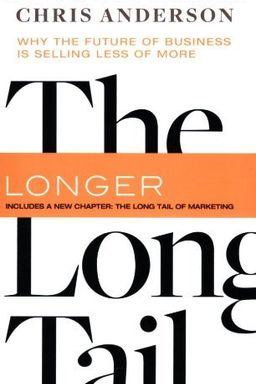
How can businesses thrive when customers are no longer united by a few blockbuster hits, but scattered across countless small interests? In The Long Tail, Wired editor-in-chief Chris Anderson argues that the future of commerce—and culture itself—is shifting from the dominance of hits to the abundance of niches. He contends that technology has ended the age of scarcity, ushering in a world where selling “less of more” is not only possible but profoundly profitable.
Anderson’s core argument is deceptively simple: the Internet and digital technologies have demolished the traditional limits of distribution. With online stores, streaming platforms, and user-driven production, millions of niche products now find buyers globally. Instead of a few best-sellers dominating the market, the true shape of demand reveals a vast “long tail” of minority tastes and hidden interests. Every obscure book, song, or idea can now reach its audience—even if that audience is small.
Understanding the Shift from Hits to Niches
For decades, the economy of entertainment, retail, and culture revolved around scarcity. Brick-and-mortar stores had limited shelves; TV broadcasts had limited airwaves. Companies invested heavily in blockbusters—large-scale products meant to appeal to the broadest possible audience—because the cost of distribution forced an emphasis on hits. But Anderson shows how digital technologies flipped that logic. Online retailers like Amazon, streaming services like iTunes and Netflix, and aggregators like Google reach customers with virtually infinite inventories. Suddenly, even the most specialized or obscure product has economic value.
Using examples such as Netflix’s DVD rentals and Amazon’s back catalog sales, Anderson demonstrates that niche products collectively rival, and often surpass, the profit generated by hits. Customers now follow personal curiosity instead of top-ten lists. Digital shelves never fill up, and search algorithms make finding hidden gems effortless. The result: a cultural and commercial democratization that challenges old monopolies of taste and distribution.
Three Forces Powering the Long Tail
Anderson’s framework rests on three technological and social forces that make the Long Tail real:
- Democratized production: Tools like digital cameras, blogs, music software, and self-publishing let amateurs create professional-quality works. Anyone can become a producer.
- Democratized distribution: Online platforms eliminate geography, enabling global access. A song uploaded by a teenager in Tokyo can instantly reach listeners in Texas.
- Connecting supply and demand: Search engines, recommendation systems, and user reviews guide consumers to niche products they didn’t even know existed.
Together, these forces flatten the cultural landscape. What used to be invisible because it wasn’t profitable to distribute has now become visible, searchable, and sellable. Anderson defines this as nothing less than the economics of abundance.
Why It Matters to You
If you’ve ever browsed Amazon and bought a book that no local store stocked, streamed a forgotten indie film on Netflix, or discovered an unsigned band through a podcast, you’ve experienced the Long Tail effect firsthand. Anderson challenges you to see culture as a shared mosaic of micro-markets, not a mass parade of megahits. Each of us now co-creates culture simply by clicking, sharing, and customizing our experiences.
This revolution also extends beyond entertainment. Manufacturing, education, journalism, and even fashion are adapting to an era of personalization and on-demand creation. As Anderson writes, digital efficiency lets businesses thrive by catering to smaller groups—the “mass of niches”—rather than the “mass market.” The Long Tail is thus both a mirror of human diversity and a business strategy for the twenty-first century.
From Scarcity Thinking to Abundance Thinking
The book’s great contribution is psychological as much as economic. Anderson encourages readers to abandon scarcity thinking—the belief that only a few things matter, only a few products can succeed. Instead, he invites you to imagine a world of endless possibility, where success means enabling creativity at all levels. Whether you’re a consumer, an entrepreneur, or a creator, understanding and embracing the Long Tail means learning to see value in variety, passion in personalization, and profit in the overlooked.
Key Idea in a Sentence
The Long Tail isn’t just about selling obscure products—it’s about transforming culture itself from a world of scarcity and conformity into one of abundance and individuality.