
Idea 1
Seeing with the Heart: Rediscovering What Matters
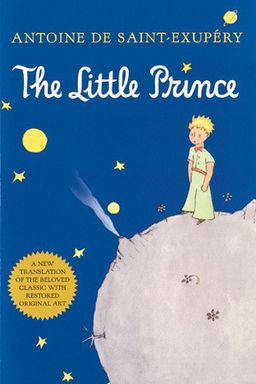
When was the last time you looked at something—really looked—and saw beyond what meets the eye? Antoine de Saint-Exupéry’s The Little Prince invites you to do exactly that: to see with your heart, not just your senses. This timeless story, written during the turbulence of World War II, asks a deceptively simple question: what does it mean to grow up, and in doing so, what do we lose of the essential things that make life meaningful?
Saint-Exupéry crafts a fable that is both whimsical and deeply philosophical. Through the meeting between a stranded aviator and a mysterious young prince from another planet, the book explores human isolation, love, responsibility, imagination, and the invisible truths that adults often forget. Its famous line—“what is essential is invisible to the eye”—summarizes the author’s core argument: to truly understand life, you must perceive with the heart, not through rationality or numbers.
Childlike Vision versus Adult Blindness
The story begins with the narrator’s disappointment in adulthood. When he was six, he drew a boa constrictor digesting an elephant, yet grown-ups saw only a hat. Their inability to see beyond appearances crushed his creativity. This scene establishes a recurring theme: adults have lost the capacity for wonder. They live by measurements, numbers, and rules—concerned with what Saint-Exupéry calls “matters of consequence.” The Little Prince, however, views life intuitively and emotionally; he asks questions that cut straight to the heart of being.
Through their conversations in the desert, the aviator rediscovers the perspective he lost as a child. The desert itself—a place of emptiness, silence, and simplicity—symbolizes the inner space necessary for reflection. Just as the prince’s tiny planet mirrors the purity of his mind, the Sahara serves as a stage where lessons about love, responsibility, and the essence of life unfold.
The Quest for Meaning through Encounters
As the prince travels from planet to planet, meeting characters like a vain man, a king, a businessman, and a tippler, he observes the absurdity of adult behavior. Each grown-up typifies a distorted aspect of human values—authority, vanity, greed, addiction. The king desires absolute obedience, the vain man craves admiration, the businessman hoards stars to feel rich. Through these encounters, the prince learns that grown-ups mistake control and possessions for meaning. They live quantitatively, not qualitatively.
Saint-Exupéry contrasts those hollow lives with the lamplighter, who stands out because his work brings light to the world. Though trapped by absurd orders, he performs his task faithfully. Here, the author hints at a deeper truth: meaning arises from devotion and care. What makes the lamplighter’s simple task beautiful is that it connects him to something greater—a rhythm beyond himself.
Love, Loss, and Responsibility
At the heart of the story lies the Little Prince’s relationship with his rose. She is beautiful but vain, delicate, and demanding. He waters her, shelters her under a glass globe, and listens to her proud words—but he grows confused and leaves, not realizing her love beneath her pretensions. Only through his journey does he learn what the fox later articulates: “You become responsible, forever, for what you have tamed.” Love is not possession—it’s responsibility, patience, and time. It is “the time you have wasted for your rose” that makes her precious.
This lesson transforms the prince’s understanding of relationships. When he meets the fox and learns to tame him—to build ties through trust and ritual—the prince grasps the essence of love: deep bonds make individuals unique to one another. In modern psychological terms (similar to Erich Fromm’s insights in The Art of Loving), Saint-Exupéry shows that love is an act of creation through attention and care.
The Invisible Made Visible
Throughout the story, Saint-Exupéry emphasizes unseen reality—the invisible well beneath the desert, the unseen flower that makes the stars beautiful, and the invisible ties that connect hearts. The prince’s death scene, where he returns to the stars through the snake’s bite, reflects the transcendent power of the invisible. His body falls silently, but his spirit lives on. The narrator, now older and wiser, looks up at the stars and hears them laugh, each one echoing his friend’s presence. In this poetic ending, death becomes transformation—love and memory render it eternal.
Why These Ideas Matter
Saint-Exupéry’s fable feels deceptively simple, yet beneath its poetic surface lies a profound call for spiritual maturity—the kind rooted not in numbers or material progress, but in empathy, imagination, and wonder. In a world increasingly ruled by “matters of consequence,” The Little Prince reminds you that life’s essential truths cannot be measured; they can only be felt. Like the aviator rediscovering his inner child, you too can reclaim the clarity of heart that allows you to see what’s invisible but real—love, connection, responsibility, and beauty.
To see rightly, you must look not with the eyes, but with the heart. Saint-Exupéry’s message is both timeless and urgent: the invisible connections between people are the very essence of life.