
Idea 1
The Global Quest for Happiness and What We Can Learn from It
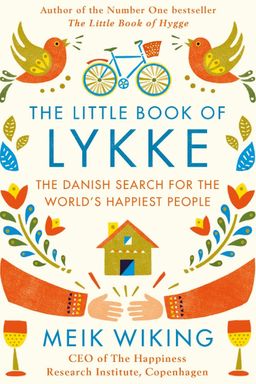
What does it actually mean to live a happy life—and why do people in some places seem to have mastered it better than others? In The Little Book of Lykke, Meik Wiking, CEO of the Happiness Research Institute in Copenhagen and author of The Little Book of Hygge, turns global detective in search of the building blocks of happiness. He argues that happiness isn’t some mysterious Nordic secret—it’s a pattern observable across cultures once you look at the evidence. By studying how people around the world cultivate joy, connection, and meaning, Wiking believes we can all collect the pieces of happiness (“lykke” in Danish) and build our own mosaic of well-being.
Wiking structures his treasure hunt around six factors that consistently appear in the world’s happiest places: togetherness, money, health, freedom, trust, and kindness. These may sound simple, but they interact in complex ways. Each chapter uncovers examples—from Danish bicycle culture and Bhutanese mindfulness to British volunteer projects and Colombian open streets—that illuminate how ordinary people craft extraordinary quality of life. His blend of storytelling, science, and social experiments demystifies happiness, showing that small actions—sharing meals, volunteering, trusting neighbors—can ripple across communities and raise collective well-being.
The Treasure Hunt for Joy
Wiking likens happiness research to a treasure hunt. Instead of gold, we’re searching for evidence of policies, behaviors, and cultural habits that make life more satisfying. He opens with a childhood story from a friend growing up in gray Soviet Latvia whose father sent her on citywide treasure hunts for color and beauty. That memory becomes a metaphor for the book itself: an invitation to go looking for the good that’s already out there. By gathering enough clues—from teacher Sarah bringing hygge into her British classroom to communities in the UK planting free vegetable gardens—we start to see patterns in what truly sustains well-being.
As CEO of the Happiness Research Institute, Wiking has access to global data collected through projects like the UN’s World Happiness Report. These studies reveal that while genetics and personality explain some differences in happiness, much depends on social conditions—how safe and trusting a society feels, how equal it is, how strong communities are, and whether people have autonomy over their time. The happiest countries, led by Denmark, Iceland, Norway, Finland, and the Netherlands, show that good lives are “designed”—not bought.
Why Happiness Is More Than Mood
A key point of Wiking’s research is that