
Idea 1
The Common Sense Path to Investment Success
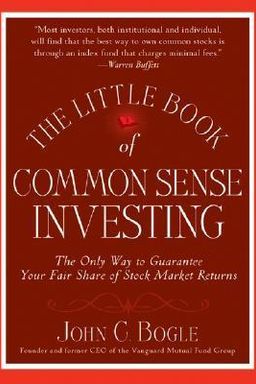
What if the secret to investing success wasn’t to beat the market—but simply to own it? In The Little Book of Common Sense Investing, Vanguard founder John C. Bogle argues that the simplest way to build wealth isn’t through constant buying, selling, or hiring the smartest fund managers, but through owning a low-cost, diversified index fund and holding it for life. The book champions a single, profoundly simple truth: in the long run, investing in the total market at minimal cost guarantees your fair share of returns, while chasing market-beating strategies almost guarantees underperformance.
Bogle contends that Wall Street’s structure—layer upon layer of managers, analysts, brokers, and consultants—creates massive frictional costs that erode what investors actually earn. Meanwhile, the real creators of wealth are the businesses themselves, which increase value through dividends and earnings growth. However, by the time costs and emotions have done their work, the average investor often captures less than half of what the market itself delivers. Through timeless arguments, data, history, and parables like the Gotrocks family story, Bogle dismantles the illusion of outperforming the market and invites readers to embrace what he calls the “majesty of simplicity.”
The Illusion of Beating the Market
At the heart of Bogle’s philosophy is a humbling arithmetic: before costs, the average investor as a group earns the market’s return. After costs—management fees, taxes, trading, and commissions—the average investor must earn less. Therefore, investing becomes a loser’s game when everyone tries to outperform one another. The only participants who consistently win are “the men and women in the middle”—the middlemen who extract their fees regardless of investors’ outcomes. (This insight echoes Warren Buffett’s view that the financial industry transfers wealth from the impatient to the patient.)
Bogle reminds readers that even professional fund managers rarely outperform the market once costs are included. Citing decades of empirical data, he reveals that only about 8 out of 1,000 mutual funds outperform their benchmarks consistently over multiple decades—and many of those are indistinguishable from luck. For the rest, reversion to the mean—what Bogle calls “the tyranny of compounding costs”—inevitably brings their performance down to average, or worse.
The Power of Simplicity and Compounding
The author urges investors to abandon the idea that smart selection or timing can consistently beat market efficiency. Instead, by owning the entire market at minimal cost, an investor retains the compounding miracle that powers capitalism. Over long periods, even small differences in annual expenses—say 0.2% in a low-cost index fund versus 2.5% in an active fund—compound into staggering wealth differences. As Bogle demonstrates through numerical examples, $10,000 invested for 50 years at 8% versus 5.5% grows into $469,000 instead of $145,000. Time, he writes, is a friend of compounding returns but the enemy of compounding costs.
This idea of compounding ties directly to owning businesses rather than speculating on prices. Stocks represent ownership in productive enterprises, and over decades, their intrinsic returns mirror dividends and earnings growth—what Bogle calls “investment returns.” In contrast, speculating on price-to-earnings ratios, market moods, and short-term shifts produces only “speculative returns”—an unpredictable, zero-sum game where one investor’s gain is another’s loss.
The Morality and Demographics of Commonsense Investing
While Bogle’s argument is mathematical, it’s also moral. The financial industry, he insists, should serve investors rather than exploit them. But because intermediation has ballooned, a winner’s game—owning businesses—has been transformed into a loser’s game—trading those same businesses. The financial croupiers always win, much like the casino or racetrack. His call is revolutionary yet modest: stop feeding the croupiers, buy the whole market, and stay out of the casino.
He also points out how democratizing indexing is. Whether you’re a young saver with $1,000 or a retiree with millions, owning a low-cost index fund provides equal access to capitalism’s rewards. While other investors chase fads—from the “Nifty Fifty” in the 1970s to Internet stocks in the 1990s—index investors quietly harvest the market’s collective growth. Over the years, even investing legends like Paul Samuelson, William Sharpe, and Warren Buffett have praised this discipline, calling it “common sense at its best.”
Why This Matters Today
The lessons in Bogle’s book matter more than ever. In an age of financial noise, algorithmic trading, and speculative ETFs, many investors confuse motion with progress. Bogle’s advice cuts through that chaos: Don’t just do something—stand there. His philosophy—stay diversified, minimize costs, ignore emotions, and focus on long-term business growth—gives investors a blueprint for achieving financial independence and peace of mind. In his own words: “When we own the market, we capture our fair share of whatever returns our businesses generate. And that is enough.”