
Idea 1
Rediscovering Forgotten Women of Resistance
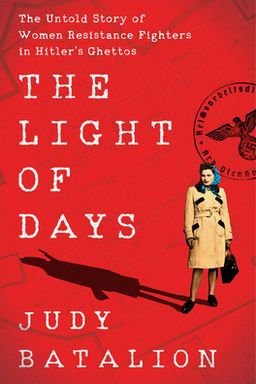
How do you recover the buried story of women whose courage shaped history yet whose names vanished from public memory? In The Light of Days, Judy Batalion reconstructs a narrative long eclipsed by conventional Holocaust accounts. She began in London’s British Library, where a 1946 Yiddish anthology, Freuen in di Ghettos, revealed dozens of Jewish women couriers, saboteurs, smugglers, and underground leaders. Their stories would change how you think about resistance, gender, and survival under Nazi oppression.
Batalion’s central claim is that the history of Jewish resistance has been structurally incomplete. Female fighters—couriers, teachers, mothers, engineers—were moral, logistical, and strategic agents, yet erased by silence, politics, and postwar mythmaking. This rediscovery is not a marginal footnote but a transformation in how we understand agency during catastrophe.
How Memory Was Rewritten
The story begins with silence. Some survivors remained mute because pain was too fresh; others found their narratives unpalatable in societies that preferred martyrdom to defiance. Early Israeli discourse elevated male fighters into myth, while postwar literature reduced women to symbols of endurance or motherhood. Batalion excavates the missing decades when female heroism was archived but untranslated, preserved in Yiddish periodicals, or forgotten behind linguistic walls. Renia Kukiełka’s memoir, for example, lay dormant for half a century before Batalion found and translated it—making visible an entire network of armed couriers and moral courage.
From Discovery to Historical Reframe
Once you follow the chain of women named in Freuen in di Ghettos, you see a continent-wide web of youth movements, couriers, teachers, and insurgents whose stories never reached standard curricula. Emanuel Ringelblum’s diaries had already hinted at their contributions—“The story of the Jewish woman will be a glorious page”—but no mainstream history had treated it as such. By chronicling figures like Zivia Lubetkin, Frumka Płotnicka, Tosia Altman, Renia, and scores of others, Batalion argues that resistance was not male-coded heroism but communal innovation built on women’s relational intelligence, adaptability, and courage under fire.
Why Gender Matters in Reconstructing Agency
Understanding these women demands attention to gendered reality: their ability to disguise, nurture, and improvise became tactical assets. They used femininity where men could not—passing under Aryan appearance, attending church undetected, and hiding explosives in handbags or under dresses. Their everyday care, teaching, and cooking concealed radical subterfuge. Recognizing this double life forces you to redefine “resistance.” It includes the mother rationing food, the girl smuggling coal, and the teacher running secret schools—all acts that sustained the moral backbone of defiance.
Memory and the Personal Turn
Batalion’s project is also personal. Growing up in a family of Holocaust survivors, she inherited a narrative of escape and endurance, not armed revolt. Uncovering the Yiddish texts reoriented her understanding of Jewish identity: these women did not just endure—they acted. For Batalion, rediscovery becomes an act of moral justice, restoring women’s deeds to the language of courage. You are urged to recognize that history’s omissions shape collective self-understanding—and that remembrance itself is a feminist and ethical labor.
A Core Lesson
History is not merely what happened—it is what survives translation, institutional endorsement, and cultural permission. Batalion’s reconstruction of women’s resistance shows how recovering marginalized archives is itself a form of historic resistance.
Across the book, you watch Batalion weave recovery into storytelling, connecting the hidden past to modern questions of moral responsibility, trauma, and remembrance. By combining research discipline with narrative compassion, she shows that the light of days still burns strongest where ordinary people—often women—chose risk over compliance and action over silence.