
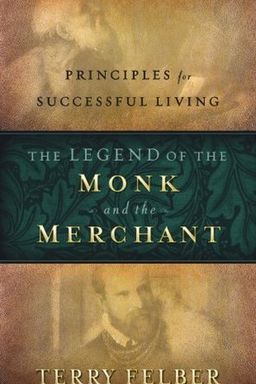
The Legend of the Monk and the Merchant cover

The Legend of the Monk and the Merchant

by Terry Felber

The Legend of the Monk and the Merchant presents a captivating tale of Antonio, who masters twelve principles of success that intertwine spirituality and business acumen. Through engaging narratives, this book provides practical wisdom to transform your life, work, and legacy.

The Sacred Partnership Between Faith and Work

Have you ever felt a conflict between your spiritual life and your work life? In The Legend of the Monk and the Merchant, author Terry Felber challenges this false divide, showing that both spiritual devotion and worldly enterprise are holy callings. Through a parable set in Renaissance Italy, Felber weaves the stories of two men—one a monk devoted to serving God, the other a merchant called to business—to reveal that both vocations serve divine purposes when pursued faithfully. His central argument is simple but radical: God calls everyone to live purposefully, whether in the monastery or the marketplace.

Felber’s book frames its lessons through a multigenerational conversation between a grandfather, Antonio, and his grandson, Julio. Antonio—once a disciple of a great merchant named Alessio—shares his life story and the wisdom he recorded in The Journal of a King. Through a blend of storytelling, biblical interpretation, and ancient wisdom, he communicates twelve timeless principles for personal, spiritual, and financial success. These range from “Work hard and God will prosper you” to “Understand the power of partnership”, each representing a milestone in Antonio’s journey from apprentice to world-changing entrepreneur.

Spiritual Calling in the Marketplace

At its heart, Felber’s tale dismantles the myth that only religious vocations are sacred. Drawing inspiration from Revelation 1:6, he explains that God “has made us kings and priests”—a dual identity that includes both spiritual and practical service. Kings symbolize leaders and providers—those who build, trade, and govern—while priests represent spiritual guides and intercessors. Both roles serve God’s kingdom. By honoring their unique callings, monks and merchants alike fulfill divine purposes. This idea deeply resonates with business leaders like Dave Ramsey, who wrote the book’s foreword, affirming that the workplace is not separate from worship but an extension of it.

This holistic view of vocation invites you to see your daily labor—whether you manage teams, raise children, or run enterprises—as an act of worship. It breathes sacredness into spreadsheets and holiness into hard work. Felber’s message is that you can serve God not only through prayer and preaching but through creativity, diligence, and integrity in your job.

A Parable with Purpose

The novel unfolds across a series of meetings between Antonio and Alessio, each yielding one or more life-changing principles. Felber structures the story like a medieval apprenticeship blended with modern mentorship. Alessio—a wise Venetian merchant—tutors the young Antonio using parables of business, Scripture, and experience. Across six meetings and through triumphs and setbacks, Antonio learns to see wealth as stewardship, failure as refinement, and giving as the highest form of prosperity.

This teaching-through-story structure mirrors classical didactic works like The Richest Man in Babylon by George S. Clason or Paulo Coelho’s The Alchemist. But Felber’s focus is distinctly Christian—showing that the foundation of lasting success is faith rooted in biblical truth. His story illustrates how practical wisdom and divine guidance intertwine in the life of a believer.

The Relevance of Ancient Wisdom

While set during the Renaissance, the lessons of the book speak directly to modern readers wrestling with issues of ambition, money, and meaning. The parable shows that prosperity without integrity is hollow, while faith without action leads to stagnation. In Felber’s world, wealth is not condemned—it is consecrated when used for good. Business becomes a form of ministry when its profits create opportunities, serve others, and build communities. Similarly, the story rebukes laziness and fear as spiritual barriers to leadership.

For you as a reader, Felber’s teachings prompt a re-examination of work ethics and purpose. What if your career were not just a job but a vocation? What if diligence, stewardship, and generosity were more than professional values—they were spiritual disciplines? The book aims to awaken that awareness through lively storytelling and timeless truths.

Why These Ideas Matter

In an age where people often separate faith from finance and spirituality from success, Felber’s message is revolutionary. He insists that morality and marketplace success are not opposites—they are allies. His twelve principles form a roadmap for integrating faith into business and leadership. Each lesson reflects a tension every person faces: diligence versus apathy, prosperity versus greed, humility versus pride, and giving versus hoarding. The resolution of these tensions defines one’s character and destiny.

By the time the story concludes—at the magnificent St. Peter’s Basilica in Rome—the reader understands that building a cathedral, whether of faith or enterprise, requires the same virtues: vision, discipline, and partnership with God. Through the monk and the merchant, Felber offers not just financial strategies but a theology of work. The point is not merely to make money but to make meaning—to turn every vocation into a sacred calling.


Work Hard and God Will Prosper You

At Antonio’s first meeting with Alessio, the wealthy Venetian merchant, a simple glass bead transforms into a symbol of divine innovation. Antonio presents Alessio with glass beads crafted through a unique process that cannot be duplicated—a discovery that would revolutionize trade. Alessio immediately recognizes its potential and helps Antonio introduce them as a universal currency. This turning point anchors the book’s first and perhaps most foundational lesson: Work hard and God will prosper you.

The principle sounds straightforward, but in Felber’s story it means much more than industriousness. Hard work here implies aligning your energy with God’s purpose. Antonio’s success comes not merely from inventiveness but persistence. He labors faithfully, invests wisely, and never confuses divine favor with instant success. This echoes Deuteronomy 28:12—“The Lord will bless the work of your hands”—a verse Alessio quotes to stress that labor is sacred when it is done in faith.

Divine Prosperity Through Diligence

Work is not a curse but a covenantal act. Alessio reminds Antonio that God blesses initiative, not inertia. Like the parable of the talents in Matthew 25, the one who multiplies his blessings is entrusted with more. Antonio’s creativity with the beads symbolizes how God rewards innovation born from diligence and integrity. (Entrepreneur and author Dave Ramsey echoes a modern version of this principle in his own work: “Pray like it depends on God, but work like it depends on you.”)

Julio, Antonio’s grandson, learns this lesson firsthand as he listens to the tale. He realizes that idleness and fear keep many people waiting for luck or divine rescue instead of working the soil of their potential. Felber turns this lesson into a challenge for you: Where might God be waiting for you to act on the ideas He has already placed in your heart?

Faith, Focus, and Follow-Through

Antonio’s innovation didn’t instantly make him wealthy. His early efforts required courage to face rejection, skepticism, and financial risk. Yet his commitment to excellence became a spiritual discipline. He believed that every business decision was an offering to God—a philosophy shared by Martin Luther, who taught that “the milkmaid and the minister are equally called.”

This first principle forms the cornerstone for all that follows. Hard work without faith turns to toil; faith without work decays into wishful thinking. Together, diligence and dependence unleash divine prosperity—not as a guarantee of riches, but as assurance that your labor participates in God’s ongoing creation. As Alessio tells Antonio, “God will only bless what you put your hands to.”


Soul Prosperity and Financial Health

At their second meeting, Antonio wrestles with guilt over his growing wealth. A priest’s sermon convinces him that riches endanger the soul. Alessio gently corrects this misconception by revealing that the issue is not wealth itself but the heart’s relationship to it. This conversation introduces Principle Two: Financial prosperity is often connected to soul prosperity. True success, Alessio teaches, begins on the inside.

Money as Stewardship, Not Sin

Alessio’s wisdom reframes the biblical story of the rich young ruler. Jesus didn’t condemn all wealth—He confronted one man’s idolatry. The danger wasn’t gold but greed. In Alessio’s words, “God wants your heart, not your holdings.” This interpretation harmonizes with Paul’s message in 3 John 2: “Beloved, I pray that you may prosper in all things and be in health, just as your soul prospers.” Wealth becomes holy when managed with humility.

Freedom From the Poverty Mindset

Felber uses this exchange to critique what C.S. Lewis once called “false humility”—the belief that material poverty equals moral purity. As Alessio explains, monks are called to vows of poverty because of personal devotion, not because God despises abundance. For those in the marketplace, wealth is a tool for expanding the reach of good. This reframing challenges you to see money as a servant, not a master—a vehicle for generosity rather than status.

Antonio’s spiritual tension mirrors the modern Christian’s dilemma: How do you honor God when you’re successful? The answer lies in aligning outer success with inner devotion. Financial affluence becomes soul prosperity when used to care for others, to fund missions, and to practice justice and generosity.


Trials, Failure, and Divine Refinement

By the third meeting, Antonio’s success meets catastrophe: his entire glass factory burns to the ground. Devastated, he wonders if God has abandoned him. It’s here that Alessio presents several profound truths about suffering and resilience, expressed through Principles Four, Five, and Six: trials develop character, you must take responsibility for your decisions, and challenges are stepping stones, not obstacles.

The Fire of Formation

Alessio reminds Antonio that glass itself is created by intense heat—the same heat that destroyed his factory. God, he says, often uses adversity to refine rather than punish. Failure, therefore, is not fatal unless you choose to stay down. This lesson parallels the teaching of James 1:2–4 on perseverance: faith tested through fire produces maturity. (Similarly, John Maxwell in Failing Forward calls failure “the tuition you pay for success.”)

Owning Mistakes and Moving Forward

Antonio learns another painful lesson: the fire likely resulted from his own poor design—too many furnaces under one roof. Alessio refuses to let him blame fate or the devil. Responsibility, he insists, is the seed of restoration. Only by acknowledging cause and effect can you regain control over your destiny. Felber uses this moment to show that spiritual maturity includes practical wisdom—what modern psychology would call “locus of control.”

This hard-earned humility allows Antonio to rebuild even stronger than before. His factory, reborn with safer architecture and better systems, becomes more profitable than ever. The lesson echoes throughout the narrative: faith’s real proof is perseverance under pressure.


Courage: Be Meek Before God, Bold Before Men

Antonio’s fourth meeting with Alessio introduces fear as the next frontier of faith. When the notorious merchant-pirate Ahmad summons Antonio to meet him on a deserted island, Antonio trembles. Alessio’s counsel changes everything: “Be meek before God but bold before men.” This principle captures the Christian ethic of humble confidence—a willingness to bend the knee only to God, not to fear.

Faith That Faces Giants

Ahmad represents the intimidating forces in every calling—competition, risk, or reputation. By facing him courageously, Antonio discovers opportunity rather than destruction. Ahmad becomes an ally, opening new trade routes and multiplying Antonio’s reach. Fear had hidden his greatest blessing. As 2 Timothy 1:7 declares, “For God has not given us a spirit of fear, but of power, love, and a sound mind.”

Felber uses this episode to argue that true meekness isn’t weakness. Like Moses confronting Pharaoh or Jesus overturning temple tables, the righteous are bold where it matters—unafraid to serve, lead, or negotiate with courage and honor. This principle resonates in business ethics today: if your purpose is pure, you can walk into any boardroom—or battlefield—with confidence born of conviction.


The Discipline of Stewardship and Debt-Free Living

By the fifth meeting, Antonio’s challenge shifts from external threats to internal stewardship. His young brother-in-law, Venito, asks for a business loan, and Antonio hesitates. Alessio teaches him three interconnected money principles that reshape Antonio’s (and Julio’s) understanding of finance: live debt-free and below your means, keep to a budget, and avoid loaning money to friends and family.

Debt as Emotional and Spiritual Bondage

Alessio quotes Romans 13:8—“Owe no man anything except to love him.” Debt, he explains, enslaves the soul as much as the wallet. Felber parallels this with modern financial experts like Dave Ramsey, who calls debt “a thief of peace.” The principle is not asceticism but freedom: by staying debt-free, you gain autonomy to give, create, and serve without fear.

Budgeting as a Moral Compass

Antonio adopts a meticulous ledger dividing income and expenses—a practical reflection of stewardship. This symbolizes self-discipline and gratitude. Every entry becomes an act of awareness, a way of recognizing that money is not yours but God’s trust temporarily in your care. When Venito refuses to follow that discipline, he fails. When he submits to it, he prospers—eventually building nine successful restaurants. The story thus portrays budgeting as both spiritual obedience and economic wisdom.


The Power of Partnership and Legacy

The story ends where it began—on the steps of St. Peter’s Basilica, as Antonio passes his journal to Julio. The twelfth and final principle, Understand the power of partnership, unites all the lessons before it. Antonio recounts how his mentor Alessio dedicated his wealth to rebuilding St. Peter’s, partnering with priests to fund a new cathedral. Alessio’s final words echo through Antonio’s future: business and ministry must serve each other like kings and priests united in God’s purpose.

Kings and Priests: Two Roles, One Kingdom

Felber’s vision for partnership transcends religion—it speaks to how different callings collaborate to achieve good. The priest receives vision; the merchant provides provision. Neither dominates or diminishes the other. This reciprocal model contrasts sharply with the modern habit of compartmentalizing spirituality from productivity. The church needs the marketplace’s stewardship, and the marketplace needs the church’s moral compass.

Legacy of Giving and Mentorship

Antonio’s final act is to give Julio the journal—with one condition: he must one day pass it on. Legacy, Felber implies, doesn’t end with wealth but with wisdom shared. Giving is the true finishing act of prosperity. When you give generously—of time, money, or mentorship—you participate in God’s creative generosity. Or as missionary Jim Elliot put it, “He is no fool who gives what he cannot keep to gain what he cannot lose.”

This final lesson transforms the book from a story about the rise of a merchant into a manifesto for purpose-driven living. Prosperity finds its ultimate meaning not in accumulation but in contribution. When Antonio gazes at the growing cathedral, we see what Felber wants you to grasp: your life’s work can become a cathedral if you build it with faith, partnership, and vision for the generations after you.

Dig Deeper

Get personalized prompts to apply these lessons to your life and deepen your understanding.

Go Deeper

Get the Full Experience

Download Insight Books for AI-powered reflections, quizzes, and more.