
Idea 1
How Journalism Works on You
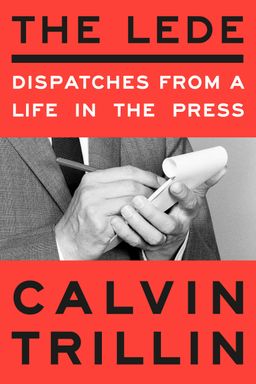
How do you write journalism that actually moves people, holds power to account, and still feels human? In this book-length suite of reported essays and craft reflections, Calvin Trillin argues that journalism works on you at two levels at once: the sentence level, where a lede and a tone hook your attention, and the system level, where newsroom routines, owners, and community pressures shape what the public even gets to see. He shows you how craft, character, and culture fuse in practice—across police beats, magazine shops, civil-rights buses, barbecue lines, and boardrooms.
You travel from a single, unforgettable first line (James Thurber’s one-word opener, "Dead.") to the industrial choreography of Time magazine’s group journalism, to The New Yorker’s deceptively difficult "casuals," to Edna Buchanan’s dogged calls in Miami’s murder tide. You watch proprietors like Conrad Black try to bend a nation’s discourse, and you see local advertisers in Nampa, Idaho, try to bend a town’s paper. Along the way, you learn how satire can explode a newsroom (Joe Bob Briggs), why editors argue about profanity (William Shawn), and how a best-in-state barbecue nod upends a tiny Saturday-only joint (Snow’s BBQ).
Craft as engine: the sentence and the stance
Trillin treats the lede as an ethical and narrative choice: a promise about what kind of truth you’ll deliver and how fast. Edna Buchanan’s "Gary Robinson died hungry" compresses irony, context, and human cost. The Advocate’s breathless Louisiana camel lede builds place and absurdity in one run-on. You experiment with short shockers, patient narrative opens, or data jolts—because the first move governs what the rest of the piece can do. Then you revise hard—"greening" ten percent and realizing the prose breathes better (a Time Edit lesson you can use anywhere).
Systems make stories: shops, roles, and owners
Trillin’s Time memories show "instant omniscience"—the institutional first-person-plural voice stitched together in New York from field "files." Researchers (nearly all women then) red-checked facts and often saved writers from themselves; editors green-penciled space. You learn how bylines later cracked that group voice and shifted status toward field reporters. At a higher altitude, owners matter: Conrad Black’s National Post proved how a proprietor’s ideology can staff a paper, steer coverage, and pick fights (the peerage battle as a national psychodrama). Systems don’t just polish your sentences; they tilt the frame.
Reporters as characters, profiles as arguments
Trillin loves the people who do this work: R. W. Apple reinventing himself from campaign ace to gourmand; Russell Baker wielding humane wit; Molly Ivins pairing hilarity with moral clarity. His profiles argue that a signature voice isn’t ornament—it’s how a reporter makes sense of chaos. He shows you how to fix a subject in the reader’s ear with repeated behaviors (John Gregory Dunne’s 9 A.M. "This you will not believe" calls) or stable tastes (Morley Safer’s realist conservatism, even painting hotel rooms). A good profile is a moral position wrapped in detail (compare Gay Talese’s method in "Frank Sinatra Has a Cold").
Beat wisdom and civic memory
On the cops beat, Edna Buchanan shows how persistence and small human details dignify the dead and teach a city to remember. On the civil-rights beat, a year on the Seg Beat made Trillin fluent enough to spot a riot brewing—and principled enough to stay reporter, not activist, while recognizing the moral stakes (he takes cues from Claude Sitton’s scrupulous independence). Beat work accumulates civic memory: it resists the numbing of murder roundups and the sanitizing of Freedom Rides commemorations packaged for tourism.
Satire, standards, and consequences
Satire liberates a writer and endangers a newsroom. John Bloom’s invented redneck critic, Joe Bob Briggs, became a syndication rocket and then a crash when a famine-parody column punched down with racist language. The lesson is blunt: intent can’t fix impact when the target is the powerless. On the other side of the ledger, editors like William Shawn tried to protect tone by censoring profanity, only to learn that sometimes raw words are the record you owe readers. Standards live in the push and pull between taste and truth.
Niches that redraw the map
Food reporting—Snow’s BBQ crowned No. 1, the Arepa Lady mapped by chowhound obsessives—shows how niche beats create new civic maps. Discovery delights people and disrupts places. Trillin urges you to weigh the consequences of a rave before you unleash a queue that can swallow a Saturday ritual. (Think of Bourdain’s paradox: to honor a hidden spot is to end its hiddenness.)
Your playbook
Take from Trillin a toolkit: collect ledes; cut ruthlessly; respect fact-checkers; design profiles around repeated habits; practice short humor to hone timing; cultivate sources with daily, human patience; hold owners and advertisers at arm’s length; include raw language only when it serves understanding; and anticipate the ripple effects of your praise. Above all, remember that journalism is a human trade done inside institutions. Craft without conscience is stunt; conscience without craft is sermon. Your job is to bring both to the page.