
Idea 1
The Neuroscience of Peak Leadership
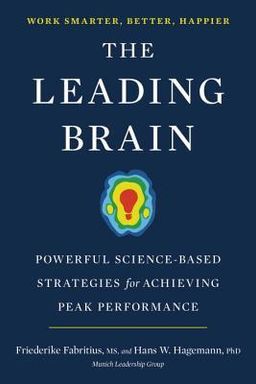
Why do some people stay calm, sharp, and inspired in high-stress moments—while others buckle under pressure? In The Leading Brain, neuropsychologist Friederike Fabritius and leadership expert Hans W. Hagemann argue that real leadership begins in the brain. They reveal that achieving and sustaining peak performance, whether as a CEO, athlete, or scientist, isn’t a matter of charisma or willpower—it’s about understanding the neuroscience of focus, motivation, and collaboration.
At its core, the book contends that successful leaders use the biology of their brains to work with human nature, not against it. By balancing what the authors call the “DNA of Peak Performance”—dopamine (pleasure and motivation), noradrenaline (focus and challenge), and acetylcholine (attention and learning)—you can tune your mental state to thrive under pressure rather than succumb to stress. This insight overturns the myth of endless productivity and distinguishes between performing at your peak and burning out trying.
From Brain Science to Better Leadership
Fabritius and Hagemann introduce a simple but powerful goal: mastering your brain’s natural design to lead others more effectively. Leadership, they argue, is ultimately a science grounded in how humans process threats, rewards, and emotional signals. Rather than relying on intuition or “leadership styles,” you can use brain-based tools to drive high performance and motivation in yourself and your team. These tools range from regulating emotions and sharpening focus to fostering psychological safety and trust—skills that determine whether a team collapses under tension or enters what scientists call “flow.”
Throughout, the authors pair neuroscience with vivid real-world examples: astronaut Gordon “Gordo” Cooper’s unflappable serenity during a failing space mission shows what optimal arousal looks like under pressure, while scientist Louis Pasteur’s focused patience represents another path to mastery. They draw lessons from sports legends, business innovators, and even professional musicians to prove that our brains can achieve extraordinary consistency—if we learn to balance stimulation, emotion, and rest.
Why This Science Matters Now
The modern workplace, flooded with multitasking, information overload, and constant connectivity, pushes the brain toward distraction and fatigue. The Leading Brain argues that leaders who grasp the neurochemistry of attention and emotion will outperform those who rely on adrenaline and willpower. As Fabritius puts it, “Being in a high-performance state all the time is detrimental; being in a high-performance state when it counts is a winning strategy.” Recognizing your personal “sweet spot” of arousal—the zone between boredom and panic—lets you generate peak focus on demand, an ability shared by elite athletes and top executives alike.
A Three-Part Roadmap for Brain-Based Leadership
The authors divide the book into three parts, mirroring the journey from individual mastery to organizational excellence. Part 1, “Reaching Your Peak,” shows how to regulate your emotions, find your optimal stress zone, and maintain focus. Part 2, “Changing Your Brain,” explains how habits, intuition, and lifelong learning arise from neuroplasticity—the brain’s ability to rewire itself. And Part 3, “Building Dream Teams,” explores the neuroscience of team trust, diversity, and collective flow, teaching leaders how to design environments where people naturally synchronize their energy and ideas.
Central to their thesis is that great leadership isn’t about dominating others—it’s about shaping brains, emotions, and environments in ways that allow everyone to perform at their best. Understanding neurochemistry isn’t theoretical; it’s practical. For example, dopamine rewards progress toward meaningful goals, so chunking big objectives into small wins keeps motivation high. Oxytocin, the “bonding hormone,” makes trust contagious, showing why psychologically safe workplaces outperform fear-driven ones. These biological insights bridge hard science and soft skills—something few management books achieve.
The Promise of a New Leadership Science
By the end of The Leading Brain, you understand why traditional hierarchies and constant stress blunt performance rather than sharpen it. Neuroscience shows that emotions, focus, and connection aren’t distractions from leadership—they’re its essence. Whether you’re crafting strategy, running a meeting, or building a team, every decision triggers the brain’s ancient circuits for threat, reward, and trust. By learning to calm the threat response, strengthen emotional regulation, and foster empathy through oxytocin-rich environments, leaders can unlock not just productivity but genuine engagement. The book’s essential message is both scientific and human: when you lead your own brain wisely, you empower others to do the same.