
Idea 1
Leading in an Age of Overload and Inversion
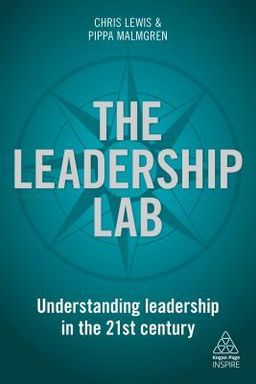
Have you ever wondered why leadership feels harder than ever, even with more tools, data, and technology at your fingertips? In The Leadership Lab, Chris Lewis and Dr. Pippa Malmgren argue that our 21st-century world has changed faster than our leadership models. Their central claim is bold: the old rules no longer work. To lead effectively today, you must understand how data overload, economic complexity, impatience, and polarization have inverted nearly every principle of traditional leadership.
Lewis and Malmgren contend that the leadership crises of our time—from failing political institutions to corporate scandals—stem from an overreliance on left-brain logic, metrics, and short-term thinking. We measure everything but understand less, mistaking analysis for insight and busyness for progress. Modern leaders, they suggest, must learn situational fluency: the ability to interpret complex, paradoxical situations and lead across disciplines, cultures, and technologies.
The Collapse of the Old Orthodoxy
Lewis and Malmgren open with a searing diagnosis. They list corporate, political, and institutional scandals—from financial fraud to abuses of public office—to show that leadership has been discredited across nearly every sector. Leaders, they argue, are failing not because they lack education but because they rely on outdated modes of thought. The analytical, hierarchical, top-down model that worked in a slower, more predictable era now falters under the speed, transparency, and interconnection of digital life. The authors quip that today’s leaders are brilliant at “doing things right,” yet incapable of “doing the right things.”
This inversion of values—where short-term logic overrides long-term wisdom—defines the 21st-century crisis. It isn’t just about corrupt CEOs or politicians; it’s systemic. Everywhere, the metrics of success reward scale, speed, and visibility rather than depth, patience, and empathy. The result? Distracted, disconnected leadership more loyal to the quarterly report than to its people.
The Kythera: A New Compass for Leadership
In response, the authors propose their signature model: the Kythera, named after the ancient Greek Antikythera mechanism—the world’s first analog computer. Just as that device mapped celestial patterns, the Kythera helps leaders navigate the complexities of our modern world. It’s built on eight paradoxical “spokes,” each representing tensions leaders must balance:
- Information ↔ Inundation
- Internationalism ↔ Insularity
- Immediacy ↔ Impatience
- Intelligence ↔ Insurgency
- Infrastructure ↔ Isolation
- Innovation ↔ Intimidation
- Inclusivity ↔ Inequality
- Inspiration ↔ Inversion
Each axis reflects a dual reality: technology and globalization bring progress but also confusion. Leaders who overcorrect toward any one pole—say, raw data without empathy—inevitably lose balance. The “art” of leadership lies in holding these contrasts simultaneously.
From Left-Brain Logic to Right-Brain Balance
One of the book’s recurring motifs is the tension between left-brain and right-brain thinking. The left brain governs analysis, quantification, and detail—the foundation of Western education and business. The right brain governs imagination, empathy, and synthesis. Leadership failure, say the authors, comes from overdevelopment of the former and neglect of the latter. We produce leaders who can calculate but not imagine, who analyze numbers but ignore people.
Lewis and Malmgren insist that the future belongs to those who can use both hemispheres—leaders fluent in both logic and empathy. Balanced leaders ask deeper questions, connect disparate trends, and see patterns others miss. This “binocular vision” is essential in a world where data alone no longer tells the truth.
Why This Matters Now
The Leadership Lab is as much a philosophical treatise as a handbook. It doesn’t just map the problems—it issues a plea for moral and cognitive renewal. Every chapter pairs a contemporary crisis—information overload, political rage, technological disruption, gender inequality—with guidance on how to lead through it. The authors challenge you to stop “waterboarding yourself with data” and start creating space for thought. Only by reclaiming imagination, empathy, and patience can we restore trust in leadership.
“Success and failure are imposters,” Lewis and Malmgren write. “True leadership begins when you commit not to knowing everything, but to learning continuously.”
This book matters because its diagnosis extends beyond institutions—it’s personal. Whether you’re a manager, teacher, or parent, you must lead amid turbulence, misinformation, and fear. The Leadership Lab teaches that leadership is no longer about authority but about awareness. If you can combine logic with imagination, intelligence with empathy, and speed with patience, you may yet become the kind of leader this century needs.