
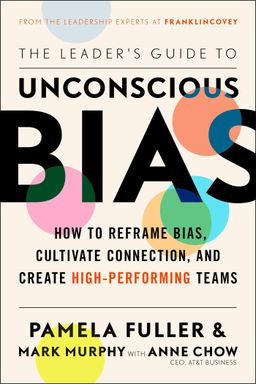
The Leader''s Guide to Unconscious Bias cover

The Leader''s Guide to Unconscious Bias

by Pamela Fuller & Mark Murphy with Anne Chow

The Leader’s Guide to Unconscious Bias offers leaders practical tools to identify and overcome biases, fostering a more inclusive and productive workplace. Learn to cultivate meaningful connections, choose courage in the face of bias, and apply these strategies across the career spectrum to enhance team performance.

The Human Bias Within: Seeing, Owning, and Transforming Our Hidden Preferences

Have you ever caught yourself making a snap judgment about someone—then realized a moment later that you were wrong? In The Leader’s Guide to Unconscious Bias, FranklinCovey experts Pamela Fuller, Mark Murphy, and Anne Chow argue that these moments aren’t moral failings but reflections of how the human brain works. The authors contend that bias is a natural, inevitable part of being human—but it’s also one of the most powerful forces shaping our choices, relationships, and performance at work.

They insist that unconscious bias isn’t something we “fix” once and forget. It’s something we must continuously recognize, question, and redirect. To be the kind of leader who uplifts others and creates high-performing teams, you must understand both your own biases and those built into your workplace systems. This isn’t about shame or guilt—it’s about awareness, curiosity, and courageous action. Or, as Anne Chow puts it, it’s about ensuring “there is simply no way to be a great leader if you don’t confront your negative unconscious biases and make inclusion a hallmark of your leadership style.”

From Awareness to Action: The Bias Progress Model

To move from awareness to measurable change, Fuller and her co-authors introduce FranklinCovey’s Bias Progress Model, a four-part framework that has been tested with thousands of leaders around the world. It begins with Identify Bias—learning to see the shortcuts and assumptions that guide your judgments. It then moves to Cultivate Connection, building trust and belonging through empathy and curiosity. Next comes Choose Courage, acting boldly and carefully to tackle bias in yourself, your peers, and your systems. Finally, Apply Across the Talent Lifecycle extends these principles into all stages of employee experience—from hiring and development to promotion and succession planning. Together, these four stages bridge personal growth and organizational transformation.

Why Bias Matters at Work

The authors root their argument in neuroscience and organizational research: our brains take in around eleven million bits of information per second but can consciously process only about forty. To handle the overload, our minds rely on mental shortcuts—biases—that speed judgment but can distort reality. These shortcuts explain why we remember one angry customer instead of the hundred satisfied ones (negativity bias) or trust ideas only when they come from people who share our background (in-group bias). Left unchecked, these biases don’t just change how we see others—they shape who gets hired, who we promote, which ideas we hear, and how we lead.

The authors connect bias directly to performance through FranklinCovey’s Performance Model, which outlines three workplace zones: the High-Performance Zone, where people are respected, included, and empowered to contribute their best; the Limiting Zone, marked by tolerance and disengagement; and the Damaging Zone, where exclusion and bias cause harm. Every team, they argue, oscillates between these zones depending on how its leaders behave. Eliminating bias is less about perfection and more about consistently pulling people upward into the High-Performance Zone.

Stories Behind the Science

Fuller, Murphy, and Chow bring the data to life through real stories—like Fuller realizing she had developed an unconscious bias against maternity leave, even after benefiting from it herself. Or Murphy describing his decades-long journey to reconcile his identity as a gay man with environments that once made him feel unsafe. Chow recalls confronting a major client who assumed women became less capable once they had children. These personal anecdotes are woven throughout to emphasize that recognizing bias isn’t a sign of hypocrisy—it’s a sign of growth. The moment you admit you have bias is the moment you start leading with integrity.

From Personal Work to Systemic Change

Ultimately, the book argues that inclusion is both a moral and performance imperative. Fuller calls bias “a natural part of the human condition,” but discrimination—the social manifestation of unchecked bias—“does real harm.” The solution, she says, requires empathetic leadership: cultivating curiosity about others’ experiences, developing psychological safety, and consistently aligning behavior with values. When leaders do this, organizations don’t just become fairer; they become more innovative, agile, and effective.

In the chapters ahead, you’ll discover how to uncover your hidden preferences, build bridges through empathy and courage, and embed inclusion into every leadership decision. Whether you lead a corporation, a classroom, or a small team, The Leader’s Guide to Unconscious Bias provides the roadmap for creating cultures where everyone—yourself included—can bring their whole selves to work and thrive.


Identity: The Mirror of Bias

To understand bias, Fuller encourages you to start with the simplest yet hardest question: Who am I? She introduces FranklinCovey’s Identity Model, a framework showing how information, education, context, culture, innate traits, and experiences all mix to form your sense of self. Each component feeds your preferences—and therefore your biases. The relationship is two-way: your identity shapes how you perceive the world, but the world also reinforces your identity through feedback, media, and relationships.

The Danger of a Single Story

Drawing on Chimamanda Ngozi Adichie’s TED talk, Fuller warns against “the danger of a single story.” When we define others—or ourselves—by only one visible trait, we flatten complexity into stereotype. You might look at a colleague and only see their age, accent, or job title, forgetting the layers beneath. Fuller compares identity to an iceberg: about 10 percent is visible (age, gender, race, physical appearance), while the vast majority—like values, education, family relationships, or personality—remains unseen. Bias often hides in the shallow glance, in how we respond to that visible 10 percent rather than the rich depth below.

Origin Stories of Bias

Each bias has an origin story. Fuller illustrates this through her own education bias—her tendency to prefer candidates from prestigious universities. That belief came from her upbringing as the daughter of Dominican immigrants who saw education as the ultimate mark of achievement. Only when her husband challenged this assumption did she realize it wasn’t education itself she valued, but the work ethic it represented. The moment she recognized the bias’s “origin story,” she could reframe it and look for work ethic in many forms, not just diplomas.

Mark Murphy shares another powerful example: his self-limiting bias born from internalized shame around being gay. Growing up in a judgmental environment, he developed perfectionist tendencies to mask perceived unworthiness. A friend’s counsel—that his need to look perfect was blocking growth—became a catalyst for self-acceptance. For both authors, identifying the narrative behind a bias makes it easier to challenge its logic and rewrite its script.

Whole Person, Whole Perspective

As Anne Chow emphasizes, you are far more than any one label. “Labels are for filing, not for people,” she quotes tennis legend Martina Navratilova. The invitation is to see yourself and others as whole beings whose visible and hidden identities interact in complex ways. Practicing this perspective dismantles stereotypes and builds empathy—an essential step in the journey from unconscious reaction to conscious leadership.


How the Brain Builds Bias

Bias, Fuller and Murphy explain, isn’t moral—it’s neurological. Our brains’ need to process overwhelming information leads them to simplify, categorize, and make patterns. The problem is that these shortcuts, while efficient, often warp our perception of people and situations. Understanding this mechanism isn’t about excuse; it’s the first step toward control.

Three Brains, One Bias-Prone System

The brain operates through three interlocking systems: the primitive brain (focused on survival and threat detection), the emotional brain (driven by memory and feeling), and the thinking brain (center for logic and creativity). When under threat—real or perceived—the primitive and emotional systems overtake the thinking brain, pushing us to react instinctively rather than rationally. This explains why even a trained, logical person can act unfairly when emotions run high.

Psychological Safety and Belonging

To help people stay in their thinking brain, teams need psychological safety—confidence that they can speak up, err, or express difference without punishment. Fuller connects this to power: when power is concentrated, fear rises, triggering the primitive brain. By adjusting physical environments (like meeting in neutral spaces) and communication styles (such as acknowledging authority boundaries upfront), leaders can balance power and restore safety. In safe environments, employees contribute ideas freely, making high performance possible (Amy Edmondson’s research at Harvard echoes this finding).

Neuroplasticity: The Brain’s Hope

The hopeful twist is neuroplasticity—the brain’s ability to form new neural pathways at any age. Pausing before reacting, asking reflective questions (“Why did I feel that way?”), and seeking feedback all help rewire cognitive habits. Fuller notes that she retrained herself to read résumés by evaluating current performance first, rather than educational pedigree. Over time, the new neural route became her default. Change, in other words, is biological as much as behavioral.

For Anne Chow, self-awareness and physical well-being reinforce each other. She credits fitness boxing for teaching mindfulness—the art of staying fully present in the body and mind. By syncing physical focus with cognitive intention, she built resilience and space for self-reflection. “When you feel safe,” she says, “you can speak, listen, and learn.” That’s where bias turns into growth.


Recognizing Bias Traps

Even when we know bias exists, certain conditions make us more prone to it. Fuller identifies three common bias traps—states that heighten error: Information Overload, Feelings Over Facts, and Need for Speed. Recognizing these traps allows you to consciously slow down, gather evidence, and re-engage your thinking brain.

Information Overload

When bombarded by data and decisions—like screening hundreds of résumés—you’re at risk of filtering information through confirmation and anchoring biases. You seek data that supports your preferences or cling to first impressions. Research shows people even feel dopamine rewards when they confirm what they already believe. Building systems (like blind résumés or multi-rater interviews) helps reduce this mental shortcut.

Feelings Over Facts

When emotions override evidence, bias deepens. Fuller uses the geography of Africa to show how perception distorts fact: most people imagine it smaller than the U.S., when it’s vastly larger. Emotionally, our maps—of people or places—reflect what feels familiar, not what’s true. The authors unpack in-group bias (favoring those like us) and negativity bias (giving weight to errors over successes). As Chow notes, “We must ensure our feelings don’t cloud a holistic view.” Deliberately inviting diverse feedback interrupts these emotional patterns.

Need for Speed

Under time pressure, we rely on instinct. That’s where attribution bias (judging others by actions but ourselves by intent) and sunk-cost bias (clinging to failing plans) emerge. Leaders often justify hasty decisions—doing tasks themselves rather than coaching staff—because “it’s faster.” But as FranklinCovey’s framework teaches, long-term capability always outperforms short-term efficiency. By pausing to reflect, leaders can transform quick reactions into conscious choices.

Bias isn’t eradicated by willpower alone. It’s managed by awareness and structure—habits that protect fairness when human instincts falter.


Mindfulness: The Pause That Powers Change

Mindfulness, Fuller writes, is “the art of pausing between noticing and reacting.” It’s not about meditation cushions or incense; it’s about attention. Research cited from Harvard shows our minds wander nearly half the time, which means we’re often on autopilot—prone to automatic, biased decisions. Mindfulness puts you back in the driver’s seat.

Practical Habits of Awareness

Fuller proposes simple techniques: daily reflection (“What decisions today were influenced by bias or habit?”), mindful observation in meetings (focusing on tone, posture, and language), and setting intentional pauses—like delaying responses to emotional emails. Borrowing from productivity guru Kory Kogon, she calls this the discipline of transcending impulse to act from clarity instead of reaction.

Neurodiversity and Learning from Difference

Fuller’s reflections on her neurodiverse son add depth: playing the card game “Mindfulness Matters” together, she realized that adults struggle with mindfulness as much as children with ADHD or autism traits. Neurodiversity reframes cognitive variation not as deficit but as competitive advantage (a point echoed in research by Robert D. Austin and Gary P. Pisano). By honoring different neurological styles, leaders access creativity and empathy that linear thinking can’t unlock.

Technology, Focus, and Intent

Because constant digital stimulation fuels bias traps, Fuller and Murphy recommend “tech blackouts”—like Mark’s “Dallas Stack,” where friends pile phones in the center of the dinner table, penalty to the first who grabs theirs. This playful rule becomes a metaphor: without distraction, you become fully present. Setting intentions before critical meetings, zooming out to see patterns instead of isolated incidents, and giving yourself rest all build the mental muscle for inclusive leadership. As Fuller reminds, mindfulness isn’t luxury—it’s prerequisite for fairness.


Belonging and Authenticity in the Workplace

Belonging isn’t a buzzword—it’s a biological need. Fuller grounds this in neuroscience: humans evolved to survive in groups, so exclusion triggers primal fear. At work, when people feel they must hide parts of who they are to “fit in,” performance and creativity plummet. The goal, therefore, isn’t assimilation but authenticity—creating conditions where everyone can show up as their whole self.

Diversity, Inclusion, Equity, and Belonging

Fuller distinguishes these often-confused terms. Diversity means representation—who’s in the room. Inclusion means participation—who gets to speak and be heard. Equity means fairness—bridging opportunity gaps caused by systemic privilege. And Belonging is the emotional outcome when the first three align. Leaders foster it by examining language (for instance, switching from “maternity” to “parental” leave), revising policies (like safer travel options for women and people with disabilities), and broadening representation at every level.

Authenticity as a Catalyst

Fuller’s mentor Martine modeled authenticity at work by encouraging discussion of personal and professional goals in the same breath—showing that people perform better when encouraged to be whole. Chow recalls deliberately referencing her children and cultural heritage in professional settings, refusing to fragment her identity. Authenticity is contagious: “As we let our own light shine,” Marianne Williamson wrote, “we give others permission to do the same.”

Language, Policies, and Representation

Murphy’s story about pronouncing an Uber driver’s name correctly powerfully demonstrates how something as small as saying a person’s name can affirm belonging. Likewise, policies can either include or exclude—such as a travel policy that inadvertently endangered women by forcing them to park in remote lots. Representation, too, matters: people must see themselves reflected in leadership, clients, and marketing to believe they belong. In Junot Díaz’s words: “If you want to make a human being into a monster, deny them any reflection of themselves.”


Empathy, Curiosity, and the Power of Connection

Bias thrives in ignorance; connection dissolves it. Fuller frames empathy and curiosity as twin tools for cultivating meaningful relationships across difference. Empathy means putting yourself in someone else’s perspective; curiosity means asking and listening to understand. Combined, they counter “culture fit” obsessions that value likability over competence—a trap many organizations fall into (echoing research from Stanford that people prefer likable colleagues to capable ones).

Putting Yourself in Others’ Shoes

Fuller’s story of a leader discovering a tardy employee’s true struggle—caring for a diabetic spouse—illustrates empathy’s transformative potential. What looked like low performance became a solvable problem once the leader listened. Murphy recalls surviving anti-American hostility in 1980s Argentina; being labeled an outsider taught him how emotionally taxing bias can be. These experiences fueled his lifelong empathy for anyone made to feel “other.”

Studying Your Frustrations

Chow recommends “studying your frustrations”—noticing who evokes annoyance and asking why. It might expose hidden bias, like her irritation with an older team member who preferred phone conversations over email. Adjusting her style revealed the person’s wisdom and ultimately strengthened collaboration. By pairing curiosity with humility, leaders turn friction into understanding.

Keep Exploring

The authors end with a challenge: deliberately expose yourself to unfamiliar ideas. Visit websites like AllSides.com to read news from multiple political perspectives. Watch films, read authors, and follow voices outside your bubble. Connection, they insist, isn’t accidental; it’s cultivated through active exploration. Each act of curiosity knits another thread of empathy, weaving workplaces—and societies—where difference isn’t feared but valued.


Courageous Leadership: From Allyship to Advocacy

After awareness and connection comes the real test—action. The authors define courage as “the mental and moral strength to strive in the face of fear and uncertainty.” It shows up in many forms: the courage to identify your own bias, cope when you’re targeted, stand beside someone as an ally, or challenge a flawed system as an advocate. Courage, in Fuller’s words, turns insight into progress.

Careful and Bold Courage

Not every act of courage must roar. Sometimes it’s quiet—like a leader privately addressing disrespect (“careful courage”). At other times, it’s public and demanding—like calling out systemic inequity (“bold courage”). Chow demonstrated bold courage confronting a high-profile client who implied mothers were less capable employees. She challenged him without hostility, sparking genuine reflection. Murphy models careful courage when giving feedback kindly yet honestly to colleagues. The mark of maturity, they stress, is knowing which kind of courage a situation requires.

Allyship in Action

Being an ally means using your privilege to extend opportunity, not empathy alone. Fuller praises TV producers Norman Lear and Mike Royce, who redirected attention to Latina showrunner Gloria Calderón Kellett when staff defaulted to them; by season two, everyone recognized her authority. Allies act: they invite underrepresented colleagues into networks, sponsor them for projects, and amplify their voices. As Chow puts it, “If you’re in the room, use your hands to pull others forward.”

Coping and Advocacy

For those experiencing bias, courage also means self-preservation. Fuller cites poet Audre Lorde: “Caring for myself is not self-indulgence.” Building community, setting boundaries, or even walking away from toxic workplaces are all valid acts of courage. Finally, advocacy—speaking truth to power—scales this courage to systems. Leaders can build employee-resource groups, audit pay gaps, or formalize devil’s advocate roles to ensure dissent drives improvement. Whether micro or macro, courage creates movement where silence sustains the status quo.


Embedding Inclusion Across the Talent Lifecycle

Bias doesn’t end with personal growth; it’s woven into organizational systems. In the final section, Fuller, Murphy, and Chow apply the Bias Progress Model across the Talent Lifecycle—from Getting Hired and Contributing and Engaging to Moving Up. Their message: leaders, not just HR, own inclusion. Every decision about recruitment, development, or promotion is a chance either to replicate bias or to dismantle it.

Getting Hired

Bias starts before a person walks in the door. Job descriptions full of jargon or gendered words (“ninja,” “rockstar”) deter diverse applicants. Limiting recruitment to elite universities narrows talent pools. Fuller recommends partnerships with historically Black colleges, veteran organizations, and disability networks; blind résumé reviews; and panel interviews that balance perspective. Even benefits—like parental leave language—signal whether applicants of all backgrounds feel welcome.

Contributing and Engaging

Once hired, inclusion must live “off the page.” Onboarding should pair new hires with “tour guides” who help them navigate culture and connect quickly. Regular pulse surveys, gamified progress dashboards, and visible recognition foster engagement and retention. Fuller warns against the toxic praise of “cultural fit”—a euphemism that often excludes difference. True fit means alignment with values, not sameness of personality.

Moving Up

Performance reviews, stretch assignments, and succession plans can unintentionally reproduce privilege. The authors propose co-created goals, 360-degree feedback, and deliberate rotation of growth opportunities. Measure not only what leaders achieve but how. Anne Chow reframes career growth as “moving forward,” not just “moving up.” Organizations that equitably nurture potential at every stage, she notes, build trust, innovation, and loyalty—the real metrics of success.

Dig Deeper

Get personalized prompts to apply these lessons to your life and deepen your understanding.

Go Deeper

Get the Full Experience

Download Insight Books for AI-powered reflections, quizzes, and more.