
Idea 1
Seeing Risk Before It Happens: The Hidden Science of Reliability
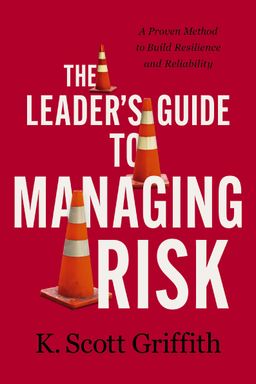
How can you prevent disasters—personal, professional, or societal—before they occur? In The Leader’s Guide to Managing Risk, former airline executive and physicist K. Scott Griffith argues that reliability, not luck or intuition, is the cornerstone of safety and sustained performance. He contends that most organizations—and individuals—focus only on what they do well, ignoring the invisible threats lurking beneath their successes. The result: predictable failures that feel unpredictable.
To change this, Griffith introduces what he calls the Sequence of Reliability®, a scientifically grounded approach that shows you how to see, understand, and manage the hidden patterns of risk in systems, people, and organizations. It’s the culmination of decades of work across aviation, healthcare, government, and other high-consequence industries, inspired by one moment that changed his life—the 1985 Delta Flight 191 crash he witnessed firsthand. That catastrophe became a lens through which Griffith saw risk differently: not as random chaos, but as a sequence governed by physics, psychology, and human behavior.
Beyond Success Bias: Why Good Results Mislead Us
Most businesses and individuals celebrate outcomes—the project launch that worked, the flight that landed safely, or the surgery that succeeded—without examining what could have gone wrong. Griffith calls this our collective “blind spot.” He argues that successful outcomes often conceal vulnerabilities that would lead to catastrophic results under slightly different circumstances. As he puts it, “Our risky systems and behaviors produce dividends—until they don’t.” By overvaluing success and ignoring dormant risks, we misunderstand the very processes that create reliability.
In practical terms, this means that a company’s strong quarter could hide systemic weaknesses—a flawed IT system, an exhausted workforce, or untested protocols—that will surface when conditions change. To become truly reliable, Griffith says leaders must flip their focus: devote as much attention to what might fail as to what succeeds. The book’s message isn’t about fear; it’s about foresight.
The Sequence of Reliability®: A Scientific Order for Managing Risk
The book’s framework unfolds through a simple but powerful sequence:
- Step 1: See and Understand Risk — Develop the vision to perceive what’s invisible. Learn how blind spots, optimism bias, and cultural filters obstruct our ability to see danger.
- Step 2: Manage Reliability in Order — Address risk through layers: systems, human behavior, and organizations—exactly in that sequence. Focusing on people without fixing broken systems, Griffith warns, is like blaming the pilot for flying through a storm they couldn’t see.
This sequence governs every level of reliability, from the personal habits that build resilience to organizational strategies that prevent billion-dollar failures. Griffith calls reliability a hidden science because it integrates engineering, neuroscience, behavioral psychology, and even ethics. In his view, reliability is about probability—a mathematical reality of how small, everyday vulnerabilities accumulate into disasters if left unacknowledged.
Why It Matters: From Cockpits to Boardrooms
Griffith makes the science accessible through vivid examples: the microburst that brought down Delta Flight 191; NASA’s space shuttle Challenger and Columbia disasters; and healthcare errors like wrong-site surgeries or medication mistakes. Across these worlds, he finds a consistent pattern—organizations assume that the absence of accidents means safety, until probability proves otherwise. “Being accident-free,” he warns, “does not guarantee future success.”
In the same way that aviation evolved from reactive accident investigations to predictive analytics, Griffith urges leaders to transform their organizations into predictively reliable systems. This shift requires collaboration—what he calls Collaborative High Reliability® and Collaborative Just Culture®. These are frameworks for fairness, inclusion, and data-driven improvements that treat errors as learning opportunities rather than grounds for punishment.
From Catastrophe to Collaboration: A Better Way Forward
Griffith’s career bridges science and management. As American Airlines’ chief safety officer, he helped develop the Aviation Safety Action Program (ASAP), a collaborative reporting initiative between airlines, unions, and the FAA that led to a 95 percent reduction in the airline fatal accident rate. His model turned punishment-based regulation into partnership-driven foresight. Later applied to healthcare, energy, and law enforcement, the same approach taught organizations to surface risks before harm occurred.
“Our risky systems produce dividends—until they don’t.”
Griffith reminds you that being good at what you do isn’t enough; you must also be good at what you don’t do well. Reliability isn’t perfection—it’s the capacity to anticipate, adapt, and recover when things inevitably go wrong.
The Promise of Predictive Reliability
Ultimately, Griffith redefines what it means to lead. A great leader isn’t merely visionary; they’re reliable. They build organizations that sustain success over decades, not just quarters. Predictive reliability—the ability to foresee and manage risk before catastrophe—helps companies prevent employee burnout, ethical breakdowns, and systemic collapse. It’s a model for modern leadership rooted in science, empathy, and collaboration.
If you’ve ever wondered why “accidents seem to happen out of nowhere,” Griffith’s answer is clear: they don’t. The patterns are there to see, if you know how to look. This book teaches you to see them, measure them, and manage them—in your business, your community, and your life.