
Idea 1
Discovering the Leader in You
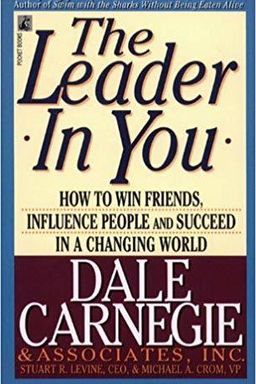
What truly makes a person a leader? Is it power, charisma, or the ability to command others? In The Leader in You, Dale Carnegie—reinvented through Stuart R. Levine and Michael A. Crom—argues that leadership isn't about authority or superiority. It’s about understanding and guiding people through genuine human connection. Carnegie’s central claim is that anyone, regardless of position or rank, can develop leadership skills rooted in empathy, communication, and influence.
Drawing on Carnegie’s timeless principles from How to Win Friends and Influence People, this book reinterprets them for a world transformed by globalization, technology, and constant change. It’s not just a manual for managers—it’s a roadmap for anyone seeking meaning and impact in their work and relationships. Carnegie contends that modern success depends less on technical mastery and more on human engineering—the ability to work effectively with, inspire, and motivate others.
The Human-Relations Revolution
Carnegie opens with the idea that the 20th and 21st centuries have witnessed a human-relations revolution. Industrial-era command structures have collapsed under the weight of globalization and information technology. Today, organizations thrive only when people communicate well and feel valued. Technological sophistication is crucial, but human interaction—trust, collaboration, empathy—is what separates thriving companies from failing ones. Harvard professor John Quelch’s insight mirrors this shift: graduates may have technical skills, but their success depends on communication and teamwork.
Leadership Beyond Authority
Leadership today isn’t reserved for CEOs or generals. It’s practiced by teachers, parents, colleagues, and anyone striving to influence others positively. Carnegie exemplifies this through figures like Charles Schwab, who earned extraordinary success not by commanding but by inspiring workers with encouragement and understanding. Schwab’s gentle humor—handing cigars to employees under a “No Smoking” sign—embodies leadership rooted in respect rather than reprimand.
Cultivating the Leader Within
The book’s central thesis asks you to uncover the “leader within.” Every person holds innate potential for leadership—expressed through listening, motivating, and appreciating others. Modern challenges—uncertain markets, rapid innovation, cultural diversity—require flexible, empathetic leaders who guide by influence, not intimidation. Carnegie’s legacy lives in these traits: curiosity, enthusiasm, and an unwavering belief in human potential.
Why It Matters
Carnegie’s philosophy feels timeless and urgent. In organizations disrupted by automation, leaders must double down on empathy, trust, and vision—the uniquely human traits that machines can’t replicate. Through engaging narratives—from Fred Wilpon’s humility with a security guard to Mother Teresa’s unwavering compassion—the book argues that leadership is built one relationship at a time. It matters because leadership that begins with respect transforms not only careers but communities.
Key Idea
To find the leader in you, start by looking outward—toward understanding, communication, and genuine consideration for others. Leadership begins not with commanding power, but with earning trust and inspiring collaboration.