
Idea 1
The Human Side of Leadership
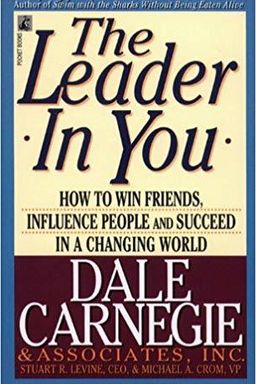
What does it really take to lead others effectively in the modern world? In The Leader in You, Dale Carnegie & Associates argue that true leadership in the twenty-first century is no longer about command-and-control authority but about understanding and influencing people. Leadership, they claim, isn’t reserved for CEOs or generals—it’s a skill that anyone can practice daily by mastering human relations, communication, and emotional intelligence.
Carnegie’s central thesis is that success depends less on technical expertise and more on the ability to lead, motivate, and connect with people. While the world has evolved dramatically since Carnegie’s first courses in public speaking and human relations in the early 1900s, human nature hasn’t changed. People still crave respect, understanding, and recognition. The challenge, then, is learning to meet these timeless needs amid constant technological and social upheaval.
From Management to Leadership
The book begins by describing a dramatic shift that took place across the twentieth century and continues today: the move from rigid, pyramidal hierarchies to collaborative, people-centered organizations. Old-style managers focused on efficiency and control, often relying on fear to motivate workers. In contrast, today’s leaders serve, listen, and inspire. As one executive puts it, “You can’t do it by directive anymore. It has to be by influence.” This distinction between management and leadership—between organizing tasks and inspiring people—is a guiding theme throughout the book.
Carnegie’s research, confirmed by studies from the Carnegie Institute of Technology, found that 85 percent of success in life and business comes from human skills rather than technical skills. That’s why leaders must focus not just on results but on relationships. Without effective communication, empathy, and trust, no amount of technical brilliance will save an organization.
The Evolution of Dale Carnegie’s Approach
Dale Carnegie developed his methods through direct experience, not academic theory. Beginning as a public-speaking teacher at a YMCA in New York, he discovered that adults who struggled to speak confidently also struggled to relate to others. By helping them express themselves clearly and positively, he saw transformations not just in their careers but in their lives. Out of this realization came the simple yet profound principles first shared in How to Win Friends and Influence People—principles like “Give honest and sincere appreciation,” “Begin in a friendly way,” and “See things from the other person’s point of view.”
In The Leader in You, these principles are updated for a world of global business, constant change, and cultural diversity. The organization Carnegie founded—Dale Carnegie & Associates—applies these principles to leadership training programs worldwide. The examples range from CEOs reviving struggling companies to teachers creating community in classrooms, proving the enduring relevance of Carnegie’s people-first philosophy.
Core Themes of the Book
Throughout the book, several major themes recur:
- Empathy and Perspective: Seeing things from another person’s point of view is the foundation of true influence. Effective leaders seek first to understand before trying to be understood.
- Communication and Listening: Great leaders listen more than they talk, creating an environment of trust and collaboration.
- Motivation through Recognition: Instead of command or fear, motivation comes from genuine appreciation, praise, and shared purpose.
- Positive Attitude and Character: Leadership begins with the mindset of the individual. Changing your thoughts can change your outcomes.
- Balance and Self-Control: Leaders who manage stress, worry less, and stay composed in crisis inspire confidence in others.
Each theme is illustrated by vivid stories—from Charles Schwab’s charming diplomacy to Mary Kay Ash’s relentless optimism—that show how empathy and enthusiasm can transform not only companies but also personal relationships. These stories remind readers that leadership is built on everyday acts of respect and understanding, not grand gestures.
Why It Matters Today
In our high-speed, high-pressure world, technical ability often feels like the most valued currency. Yet as technology advances, the human touch becomes more important, not less. Artificial intelligence can process data, but it cannot replace genuine empathy, trust, and inspiration. Carnegie’s principles equip you to thrive—and help others thrive—in exactly this environment.
Ultimately, The Leader in You is a guide to unlocking the natural leader within. It argues that great leadership starts with self-awareness and grows through service to others. Whether you’re directing a company, raising a family, or leading a classroom, the same skills apply: listen deeply, empathize sincerely, communicate clearly, and act with integrity. These are the timeless tools of influence, and learning to use them can transform every aspect of your life.