
Idea 1
Leadership as a Habit, Not a Trait
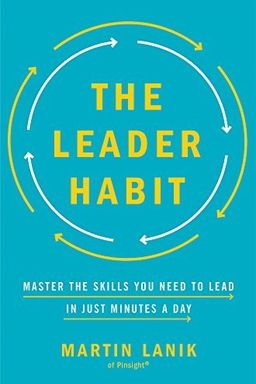
How can you become the kind of leader who naturally inspires, motivates, and acts effectively — not by sheer willpower, but through consistent behavior? In The Leader Habit, Martin Lanik argues that great leadership isn’t an inherited trait or a mystical quality possessed by the few. Instead, it’s the result of deliberate habit-building. Lanik contends that leaders don’t just think or decide differently — they act differently over and over until those actions become automatic.
Drawing on cognitive psychology, behavioral analysis, and his own global leadership research, Lanik proposes a method that helps anyone turn leadership behaviors into habits through short, focused daily exercises. This practical model — what he calls the Leader Habit Formula — contrasts sharply with traditional leadership training that relies on classes, reading, or seminars. Instead of just learning what good leadership looks like, you practice small, concrete actions until they become second nature.
Leadership Skills as Automatic Behaviors
Lanik begins by explaining that leadership behaviors are guided by habit. We often act without thinking — whether we’re driving a car, brushing our teeth, or handling a team meeting. He cites studies showing that nearly half of our daily behaviors are habitual and automatic, not deliberate choices. Good and bad leadership, therefore, can stem from deeply embedded behavioral patterns.
Through Laura’s story — an emergency room nurse who thought she was a natural leader but was seen by colleagues as argumentative and difficult — Lanik illustrates how unrecognized habits undermine leadership. Laura wasn’t consciously rude; she was repeatedly triggered by stress and reacted according to her existing habits. When she instead practiced asking open-ended “what” and “how” questions for five minutes a day, she began listening better, built rapport, and transformed into a respected leader. That single exercise rewired her habitual responses.
The Mechanics of Habit Formation
The Leader Habit Formula rests on a well-studied psychological principle: the cue–behavior–reward loop. A habit forms when a specific cue triggers a behavior that yields a satisfying reward. For example, sitting down with coffee (cue) makes a smoker light up (behavior) and feel relaxed (reward). To develop positive habits, you reverse-engineer this loop — picking purposeful cues and intrinsic rewards that drive desired behaviors.
Lanik’s research shows that the most effective ways to convert leadership behaviors into habits are to make them simple, individual, consistent, and context-based. Instead of trying to “be visionary” or “communicate better,” you practice precise actions — like writing down one anticipated reaction before each meeting or restating someone’s point during conversation. These tiny, repeatable behaviors become subconscious habits after sustained practice (about sixty-six days on average).
Why Most Leadership Training Fails
Traditional corporate training often emphasizes learning theory or attending seminars. Lanik explains that this approach produces knowledge, not automatic behaviors. He likens it to reading about piano technique versus actually playing the piano. Studies show that people forget 85% of material learned in the classroom within six days. Without repetition and feedback linked to real cues, behavioral change never sticks. Lanik’s system replaces theory with structured deliberate practice — short exercises you can do in minutes each day that turn skills into ingrained responses.
The Power of Small, Repeated Practice
Lanik’s proposition is deceptively simple yet powerful: lasting leadership change comes from doing less, not more. Each five-minute practice session focuses on a single micro-behavior tied to a natural cue (for example, after finishing a meeting, summarize what was agreed upon). As you repeat these behaviors daily, they transition from conscious effort to automatic reaction — enabling you to lead effectively under stress or uncertainty.
“If you can practice one simple behavior every day for five minutes,” Lanik writes, “you can make profound changes in your leadership that will cascade into your entire life.”
Over time, small daily changes compound into transformation. Laura, who began by practicing better listening habits, found herself negotiating more diplomatically and even improving relationships at home. By embedding leadership skills into automatic routines, you shift from managing behaviors consciously to embodying them instinctively — making leadership your default pattern rather than a performance.
Lanik concludes that leadership, success, and influence are not the result of one-time inspiration or innate ability. They’re products of habit. The Leader Habit Formula offers a scientific, practical roadmap for turning any desired leadership behavior into a sustainable, automatic part of who you are.