
Idea 1
The Four Laws That Drive the Universe
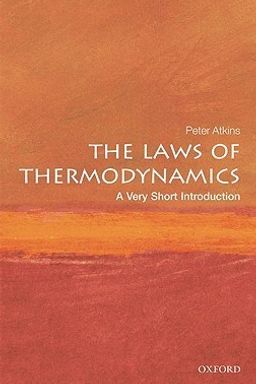
Why does ice melt, engines hum, and your body feel warm after exercise? In The Laws of Thermodynamics: A Very Short Introduction, chemist Peter Atkins asks this deceptively simple question to reveal one of nature’s deepest truths: everything that happens, from boiling water to the birth of stars, is governed by four fundamental laws of energy. Thermodynamics, he argues, isn’t just about steam engines or physics—it’s the language that explains what drives the universe itself.
Atkins contends that the universe operates under a “mighty handful” of laws: the Zeroth defines temperature, the First secures energy conservation, the Second uncovers entropy and the inevitability of change, and the Third establishes that absolute zero remains forever unreachable. Together, they map the transformation and flow of energy, revealing why things happen—and equally important, why they cannot. Thermodynamics, in Atkins’s view, is both a scientific framework and a philosophical lens that invites you to understand existence as a grand balance of order and disorder, efficiency and waste, spontaneity and constraint.
From Steam Engines to the Universe
At first glance, thermodynamics may seem like a relic of the industrial age—born in 19th-century debates about steam engines and boilers. Atkins acknowledges this history but quickly expands its reach. The same principles that determine how efficiently coal can drive a piston also dictate how your body metabolizes food, how stars radiate energy, and even how order emerges from chaos in biology and thought. What began as mechanical engineering has grown into a universal law of change.
In fact, Atkins begins by redefining the word “system.” A system isn’t just a machine—it’s any bounded part of the universe you choose to study, from a cup of water to a living organism. The rest of reality becomes its surroundings. Once you understand this division, you can explore how matter and energy cross boundaries through heat, work, and transformation—concepts that power every process imaginable.
The Architecture of Thermodynamics
The four laws, Atkins explains, form a logical staircase. The Zeroth Law creates the foundation by defining temperature as the criterion of thermal equilibrium—when heat no longer flows between two systems, their temperatures are equal. On this simple axiom stands the thermometer, the measure of equilibrium itself. The First Law, the familiar law of conservation of energy, asserts that energy can neither be created nor destroyed—only transformed between heat and work. The Second Law, the most philosophically rich, introduces entropy, the measure of disorder and directionality in the universe. And the Third Law caps these foundations with a practical restraint: no matter how ingenious our tools, we can never reach absolute zero.
If the First Law tells us what is possible (energy must balance), the Second Law tells us what is natural (disorder increases). This interplay is what Atkins calls the “engine of change”—the reason why time moves forward and why perfection—whether in machines or minds—always remains slightly out of reach.
The Bridge Between Macro and Micro
A recurring theme in Atkins’s narrative is the union between classical, bulk-level thermodynamics and statistical thermodynamics, which dives into the world of molecules and probabilities. In classical thermodynamics, you can understand pressure, temperature, and heat without mentioning atoms. In statistical thermodynamics, these bulk properties emerge naturally from molecular behavior. The author beautifully demonstrates how Boltzmann’s distribution connects these worlds: temperature becomes a parameter describing how molecules populate available energy levels. As heat increases, molecules occupy higher states; as things cool, they settle into lower ones. This molecular view transforms temperature from a mere number into a vivid portrait of molecular motion—order dissolving into disorder.
By bridging observation and atomic theory, Atkins reveals thermodynamics not as dry mathematics but as a human story of understanding: from early experimentalists like Joule and Kelvin to visionaries like Clausius and Boltzmann, each contributed to uncovering why “nothing happens” is just as important as why “something does.”
Why It Matters to You
Thermodynamics governs more than science—it governs your life. Every meal you eat is a chemical engine converting energy into motion. Every refrigerator and battery battles entropy to maintain order against nature’s tendency toward chaos. Even creativity and consciousness rely, in Atkins’s broad interpretation, on entropy’s drive toward change: you think, innovate, and evolve by dispersing energy into new forms. The second law’s “increase in entropy” isn’t pessimism—it’s the engine of transformation fueling both physical and intellectual progress.
What makes Atkins’s vision distinctive is its blend of rigor and wonder. He doesn’t treat thermodynamics as textbook physics, but as philosophy in action—a study of what makes the universe dynamic. And although his prose remains grounded in equations and experiments, his ambition is cosmic: to show how a handful of laws explain everything from the behavior of heat engines to the birth of stars, and even to the fleeting spark of a thought in your mind.
"Do not think that thermodynamics is only about steam engines," Atkins writes. "It is about almost everything."
Through this powerful statement, he invites you to see the invisible patterns behind every meaningful change—from boiling water to the rise and fall of civilizations. Energy, in all its forms, drives the universe. And understanding its laws means understanding the story of existence itself.