
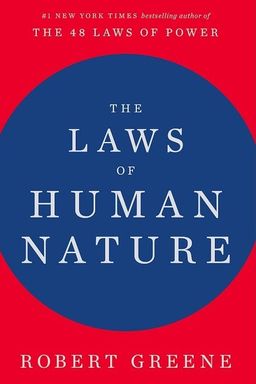
The Laws of Human Nature cover

The Laws of Human Nature

by Robert Greene

Robert Greene''s ''The Laws of Human Nature'' delves into the often unacknowledged facets of our behavior. By understanding and accepting our irrational, narcissistic, and aggressive tendencies, we can gain control and transform these traits into strengths, leading to a more fulfilling life.

Mastering Human Nature

Why do people so often act against their own interests? In The Laws of Human Nature, Robert Greene argues that beneath modern sophistication, humans remain governed by deep emotional and evolutionary patterns—irrational impulses, ego defenses, tribal instincts, and hidden desires. To live effectively, you must learn to decode these forces in others and in yourself. The goal is not cynicism but mastery: seeing human nature clearly so you can act with insight, empathy, and purpose rather than manipulation or self-deception.

Reading human nature, not escaping it

Greene’s central premise is that all power, relationships, and creative fulfillment hinge on accurate perception. You misread people because you project your feelings, accept social masks, or mistake charisma for character. By systematically studying emotions, motivations, and historical character types—from Pericles to Elizabeth I—Greene maps a discipline of human realism. That realism makes you calmer under pressure, harder to manipulate, and more persuasive.

Each law he presents moves from self-mastery to social mastery. The early sections teach you to manage emotion and narcissism in yourself; the middle examines reading others and group dynamics; the latter laws widen perspective, elevate moral intelligence, and anchor long-term purpose. Together they describe the transformation from reactive being to composed strategist.

From emotional slavery to rational control

The first challenge is emotional irrationality—the mind’s default state. You act from moods, biases, and social contagion. Historical figures like Pericles model the Inner Athena: decision-making ruled by rational standards and guided delay. By observing your own triggers, journaling daily distortions, and lengthening response time, you train a clear mind. Rationality here does not mean cold detachment—it means subtracting distortion to see reality.

This clarity connects with empathy. Instead of turning inward like the narcissist, you transform self-focus into understanding others. Shackleton reading his crew’s moods on Antarctic ice or Milton Erickson decoding patients’ body language show empathy as an actionable skill of observation. When you master empathy, you cease to be seduced by appearances and become a skilled reader of unspoken cues.

Seeing people as they are

People wear masks to survive and impress. If you accept those performances, you suffer manipulation. By learning the second language—tone, gesture, microexpression—you catch contradictions between words and feelings. This “reading beneath” saves you from both naïve trust and undue suspicion. You also learn impression management: your own mask can be crafted deliberately, with authenticity as the anchor. Display warmth, restraint, and selective mystery so your presence commands trust and intrigue rather than exposure.

Character, desire, and hidden drives

Greene’s historical portraits—Howard Hughes’s compulsion, Stalin’s narcissism, Chanel’s mystique—demonstrate that personality patterns repeat. Under stress, people revert to early-formed compulsions. If you read these repetitions, you see who will crumble or endure. You also learn that desire operates by contrast: scarcity and ambiguity magnify value. Chanel’s controlled absence and minimalist branding awaken imagination—a lesson in designing attraction in work, art, or leadership.

Beyond personal magnetism, Greene warns that grandiosity, envy, and fragile ego distort success. Modern culture amplifies these through attention economies. Only by reality checks—crediting luck, adversity, and collaboration—can ambition become mastery. Grandiosity becomes the engine of excellence only when tethered to feedback and discipline.

Perspective and purpose

The book culminates in mental elevation: moving from shortsighted reaction to long-range strategy. Ever since John Blunt’s South Sea disaster, societies have fallen to mass irrationality. You counter this by “manufacturing time”—deliberately widening your mental altitude through delay, comparative history, and scenario thinking. That perspective allows you to lead wisely, resist bubbles, and see truth behind trends.

The final laws turn inward toward moral and existential mastery. By changing attitude like Chekhov, integrating the Shadow like Lincoln, and meditating on mortality like Flannery O’Connor, you dissolve bitterness and find sustaining purpose. Mortality awareness becomes a focusing lens, converting urgency into clarity. The human animal cannot suppress instinct, but with awareness, you refine it into creativity, empathy, and long-term power.

Guiding principle

To master human nature is to see through illusion—your own and others’—and to replace reaction with understanding. Clarity, empathy, discipline, and purpose are the true instruments of influence.

This journey from emotional self-deception to farsighted composure defines Greene’s enduring message. Power and happiness alike flow not from domination but from psychological lucidity—the art of understanding what moves people, and mastering what moves you.


Emotional Mastery

Greene begins with the Law of Irrationality: beneath reason resides a volatile emotional core. Your mood, ego wounds, and social pressures hijack decision-making unless you cultivate distance. Pericles embodies the model of the rational strategist: anchoring decisions to the greater good of Athens and delaying action until emotion cools. The practice is modern Stoicism—learning to insert reflection between impulse and motion.

Recognizing biases and triggers

Common biases—confirmation, conviction, appearance, and group bias—make you see the world as you wish it to be. High-grade irrationality appears when buried insecurities or collective panic erupt. During speculative booms or viral outrage, cognition gives way to imitation. Greene tells you to journal recurring triggers, extend response time, and signal cooling-off periods before any consequential move. These meta-habits transform raw feeling into information rather than distortion.

From emotion to realism

Rationality does not discard feeling—it refines it. Emotions can guide attention if you treat them as data. Anger reveals values violated; fear marks areas for preparation. Lincoln used both empathy and melancholy as strategic assets, not weaknesses. Your task is to become aware quickly when emotion surges and pivot toward analysis, asking: “What is this signal trying to tell me—about others or about myself?”

Practice

Delay response, isolate motive, and act only when the emotional wave subsides; clarity rises in the calm that follows.

Over time your patience becomes power: when others lurch impulsively, you remain steady. This steadiness is the cornerstone of all further social strategy—without self-control, every other law fails.


Social Intelligence and Empathy

Everyone seeks attention and validation, but those who can redirect that energy toward others acquire enduring influence. Greene’s Law of Narcissism teaches you to transmute self-love into empathy. The healthy narcissist mirrors others instead of exploiting them—the way Ernest Shackleton transformed his own confidence into a life-saving morale engine on Antarctic ice. The ultimate power is social attunement.

Empathy as a learned discipline

Empathy has four levels: attitude (curiosity without judgment), visceral tuning (reading tone, pace, microexpression), analytic empathy (understanding biography and values), and the empathic skill—testing what you sense through feedback. Practicing these daily turns you from reactive to receptive. Milton Erickson’s method—matching a patient’s rhythm and posture—demonstrates how subtle synchronization builds trust faster than argument.

Reading the masks

People conceal motives behind charm or competence. By cataloging patterns—dominance signals, disguised dislike, forced smiles—you decode truth. (Note: Greene cautions against Othello’s error—mistaking nervousness for guilt. Context matters more than isolated cues.) Equally, your persona should be deliberate. Control impressions through calm energy and measured speech; silence and eye contact often persuade more deeply than talk.

Choosing who to trust

Character, not surface, predicts loyalty. Examine behavior under stress, consistency across roles, and willingness to learn. Avoid toxic archetypes—the hyperperfectionist, drama magnet, or big talker—and align with resilient, grounded partners. Heraclitus’s dictum recurs: “Character is destiny.” The rational mind evaluates patterns, not promises.

Empathy, observation, and patient judgment form the triad of social mastery: they let you navigate power structures without losing compassion or realism.


Desire, Ego, and Attraction

Desire governs more decisions than reason. You crave what seems scarce, forbidden, or symbolic of completion. Greene’s Law of Covetousness reveals that presence dulls value; mystery magnifies it. Coco Chanel mastered timing and absence—spreading her brand everywhere while revealing little of herself. In relationships and leadership alike, the principle holds: make others imagine and pursue you rather than flood them with access.

Ethics of allure

Scarcity requires substance. Manipulative mystique collapses if no genuine craft sustains it. Chanel coupled seduction with quality; her perfume endured after trends faded. In a hyperconnected age, controlled withdrawal—delaying responses, limiting disclosure—creates respect as well as curiosity. Pleasure lies in pursuit, not saturation.

Ego management

The same dynamic fuels grandiosity. Success exaggerates the self-image until you conflate talent with omnipotence. Michael Eisner’s decline at Disney shows how praise without correction leads to overreach. To remain grounded, divide credit, welcome dissent, and reset to humility after victories. Treat success as intoxication—wait until you sober before deciding.

Used responsibly, ego and desire become creative engines; unexamined, they drive obsession and collapse. The art is balance: mystery without deceit, confidence without delusion.


Shadow and Inner Transformation

Inside you live conflicting drives—ambition and fear, love and cruelty. Greene, drawing on Jung, calls the repressed part the Shadow. Unacknowledged, it leaks through envy, hypocrisy, or self-sabotage, as Nixon’s unintegrated resentments ruined him. Embracing it consciously releases energy for authenticity and creativity.

Seeing and integrating the Shadow

Notice recurrent jealousies, irrational anger, or mental gossip about others. These are mirrors of what you fear in yourself. Admit these impulses without shame; journal them, express them through art or humor, and transform their energy into empathy. Lincoln acknowledged his dark moods yet transmuted them into eloquence and patience. Integration replaces repression with range.

Changing attitude like Chekhov

Chekhov illustrates inner alchemy: from poverty and abuse he cultivated humor, diligence, and generosity. By reinterpreting hardship as training, not curse, he liberated himself from parental scripts. You can do the same through reframing and consistent labor—seeing constraints as instruction rather than trap.

Shadow work turns suffering into clarity. The more of yourself you recover, the less power circumstances and manipulators have over you.


Persuasion and Influence

Human defensiveness is the main barrier to influence. People believe they are autonomous, intelligent, and good; contradict this and you provoke resistance. The Law of Defensiveness teaches the opposite tactic: confirm self-opinion before guiding. Lyndon Johnson epitomized it—making senators feel brilliant and free while steering them toward his agenda.

Five soft-power strategies

  • Listen deeply—mirror phrasing, ask specific questions, and let silence draw others out.
  • Set the emotional climate—humor and warmth defuse suspicion.
  • Validate autonomy and intelligence before making requests.
  • Soothe insecurity with believable praise—commend effort, not genius.
  • Use resistance as leverage—agree outwardly to redirect flow (Erickson’s therapeutic judo).

Empathy again underlies persuasion. You meet people where they live psychologically, not where logic says they should be. Subtle reciprocity and mood-shaping achieve what argument rarely can.

Practiced ethically, these strategies build lasting goodwill. People support those who make them feel capable and seen.


Farsighted Thinking

Short-term vision wreaks havoc on individuals and nations alike. The South Sea Bubble and the 2008 crash show that craving immediate gain blinds entire societies. Greene’s Law of Shortsightedness teaches you to widen perspective—to manufacture the wisdom of hindsight in the present.

Expanding the time horizon

Train delay and comparative thinking: simulate the mountain vantage before acting. Ask how a choice will read in five or ten years, and analyze historical analogues. Abraham Lincoln, enduring early defeats, maintained an elevated calm—the model of manufactured time. Scenario planning and structured pause (72-hour rules, devil’s advocate reviews) build institutional farsightedness.

Common traps

  • Unintended consequences—ignoring second-order effects (the Cobra effect, Prohibition).
  • Tactical hell—endless fights detached from strategy.
  • Ticker-tape fever—reacting to minute data instead of trend lines.
  • Lost in trivia—mistaking detail control for mastery.

To think long is to act from structure, not impulse. The farsighted mind anticipates feedback loops, welcomes pause, and measures success in durability rather than drama.


Leadership and Authority

People simultaneously crave guidance and resist domination. Authority therefore rests not on coercion but on consistency, empathy, and long vision. Elizabeth I demonstrates this paradox—projecting humility and strength in fusion, turning weakness of gender and circumstance into moral force. Greene defines true authority as earned legitimacy: the aura people feel when they trust your purpose.

Pillars of lasting authority

  • Vision—communicate long-term objectives clearly and calmly.
  • Empathy—sense group mood and preempt fractures.
  • Example—lead from the front; embody the standard you demand.
  • Controlled presence—balance accessibility with mystique; avoid overexposure.

Elizabeth’s coronation grace, her mastery of negotiation through strategic absence, and her eventual decisiveness over Mary Stuart form enduring lessons. Leaders who delay for perspective but act firmly when stakes peak gain trust that transcends charisma. Consistency becomes spiritual gravity.

Authority built on empathy and vision outlasts positional power. It is renewed through humility and a higher sense of service—a theme Greene links to Lincoln and modern exemplars like Merkel.


Power, Aggression, and Strategy

Aggression pervades all human dealings, but its disguise determines outcome. Greene contrasts primitive, explosive aggression with Rockefeller’s cold, sophisticated pursuit—relentless yet patient. To survive among such players, you must recognize patterns of camouflaged domination and turn your own assertive energy constructive.

Defensive strategy against manipulators

When facing the calm aggressor, detach morally and map incentives. Avoid emotional retaliation; coordinate with allies, document deceit, and expose contradictions. Isolation and panic fed Rockefeller’s victims; unity and information would have neutralized him. In organizations, transparency and collaboration form the best armor.

Channeling aggression productively

Your inner aggression can fuel ambition, persistence, courage, and righteous action if disciplined. Define clear missions, maintain failure logs, and convert anger into structured campaigns rather than rants. Martin Luther King Jr.’s channeled outrage—nonviolent yet immovable—stands as moral aggression at its highest refinement.

Power used ethically depends on self-command. By fusing willpower and patience, you transform destructive impulses into architecture—building lasting influence rather than fear.


Systems, Conformity, and Cultural Timing

Human behavior expands from individuals to crowds. Gao Yuan’s Born Red memories reveal how group identity and moral panic erase conscience. Once conformity and symbolic purity infect a community, it devolves into persecution. Social energy, however, can be redirected into purposeful collaboration—a “reality group” grounded in shared craft, open dissent, and fair process.

Leaders who sense collective mood early—like Danton reading pre-Revolutionary France—can ride emerging currents instead of resisting them. Every generation undergoes cycles of creation, consolidation, decline, and renewal. Understanding where your era stands in this rhythm grants strategic advantage. You either embody the new spirit or become relic of the old (Louis XVI’s fate).

Practically, you build resilient culture by rewarding competence over ideology, clarifying purpose, diversifying temperaments, and maintaining information transparency. These structural habits keep emotion serving mission, not swallowing it. When cultural tides shift again, awareness—not nostalgia—keeps you afloat.

The ultimate strategist reads not just people but epochs. By aligning personal direction with historical momentum, you amplify both freedom and power.


Mortality, Meaning, and the Sublime

Greene concludes with mortality awareness—the master key to perspective. Denial of death breeds trivial pursuits and anxiety; awareness of it sharpens vision. Flannery O’Connor, knowing her illness, used time as fuel for focus and empathy. Likewise, Dostoyevsky and Montaigne turned proximity to death into creative and moral renewal.

Turning awareness into clarity

  • Visualize your mortality vividly to refocus priorities.
  • Treat life as finite projects—deadlines transform procrastination into momentum.
  • Recognize mortality in others to dissolve petty hatred.
  • Practice amor fati—loving fate, turning pain into discipline.
  • Seek the Sublime—art, nature, or silence that dwarfs ego.

To meditate on death is to awaken life. It compresses ambition into purpose, aligns ego with service, and gives serenity amid chaos. Death is the most reliable teacher of proportion—reminding you that time, not applause, is the ultimate currency.

When you sense impermanence daily, your work gains urgency, compassion, and gravitas. That consciousness—clear-eyed, humble, and bold—is the final mark of mastery over human nature.

Dig Deeper

Get personalized prompts to apply these lessons to your life and deepen your understanding.

Go Deeper

Get the Full Experience

Download Insight Books for AI-powered reflections, quizzes, and more.