
Idea 1
The Law of Attraction and the Art of Deliberate Creation
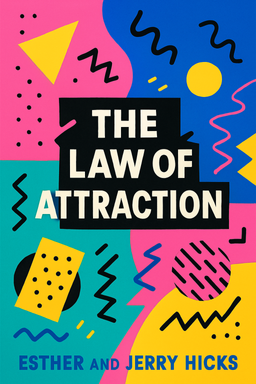
Have you ever noticed how focusing on something—whether it’s a fear, a dream, or a daily frustration—seems to invite more of it into your life? Esther and Jerry Hicks, channeling the collective consciousness known as Abraham, use this everyday observation to build the foundation of The Law of Attraction: The Basics of the Teachings of Abraham. They argue that the universe operates through a simple but profound principle: you attract what you give your attention to. This, they say, is not only a metaphysical theory but the central organizing law of existence—“that which is like unto itself is drawn.”
The book presents a system of spiritual mechanics that you can use to deliberately shape your experience, replacing unconscious creation with conscious, joyous co-creation with the universe. Abraham teaches that every thought carries a vibration, and those vibrations summon experiences that match them, much like a radio tuning into a specific frequency. You are always broadcasting, always attracting—and whether you do so deliberately or by default determines the quality of your life.
What the Book Argues
At its heart, the book asserts that you create your reality through your thoughts, emotions, and attention. By becoming aware of where your mental energy flows, you can align with what Abraham calls your Inner Being—the nonphysical source energy that always guides you toward expansion and joy. When your thoughts and emotions harmonize with that inner guidance, you experience positive emotion, synchronicities, and ease. When they conflict, you experience struggle, resistance, and unwanted outcomes. This emotional feedback is your built-in navigation system.
Abraham’s intention is not to give you another belief system, but to remind you that you are an extension of Source Energy. Instead of struggling to fix an external world, you start by adjusting your internal vibration—your feelings and thoughts—and the outer world shifts in response. It’s a mindset echoed in works like Wayne Dyer’s Change Your Thoughts, Change Your Life and Napoleon Hill’s Think and Grow Rich, both emphasizing mental alignment as the foundation of material and emotional fulfillment.
The Three Universal Laws
Abraham organizes their philosophy into three interconnected Universal Laws:
- The Law of Attraction: Like energy attracts like energy. Whatever you focus on—wanted or unwanted—expands.
- The Science of Deliberate Creation: You can create intentionally by focusing your thoughts in alignment with your desires rather than drifting by default.
- The Art of Allowing: True mastery comes when you stop resisting and allow all things—including others—to be as they are, freeing your own energy flow.
Each law builds upon the previous one. Without understanding the Law of Attraction, you cannot truly create deliberately. Without practicing deliberate creation, you cannot master allowing. The process is evolutionary—it’s about learning to align, create, and ultimately release control into effortless co-creation with life itself.
Why It Matters
Abraham’s teachings speak to a universal yearning for agency and peace. In a world that often feels chaotic, the idea that your emotions and focus literally shape reality is both empowering and daunting. The Law of Attraction reframes “life happens to me” thinking into “life responds to me.” Instead of reacting to circumstances, you begin consciously designing them. This is not wishful thinking—it’s vibrational management. As you learn to calibrate your emotional frequency toward joy, you magnetize experiences that reflect that joy.
For example, Jerry Hicks recalls that once he began to apply these principles, his lifelong pattern of struggle gave way to ease. Business opportunities flowed, relationships softened, and synchronicities multiplied. The teachings are unapologetically optimistic: you are a deliberate creator, not a victim of fate, and the forces of the universe are on your side—if you choose to align with them.
The Framework of the Book
The book unfolds through five parts. Part I tells the story of Esther’s extraordinary channeled connection with Abraham, transforming skepticism into revelation. Part II explains the Law of Attraction in practical terms—why you can’t attract prosperity while feeling poor or attract love while feeling unworthy. Part III dives into the Science of Deliberate Creation, revealing how focused desire and expectation bring your imagined intentions into form. Part IV explores the Art of Allowing, showing that resistance—whether in judgment, fear, or control—is the only thing that blocks flow. Finally, Part V introduces Segment Intending, a tool for consciously setting intentions throughout your day.
Together, these principles form a kind of metaphysical “user’s manual” for reality creation. The Hickses’ contribution is not a new religion but a clear, experiential system that blends spirituality, psychology, and quantum-like metaphors into an accessible practice of feeling better first and watching external results follow. If you’ve ever suspected that your emotions hold more creative power than you’ve been taught, The Law of Attraction gives you both the rationale and the routines to prove it true in your own life.