
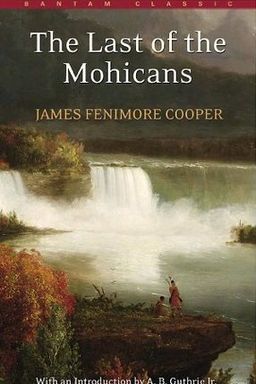
The Last of the Mohicans cover

The Last of the Mohicans

by James Fenimore Cooper

The Last of the Mohicans is a gripping tale of adventure and romance amid the chaos of the French and Indian War. Follow two sisters, a rugged frontiersman, and their Native American allies as they navigate treacherous landscapes, cultural conflicts, and the enduring power of love and honor.

Frontier Conflict and Moral Geography

What makes The Last of the Mohicans endure is not only its action but its comprehension of the frontier as a moral landscape. James Fenimore Cooper frames wilderness, war, and culture as intersecting systems—geography dictates strategy, and each fight tests human codes of honor against the land’s uncompromising realities. You learn that terrain in this novel is never neutral, that politics and revenge flow through rivers and portages as much as through men’s hearts.

Wilderness as active force

From the Horican (Lake George) southward to the Hudson valleys, geography is both battlefield and protagonist. Cooper shows how forts—William Henry and Edward—sit astride fragile transport corridors, forcing armies into predictable jeopardy. The wilderness governs choices: slow river travel demands scouts like Hawkeye and native allies; narrow trails invite ambush. You watch physical constraints—portages, cliffs, caverns—transform tactics into survival logic. Geography, in Cooper’s hands, becomes destiny.

Cultures in collision

Cooper insists that the Indian peoples are not mere backdrop. The Mohican pair, Uncas and Chingachgook, and the Huron Magua dramatize the diversity of America’s native nations. Language and naming create misunderstandings—Lenape, Delaware, Mohican, Mohegan—interchangeable to outsiders, distinct to themselves. You see fierce warriors paired with poets: brevity, oratory, and tone substitute for elaborate rhetoric. In this mosaic, northwestern tribes ally and betray according to colonial pressures, showing a living diplomacy where personal injury easily escalates into war.

Moral codes of the frontier

At the novel’s heart stands Hawkeye—neither soldier nor savage, but a moral scout. His ethics prioritize prudence and honor under duress. He kills when necessity dictates, saves women he barely knows, and judges men by skill rather than uniform. Chingachgook and Uncas mirror that ethic within their own customs: calm courage, filial loyalty, restraint. Against them Cooper sets Magua, the avatar of betrayal—a man whose private grievance with Colonel Munro metastasizes into public calamity. Each character’s moral stance elucidates what “civilization” costs when imposed on a harsh environment.

War, deception, and tragedy

Military honor collapses amid misunderstanding. Montcalm’s courteous terms cannot restrain his native auxiliaries, and a signed capitulation becomes atrocity at William Henry. Hawkeye’s resourcefulness—concealment in caves and animal disguise—rescues some but spares few. Cooper uses this mixture of tactical brilliance and moral futility to warn that heroism on the frontier demands compromise. The novel’s later pursuits and deaths enact the same pattern: courage married to unavoidable sorrow.

Landscape and aftermath

When the sieges end, the charred fort and ravaged plain become testimony. Cooper turns scenery into moral witness: every tuft and raven remembers violence. Tragedy culminates in Uncas’s and Cora’s deaths, balanced by ritual mourning that merges Christian hymn and Delaware chant. Through Tamenund’s council the narrative closes not in ease but in reflection—the wilderness retains memory even when people perish. You leave with the understanding that war’s geography also traces a geography of conscience.

Key takeaway

Cooper writes a philosophical adventure: the land, the languages, and the codes of honor all converge to test how humans act when civilization loses its bearings. In the frontier, every ridge and river becomes a moral line.


Geography and War Strategy

You begin with the map. Cooper’s battlefield stretches from Lake Champlain to the Hudson, with Lake George forming the corridor of contest. Armies must move through water and forest, constrained by terrain rather than by command. Fort William Henry and Fort Edward guard this route, but the narrow passages mean slow logistics and vulnerability to ambush.

Terrain as controller

Every strategic event—Montcalm’s siege, Munro’s defense, and the rescue at Glenn’s Falls—expresses the power of landscape. The falls serve as fortress and refuge; its caverns transform natural scenery into engineered shelter. When geography dictates fixed routes, conflict becomes predictable, and advantage belongs to whoever reads the land best.

Tactical lessons

Frontier combat favors small groups, local knowledge, and improvisation over formation. Scouts and native guides gain superiority through skill: Hawkeye’s clever canoe work, the Mohicans’ reading of deer paths, and Magua’s exploitation of blind scrub. Cooper’s maxim: courage is dependent on terrain, and ignorance of geography breeds defeat.

Key idea

In Cooper’s frontier world, strategy arises from landscape. The fall of Fort William Henry occurs less from cowardice than from logistical confinement—a lesson in how setting can overrule valor.


Codes of the Native Nations

Cooper portrays the native peoples as moral agents rather than stereotypes. Their dignity rests in cultural codes of behavior, speech, and loyalty. You see the Mohican father and son acting with restraint; Magua and his allies express vengeance within customary logic. Each tribe’s political fluctuation—the Hurons for France, the Delawares for themselves—reveals internal diplomacy, not savagery.

Language and confusion

European records confound tribal names—Mohican, Mohegan, Lenape—flattening diversity. Cooper reminds you that labels distort alliances and identities. Misnaming shapes treaty errors and animosity. Listening carefully to tone, sobriquet, and symbol becomes crucial for understanding who acts with honor and who betrays.

Moral parity

Native ethics balance bravery and mercy. War allows ferocity; peace demands justice. Uncas’s nobility and Magua’s passion both derive from this same structure: valor carries the seed of vengeance. Cooper thus equalizes moral capacity between races—difference arises from circumstance, not inferiority.

Cultural insight

Understanding this view prevents you from seeing Cooper’s Indians as exotic others. They are ethical mirrors, reflecting humanity’s shared extremes of courage, cruelty, and compassion.


Hawkeye’s Frontier Ethic

Hawkeye stands as the scout whose wisdom mediates between civilization and wilderness. His identity, neither aristocrat nor savage, gives him moral clarity. His tools—the rifle Killdeer, river trails, and disguise—represent intelligence grounded in craft rather than command.

Pragmatic morality

You see his moral code through action: killing a horse to prevent discovery, refusing payment for rescue, distrusting authority yet honoring loyalty. Cooper’s frontier demands hard decisions. Hawkeye teaches that mercy unrealized through prudence becomes liability. His ethic is utilitarian honor—do what preserves life without staining integrity.

Leadership and kinship

Hawkeye leads by competence, not title. He trusts Chingachgook and Uncas, mocks pretension in Heyward, and shields Cora and Alice with measured affection. He values capability above birth—his humor masks humility. Leadership here means knowledge of trail and conscience alike.

Moral rule

Frontier virtue lies in practiced wisdom: survival must harmonize with justice, even when necessity bruises sentiment.


Magua and the Mechanics of Revenge

Magua’s story transforms private pain into public calamity. His humiliation under Munro, punishment after drunkenness, and exile drive his long vengeance. Cooper develops a tragic symmetry: the personal grievance of one man sets off the massacre of hundreds.

Psychology of treachery

Magua manipulates trust—posing as guide, staging ambush, bargaining for marriage with cruelty. He embodies deception not as inherent evil but as warped honor. By reclaiming Cora through capture, he converts shame into power. Cooper asks you to read him as wounded, not monstrous.

From hurt to havoc

Magua’s revenge triggers concentric devastation: the sisters’ abduction, the siege’s panic, and finally the fatal pursuit. Cooper links emotional injury to systemic violence—the frontier amplifies every private motive into national consequence.

Ethical reflection

Revenge, once rationalized as justice, becomes self-consuming. Cooper positions Magua as proof that personal wrongs can destabilize entire civilizations.


Siege and Collapse of Honor

The fall of Fort William Henry epitomizes Cooper’s moral critique of colonial warfare. Commanders pursue chivalry but misunderstand conditions. Munro’s fort sits isolated; Webb’s letter urging surrender cracks morale. Montcalm’s polite gestures of clemency cannot control the cultural storm he’s conjured.

Failures of leadership

Montcalm’s delayed seizure of high ground and Webb’s indecision reveal strategy sucked into bureaucracy. The result is capitulation without protection. Cooper distinguishes moral honor from practical foresight—the former ineffective without power over allies.

Lesson in broken trust

The massacre after surrender symbolizes civilization’s fragility. Signed papers fail before tribal fury; rational law collapses against emotion. Cooper’s warning: politeness cannot suppress chaos unless rooted in understanding of human temperament and local custom.

Historical insight

Honor, separated from cultural empathy, produces tragedy. Colonial wars require more than treaties—they demand comprehension of the complex societies engaged.


Nature as Moral Witness

After the fort’s destruction, Cooper paints the wilderness as ledger of crimes. The ruined plain, ravens, smoke, and fragments of Cora’s veil materialize guilt. Land becomes conscience: every physical scar testifies to moral wound.

Reading the aftermath

Hawkeye’s and Chingachgook’s silence amid corpses marks reverence rather than numbness. Cooper merges natural description with ethics—the ravaged earth indicts human misdeed. The topography functions like a judge recording testimony.

Symbolism through ruin

The landscape’s death mirrors the decay of human codes. By framing nature as allegory, Cooper expands warfare into metaphysical scale. The forest remembers what civilization forgets.

Key lesson

In this world, terrain not only shapes conflict—it carries its memory, reminding future generations of moral cost.


Tracking and Cultural Intelligence

Cooper turns survival into forensic reasoning. Hawkeye and the Mohicans interpret trails, footprints, and scraps as knowledge systems. Tracking becomes both art and science: deduction through sensory precision.

Reading the physical world

You see them distinguish moccasin from shoe, alcohol gait from sober step, and patch from craftsmanship. Each clue reconstructs identity and motive. The fragment of Cora’s green veil or David Gamut’s clumsy track act as moral evidence linking perpetrators to victims.

Cultural decoding

Totems, scalp marks, and totems on chests reveal tribal politics. Their ability to infer from sign proves that observation equals power. Cooper anticipates empirical thinking: frontier forensics as knowledge grounded in lived experience, not in books.

Insight

Survival unfolds through scientific literacy—knowing how to read nature to unveil truth and justice.


Deception and Theatrical Survival

Disguise becomes a form of warfare. Hawkeye’s bear costume, Heyward’s painted face, and David’s musical madness turn theatre into tactic. On the frontier, performance can mask vulnerability and invert power.

Performative cunning

Hawkeye’s growls and David’s songs signal allies; deception relies on timing and shared cultural memory. Manipulating the Hurons’ beliefs in magic and folly allows safe entry and escape. Cooper interprets art as defense—the stagecraft of expedition replaces brute combat.

Ethical ambiguity

This use of deceit raises moral questions: does survival sanctify falsehood? Hawkeye answers yes, when truth serves justice. Cooper frames deception as skill, morally neutral until used for good.

Interpretive point

Frontier cunning blurs boundaries between wisdom and art—deception becomes intelligence shaped by understanding of culture.


Leadership and Moral Judgment

As conflict peaks, Cooper examines decision-making under pressure. Each leader—Hawkeye, Uncas, Chingachgook, Heyward, Tamenund—embodies a different logic of courage and restraint.

Contrasts of leadership

Hawkeye calculates outcomes; Uncas acts from instinct; Heyward burns with moral zeal; Tamenund appeals to tradition. Each model succeeds briefly but fails in excess—prudence without passion cannot inspire, courage without prudence kills. Cooper’s balanced portrayal shows leadership as moral tension, not heroics alone.

Responsibility and cost

The rescue missions illustrate how wise choices yield tragic results. The bear ruse saves Alice yet contributes to later deaths. Ethical stewardship requires acknowledgment of consequence: to lead means accepting that triumph and tragedy are twins.

Philosophical lesson

Moral choice on the frontier balances courage with foresight—no single leader remains pure, but all strive toward ethical endurance amid chaos.


Ritual and Enduring Memory

The book closes not with victory but ceremony. Uncas and Cora’s deaths summon communal rites: Delaware chants, Christian hymns, and silent mourning. Cooper transforms sorrow into lesson.

Ritual as reconciliation

Tamenund’s pronouncements and Chingachgook’s stoicism turn private grief into wisdom. You witness synthesis of worlds—native spirituality, European faith, and frontier brotherhood. Ritual restores order after chaos.

Memory’s shadow

The survivors—Hawkeye and Chingachgook—carry the cost of honor forward. Cooper implies that mourning teaches more than battle: to remember is to accept limits. The novel ends as elegy for friendship and cultural extinction—the Mohican line fades, but its code survives in story.

Final reflection

Cooper uses funerary ritual to assert meaning: civilization and wilderness reconcile through remembrance, not conquest.

Dig Deeper

Get personalized prompts to apply these lessons to your life and deepen your understanding.

Go Deeper

Get the Full Experience

Download Insight Books for AI-powered reflections, quizzes, and more.