
Idea 1
Living with Purpose: Turning Limited Time into Lasting Legacy
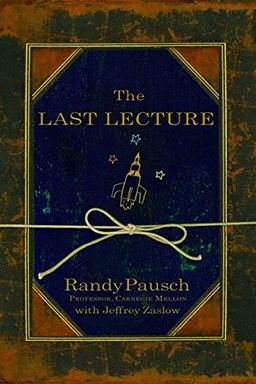
How would you live if you knew your time was running out? In The Last Lecture, Randy Pausch—a Carnegie Mellon professor facing terminal pancreatic cancer—wrestles with this question not in theory, but in practice. What emerges is not a meditation on dying, but a blueprint for living: full of purpose, humor, responsibility, and love. Pausch’s final lecture—and the book that grew out of it—captivated millions because it transformed a personal farewell into a universal guide to a life well-lived.
Pausch argues that our time, whether long or short, is best spent pursuing our childhood dreams, enabling others to achieve theirs, and playing the hand we’re dealt with integrity and optimism. He contends that you don’t avoid pain by ignoring death—you transcend it by choosing joy, being of service, and living your values so vividly that they outlive you. In his words: “We cannot change the cards we are dealt, just how we play the hand.”
Dreams as a Blueprint for Living
Pausch’s core message begins with the deceptively simple question: What were your childhood dreams, and how far have you gone to achieve them? For him, those dreams ranged from floating in zero gravity to working at Walt Disney Imagineering. Some he achieved directly; others morphed into different forms—but all shaped the person he became. In his telling, dreams are not childish fantasies but early cues to who we are. They reveal what excites us and where our natural curiosity lies. By honoring those dreams—even when circumstances or illness intervene—you keep alive the most vital part of yourself.
The Head Fake: Learning What Really Matters
Pausch structures his message around what he calls the “head fake”—teaching people something important while they think they’re learning something else. His lecture was ostensibly titled “Really Achieving Your Childhood Dreams,” but the hidden lesson was about how to live your life so that your dreams find you. Live with integrity, work hard, show gratitude, and help others do the same; the dreams, he promises, will follow. (This echoes Viktor Frankl’s assertion in Man’s Search for Meaning that meaning cannot be pursued directly—it must ensue as a byproduct of how we live.)
From Engineering to Emotion
As an engineer, Pausch approaches mortality like a design problem. His life’s last project is to “bottle himself” for his three children—to encode his love, wisdom, and humor into stories they can return to. Giving a “last lecture” was his way of engineering permanence despite impermanence. Yet this rational frame never dulls his emotional depth. With clarity and wit, he recounts the gift of “winning the parent lottery,” the lessons from football coach Jim Graham, and the joy of finding his true partner Jai. His engineering discipline meets human warmth: he builds meaning through structure and connection.
Legacy Through Others
Midway through his story, Pausch shifts focus from pursuing dreams to enabling others’. His creation of the “Building Virtual Worlds” course and the Entertainment Technology Center at Carnegie Mellon brought artists, engineers, and dreamers together—teaching teamwork, creativity, and empathy. As he puts it, “Enabling the dreams of others may be even more fun than achieving your own.” Legacy, in Pausch’s view, is not what you accomplish personally but what continues to grow because you planted the seed.
Optimism as Discipline
Throughout the book, optimism is not an emotion but a choice—a system of mental engineering. Pausch refuses self-pity, even while confronting his imminent death. He embodies what positive psychologists like Martin Seligman call “learned optimism”: focusing not on what’s lost but on what can still be given. His “Tigger or Eeyore” framework captures this vividly—you must decide who you’ll be every day, in the face of any circumstance. His joy becomes a quiet act of rebellion against despair.
Why These Ideas Matter
At its heart, The Last Lecture isn’t about dying at all—it’s about how to live so well that you leave something behind worth remembering. For readers, Pausch’s story is both invitation and challenge: to rediscover childhood wonder, to choose integrity and hard work over cynicism, to serve others generously, and to define success not by longevity but by legacy. His lessons remind you that while life is finite, meaning is not. How you live becomes how you continue.