
Idea 1
Bo Jackson and the Making of a Modern Folk Hero
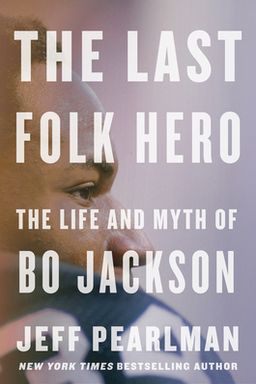
Why does Bo Jackson remain one of the most mythic figures in American sports? In The Last Folk Hero, Jeff Pearlman argues that Jackson’s story sits at the intersection of verifiable brilliance and timeless legend. Bo is not merely a two-sport athlete — he’s the last figure whose feats existed partly outside full documentation, thriving in an era before every catch and swing could be dissected frame by frame. Pearlman shows you how Bo’s story fuses folklore and realism, blending poverty, violence, talent, and media spectacle into something beyond conventional biography.
Origins: From Raimund to Recognition
Bo’s mythology begins in the dirt and noise of Bessemer, Alabama. Born Vincent Edward Jackson in 1962, he grows up poor, disciplined by a hardworking mother (Florence Mae “Bebe” Jackson) and shaped by the absence of a father. His early years are defined by both cruelty and survival — stuttering, fighting classmates who tease him, and leading a band of boys to beat a neighbor’s hogs, earning the nickname "Boar Hog," later shortened to Bo. Every later headline traces back to this furnace of anger, hunger, and determination.
Discovery: McAdory and the Spark of Legend
At McAdory High School, coaches first see a gift that defies geometry. Track coach Dickey Atchison spots Bo clearing five-foot-six without training; soon he’s a state decathlon champion, football star, and baseball prodigy. Sports Illustrated’s 1981 “Faces in the Crowd” feature turns a local marvel into a national curiosity. By the time Auburn University recruits him, Bo already exists at the boundary of myth: a boy who seems too fast, too strong, too varied to categorize.
Auburn: Opportunity, Exploitation, and Glory
Pearlman paints college sports as a web of boosters, pressure, and poverty disguised as pride. Boosters like Frelon Abbott play paternal friend and recruiter, while coach Pat Dye secures Bo with sincerity and a kitchen-table promise. The Auburn era blends triumph with tragedy: Greg Pratt’s fatal practice, secret payments through “handshakes,” institutionalized racial tension, and tense hierarchies where winning justifies everything. Yet amid that, Jackson dominates — smashing track records, gunning down runners from the outfield, and bulldozing SEC defenses until his 1985 Heisman Trophy win becomes inevitable.
Myth and Media: The Bo Phenomenon
Bo’s legend amplifies through both his body and its reproductions. In baseball and football, his feats begin resembling tall tales—a one-hit shutout at Rickwood Field, a 554-foot grand slam in Memphis, a 91-yard run in Seattle, a wall-climb in Baltimore that no player can replicate. Nike seizes the mythology with the 1989 “Bo Knows” campaign, airing just after his All-Star Game home run. Media transforms Bo from athlete to cultural emblem—part Superman, part Paul Bunyan, part living cartoon (his “Tecmo Bo” avatar in Tecmo Super Bowl becomes the most dominant video-game athlete ever designed).
Fragility and the Fall
The paradox of invincibility collapses in one play. In a 1991 Raiders playoff game, a hip dislocation leads to avascular necrosis—a bone death that ends his dual-sport career. The Royals release him while he’s undergoing evaluation, and a global audience sees mortality intrude on myth. Pearlman documents it clinically and poignantly: a 28-year-old icon weeping as he clears his locker, stripped of the body that made him legend.
Reinvention and Endurance
Yet Bo defies finality. A hip replacement, grueling rehab under Herm Schneider and Mack Newton, and an improbable 1993 return with the White Sox prove that will can rewrite limitation. His first post-surgery swing—a home run—symbolizes resurrection. The man once defined by myth now embodies recovery. Pearlman closes his arc by showing Bo’s evolution from private recluse to philanthropist through “Bo Bikes Bama,” raising millions for tornado relief. In the end, the folk hero survives because the story—half memory, half miracle—never stops being retold.