
Idea 1
Becoming Harper Lee: Apprenticeship, Place, and Moral Vision
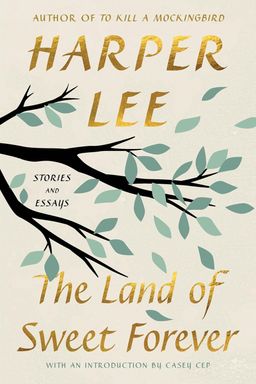
When you return home after years away, what do you see that you once missed—and what does it show you about who you’ve become? In The Land of Sweet Forever, Harper Lee’s newly published cache of early stories and essays, the author of To Kill a Mockingbird lets you watch her becoming herself: an observant Southerner and lifelong New Yorker, a comic ironist and moral realist, a stylist whose sentences smile even when her subject stings. Casey Cep’s introduction frames these pieces as Lee’s apprenticeship; the texts prove it, mapping how a young Nelle Harper Lee distilled childhood, church, courthouse, and city sidewalk into the material that would power two classic novels.
Lee contends—implicitly through these stories, explicitly in later essays—that character is formed in the tug-of-war between the intimacy of small towns and the anonymity of big cities, between tradition’s comforts and conscience’s claims. The collection’s core argument is that a writer’s moral imagination grows from attention: to children’s misunderstandings and adults’ evasions, to the meanings carried by hymn tunes and last names, to everyday silences that either cushion dignity or conceal complicity. If you want to understand how Scout Finch, Atticus, and Maycomb came to life, this is the laboratory notebook.
What This Collection Contains—and Why It Matters
The book presents eight early short stories, most never seen in print, alongside eight essays and occasional pieces Lee published over decades. The stories split naturally: three South Alabama tales told from the territory of childhood (The Water Tank, The Binoculars, The Pinking Shears); three sharp, funny New York sketches of adults negotiating city life (A Roomful of Kibble; The Viewers and the Viewed; This Is Show Business?); and two transitional pieces that weld Maycomb’s church and backyard to a grown narrator’s New York-er self (The Cat’s Meow; the title story, The Land of Sweet Forever).
Across them you see motifs that Lee will later deepen in her novels. A schoolroom scene in The Binoculars reappears as Scout’s confrontation with a teacher who punishes her for knowing how to read. The comic fuss over a new way to sing the Doxology in The Land of Sweet Forever resurfaces as Watchman’s set piece of homecoming, and its hymn lends Mockingbird a note of grace in Calpurnia’s church (“There’s a land beyond the river… the sweet forever”). Names—Q W Tatum (no periods), Miss Turnipseed, Miss Busey—arrive pre-loaded with character and satire. And then there’s the moral pressure: the aching miseducation of a girl who thinks a hug will make her pregnant (The Water Tank); the near-chill of a neighbor who shuts a door on a burning woman (A Roomful of Kibble); the delicate, often well-meaning, often self-protective silences around race (The Cat’s Meow).
How the Pieces Talk to Each Other
Read the Maycomb tales as studies in “childhood’s secret society,” Lee’s phrase for the realm where kids live intensely observed lives beyond adult comprehension. Abbie in The Water Tank faints on a bench after hearing a schoolmate’s folk biology; back home she plots her death from the top of a town water tower rather than face a shaming she barely understands. In The Pinking Shears, little Jean Louie (on her way to becoming Jean Louise Finch) trims a classmate’s Rapunzel-length hair at the girl’s request and collides with the thunder of a father-preacher who reads sin into scissors. Meanwhile, The Binoculars uses a first-grader’s telescope view to study adult authority—then flips the lens when Miss Turnipseed scolds a child for early literacy. Each is funny until it isn’t; each uses comedy to spring-load a moral test.
The New York stories invert the geometry. Here adulthood, not childhood, produces the murkier ethics. A Roomful of Kibble escalates from a friend’s eccentricities to the most chilling act in the book: Sarah Mitchell shuts the door on a neighbor engulfed in flames. Lee does not sermonize; she lets the blankness of the choice indict itself. In The Viewers and the Viewed, you sit with an Upper East Side audience as they mock the falseness on screen and play the parlor game of reconciling absurd movie titles with plots; it’s Seinfeld decades early, but also craft practice: Lee is listening for sound, crowd, cadence. And in This Is Show Business? she recounts a fashion-show errand run amok via parking rules, push-button transmissions, and a lighting designer who eats when she’s stressed—Lee’s eye is affectionate and precise, a reporter training her wit on herself.
The Essays: Craft, Conscience, and Community
The essays add the writer’s toolkit and creed. In Christmas to Me, Lee retells the near-mythic moment when friends Michael and Joy Brown gave her a year’s living expenses—no strings attached—so she could write. In Love—in Other Words, she argues love “admits not of self,” a definition that undergirds Atticus and scorch-lights the failure in Kibble. Her portraits of Gregory Peck, Truman Capote, and historian A.J. Pickett show what she admires in craft, courage, and historical memory; her O Magazine letter celebrates paper, libraries, and the soft pages where a reader meets the world.
Why It Matters
To read these early stories is to watch courage take form: the courage to laugh at what you love without belittling it; to depict your people whole, not tidy; to test your conscience in the small rooms of daily life before you face the courtroom of history. For you, they offer a way to practice attention—seeing how names, hymns, and habits encode a place—and to ask, in your own decisions, where humor ends and responsibility begins.
In the pages that follow, you’ll tour Lee’s childhood court with its schoolyard legends; sit in a pew while a congregation collides with a new tempo; feel the friction of a sister-lawyer (Doe) and a Northern-educated Black gardener (Arthur) negotiating dignity; and follow a young writer across Manhattan as she tunes her ear. You’ll also see how scenes migrate and mature into Mockingbird and Watchman, and how discipline plus one audacious gift can change a life. Above all, you’ll encounter the steady claim running through it all: that love and clear seeing, not noise or nostalgia, make a citizen—and a writer.