
Idea 1
Light in the Kingdom of Cain
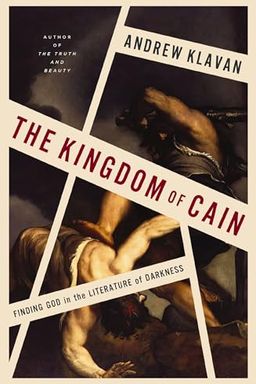
When the world feels thick with bad news—violence on the headlines, cynicism in the air—how do you keep your capacity for joy and moral clarity alive? In The Kingdom of Cain, Andrew Klavan argues that the surest way to see the light is to look unflinchingly into the dark. He contends that murder—real, imagined, and retold—exposes the moral order written on the heart, and that art made from darkness can become an act of love, a creative answer to evil that rekindles our capacity for joy.
Klavan’s core claim is bold: evil is the absence of love, and murder, as the ultimate denial of another’s reality before God, starkly reveals the truth of goodness. By tracing how artists have mythologized notorious murders—across novels, plays, and films—he shows how the imagination can confront evil without capitulating to nihilism. The opposite of murder, he writes, is creation. And true art, even when it depicts violence, can become an act of creation that restores meaning in the face of loss. (Compare Raymond Chandler’s insight: “In everything that can be called art there is a quality of redemption.”)
Where Klavan Takes You
You’ll walk two intertwined paths. First, Part 1 (“The Art of Murder”) explores three murder cycles and their cultural reverberations:
- From Pierre François Lacenaire to Dostoevsky’s Crime and Punishment, then Nietzsche, on to Leopold and Loeb, and Alfred Hitchcock’s Rope—all asking whether a world without God can still defend the sanctity of life.
- From Ed Gein to Robert Bloch’s Psycho to Hitchcock’s film and the slasher genre to The Silence of the Lambs—probing what happens when psychoanalysis tries (and fails) to explain evil away.
- Back to the first murder—Cain and Abel—to recover five themes that shape all art and history: the knowledge of good and evil, sin and sex, the battle of brothers, murder as suicide, and murder as sacrifice.
Second, Part 2 (“The Practice of Creation”) turns practical and personal. Klavan gives three countermeasures against despair, grounded in embodied faith, disciplined love, and beauty:
- Ritual and communion (“This Is My Body”) as a school for reality—training your body to perceive spiritual truth.
- Therapy rightly ordered (“The Prison of Desire”)—escaping self-repeating scripts through love, not license.
- Beauty as theodicy (“A Certain Splendor”)—how great art can become a lived argument that suffering can be transfigured.
Why This Matters Now
Klavan insists that ideas aren’t abstractions—they are “both the light we see by and the path we tread.” When elites rationalize the inhuman (from political terror to the disposability of life), you are already breathing the atmosphere of the “zone of interest”—his phrase for the ordinary moral compromise that lets atrocities proceed next door while we go about our day. The arts, he argues, can either reinforce this haze or cut through it. The literature of darkness can clarify your vision, provided it is true art that transfigures its subject through creation.
Core Claim
“To write about murder and the imagination is to write about confronting evil, which is the absence of love, with creation, which is the telos of love—love, which is the source of every joy.”
How the Book Works
Klavan is a novelist and critic, not a theologian, so he writes with storyteller’s pace and scene-level detail. He opens with a definition of evil grounded in what he calls the Great Speculation: that other people are as real to themselves as you are to you—and equally dear to God. Accept this, and morality becomes the perception of a spiritual truth, not merely a social construct. Reject it, and you drift toward the Marquis de Sade’s logic—pleasure as the only standard, power the only means—a path Dostoevsky and Nietzsche both saw when “God is dead” becomes a cultural fact (see Susan Neiman’s and Albert Camus’s related treatments of modern evil).
In this guide, you’ll discover how a French celebrity-murderer entranced the Romantics; why Hitchcock’s shower scene is both morally serious and culturally prophetic; how Woody Allen’s murder stories attempt to live without conscience; why Foucault’s trajectory from theory to death is not an accident; and how Cain’s first blow echoes across Scripture, art, and your own choices. You’ll then learn how communion and ritual restore sight in a materialist age, how sane psychotherapy requires love and limits (not libertinism), and how the Pietà can serve as a luminous answer to Ivan Karamazov’s anguished protest.
What You’ll Take With You
You’ll come away with a bracing conviction: you can face darkness without losing joy. In fact, if you confront it truthfully—and create from it—the joy grows. The goal isn’t sentimental uplift, but the quiet courage to recognize evil as privation (Augustine), love as the soul’s native light (the Gospels), and beauty as the surprising sign that even murder, viewed through art and the cross, can be met by a stronger word: creation.