
Idea 1
How the Right Became Funny
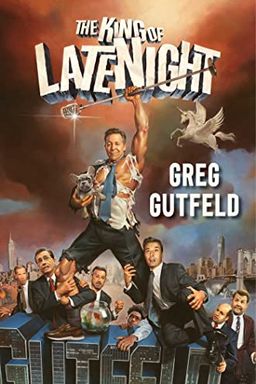
Have you ever felt like the cultural ground shifted beneath you—one day the rebels are railing at “the Man,” and the next day the rebels are the ones on the receiving end of scolding? In The King of Late Night, Greg Gutfeld argues that American comedy and culture have flipped: the Left, once the tribe of envelope-pushing iconoclasts, now polices speech and enforces respectability, while the Right—oddballs, misfits, and people tired of walking on eggshells—has become the home of risk-taking humor and free expression. He contends that this reversal (“the flip”) did more than change punchlines; it upended late-night television and let an outsider on a news network outpace the network comics at their own game.
Gutfeld’s core claim is equal parts cultural diagnosis and how‑I‑built‑this memoir: a 3 a.m. cult show (Red Eye), a daytime panel (The Five), and a dive‑bar‑energy late-night series (Gutfeld!) together exploited a widening gap between what mainstream comedy allowed and what audiences wanted. His method wasn’t to be the most outrageous guy in a fringe venue; it was to be weird—and honest—in the most mainstream rooms. Where others saw risk, he saw oxygen. Where others sought celebrity guest armor, he built chemistry, teasing, and authenticity with a troupe (Kat Timpf and Tyrus) that could go places scripted monologues can’t.
What flipped—and why it matters
The book opens with a provocation: you can laugh at anything if you know it’s terrible. That impulse, Gutfeld suggests, is how many of us stay sane. But as institutions embraced speech codes and conformity (what political scientist Wilfred Reilly calls “wokeism”—the belief that society is structured to oppress and must be forcibly equalized), humor’s natural boundary-testing became a liability. Comedians who once mocked authority began aligning with it—applauding mandates, cheering bureaucratic force, and treating dissent as contagion. Meanwhile, older comics (Dave Chappelle, Ricky Gervais) and heterodox voices (J. K. Rowling, Russell Brand) acted like the true punks—risking careers to say awkward truths (compare Jerry Seinfeld’s campus “PC” warnings in interviews with Chappelle’s onstage refusals to bend).
Gutfeld insists this isn’t about partisan victory laps; it’s a practical truth for anyone who makes or consumes culture: creativity dies when you fear the mob more than you love the joke. If you work in any high‑risk, public‑facing job—or even moderate‑risk corporate roles—you’ll recognize his survival heuristics: turn fear into curiosity, build teams that tease instead of tiptoe, and preempt gotchas by speaking honestly about your own messes (his “vice signaling” beats others’ virtue signaling).
From misfit to market leader
Gutfeld narrates a string of flip-enabled moves. At 3 a.m., Red Eye thrived precisely because no one important was watching; that sandbox let him discover that breaking the fourth wall, acknowledging mistakes, and laughing at his own flubs invited viewers into a conspiracy of fun. On The Five, playful combat (especially with Dana Perino and the late Bob Beckel) showed millions that conservatives could be self‑effacing, weird, even warm. Then came Gutfeld!: not a velvet-rope celebrity salon but a raucous “dive bar” where surprises were the point. The formula wasn’t complicated: a monologue with sharp edges, a panel that could improvise, and segment beats that let Timpf’s wry libertarianism and Tyrus’s expansive deadpan (backed by life experience) collide.
He even explains the exclamation point in the title: it’s an inner cattle prod. During Red Eye, a sound engineer would jolt him before air by shouting “GUTFELD!” in his ear. The printed exclamation became a portable version of that spark—a daily reminder that the job is a gift to be attacked with energy, not a chore to survive. (It’s also a wink at branding rules—“you don’t put exclamation points in titles”—that he happily breaks.)
A manifesto in memoir clothing
Under the gags is a serious argument about power. Late-night hosts perform synchronized moral certainty; Gutfeld’s crew brawls, flubs, and self‑owns in public. He suggests that when media aligns with state or corporate coercion (whether during pandemic mandates, the “more IRS agents” moment, or the January 6 hearings), comedy that punches the same targets becomes sermonizing. His response is to flip toward the people getting scolded—while still mocking clear lawbreaking—because that’s where the human story (and thus the humor) lives.
Across the pages, you’ll see four big through‑lines: (1) Flip thinking as a career engine (fear to curiosity; boredom to play; outsider to insider without losing the outsider’s eyes). (2) Team chemistry beats celebrity booking. (3) Dark thoughts aren’t crimes; they’re often the mind’s pressure valve. (4) Culture moves faster than politics; if you want to build something durable, fix the vibe before you chase votes. The book closes with “The After Party,” a tongue‑in‑cheek but sincere invitation to a mindset: defend the strange, hire the messy thinkers, seek people who prove you wrong, and share the risk so mobs shrink. Whether you agree with Gutfeld’s politics or not, his operating system—make the flip, build the band, and refuse to fear your own jokes—is a useful playbook for anyone trying to do non‑boring work in cautious times.