
Idea 1
Dreams as the Royal Road to the Unconscious
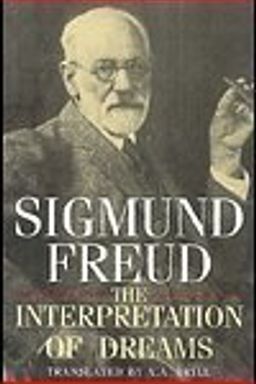
What if the most mysterious events of your night—the images and stories that unfold while you sleep—were not random but profoundly meaningful? In The Interpretation of Dreams, Sigmund Freud proposes one of the boldest claims in modern psychology: every dream is a disguised fulfilment of a wish. By analyzing how dreams form, distort, and conceal our impulses, Freud creates a map of the mind itself—a topography of consciousness, preconscious, and unconscious layers. Dreams, in his view, are the royal road to uncovering unconscious wishes, conflicts, and desires that shape our waking life.
Freud’s theory unfolds as both a clinical method and a philosophical model. It connects nightly fantasies with mental illness, symbolism in art, and even myths like Oedipus Rex. Across examples—Freud’s own ‘Irma’s injection’ dream, patient fantasies, and common recurring dreams—he shows that meaning emerges when you see how repressed wishes find symbolic representation under censorship. To grasp this, you must understand the mechanisms—the dream-work—that transform hidden thoughts into apparent nonsense.
The Central Thesis: Dreams as Wish Fulfilments
Freud’s first breakthrough is direct: properly interpreted, every dream expresses a wish. A child denied chocolate dreams of eating sweets; an adult worried about guilt may dream of punishment. Even nightmares fulfill hidden, sometimes masochistic wishes. Through association and analysis, Freud discovers that bizarre dream images—needles, shop windows, whips, staircases—can hide material far more emotional or erotic than their surface suggests. What makes dreams strange is not their content but their disguise.
The Dream-Work: The Mind’s Disguising Machinery
Freud’s technical model—the dream-work—is the machinery that turns invisible thoughts into visible dreams. It uses condensation (compressing many ideas into one image), displacement (shifting emotional intensity from forbidden thoughts onto trivial ones), symbolization (turning abstract or sexual content into pictorial signs), and secondary revision (tidying up the dream’s surface for sense). These processes operate under a psychic censorship that ensures forbidden wishes—often sexual or aggressive—appear only in distorted form. Understanding them is like learning the grammar of the unconscious.
Dreams, Memory, and Sources of Material
Freud distinguishes several sources for dream material. External stimuli (sounds, pressures), internal somatic sensations (digestion, breathing difficulty), subjective excitations (retinal sparks), and psychical residues from the previous day form the raw material. Yet he insists that the decisive element is psychological: the dream-day impressions that bridge to latent wishes. These recent impressions fuse with earlier—often childhood—memories, producing hybrid imagery. Thus a trivial scene from yesterday may disguise primitive emotions from decades earlier. This explains both the dream’s hypermnesia (its recall of forgotten childhood details) and its propensity to fade upon waking.
Infantile Roots and Cultural Echoes
Underlying many dreams are infantile impulses—primitive desires for parental attention, curiosity, and sexual fulfilment. What shocks adults in interpretation (dreams of the death of loved ones, nudity, or incest) often recapitulate childhood scenarios when such feelings were immediate and unregulated. Freud extends this idea beyond the individual: myths and art replay the same unconscious material. Oedipus and Hamlet dramatize universal childhood wishes—to possess the mother and rival the father—that persist unconsciously and surface through dreams and creativity.
Clinical and Theoretical Consequences
Freud’s method transforms psychology and therapy alike. The technique of interpretation—recording dreams immediately, dividing them into fragments, eliciting associations without judgment—makes the dream a diagnostic tool. Dreams mirror the operations of neuroses and psychoses: censorship, displacement, fixation on childhood scenes. By decoding dreams, analysts can reveal repressed motives and begin therapeutic change. Freud thus bridges normal and abnormal mind: both obey the same laws of wish-formation and repression.
Why Dreams Guard Sleep
Paradoxically, the dream’s purpose is also practical: it guards sleep. When unconscious excitation stirs at night—whether from physical pain or forbidden desire—the mind can either wake you or weave the disturbance into a dream compatible with rest. In this sense, dreams are safety valves. A father dreaming his dead child alive (‘Father, don’t you see I’m burning?’) briefly satisfies the wish to restore life while delaying awakening. Freud’s claim that “dreams are the guardians of sleep” ties biological and psychological systems together in one economy.
The Larger Vision: A Unified Psychology
Freud’s project is larger than dream analysis—it is an architecture of mind. He defines interacting systems (Ucs., Pcs., Cs.), distinguishes primary processes (free, associative energy flow) from secondary processes (restrained, reality-bound reasoning), and uses dreams to illustrate regression, censorship, and affect reversal. Through this lens, you begin to see dreams not as curiosities but as nightly enactments of mental dynamics that persist also in art, neurosis, and everyday behavior. Interpreting your dreams becomes a way of understanding the hidden, unconscious life that continuously shapes your conscious decisions.