
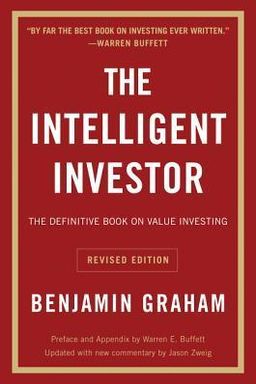
The Intelligent Investor cover

The Intelligent Investor

by Benjamin Graham and comments by Jason Zweig

The Intelligent Investor offers timeless wisdom on value investing from Benjamin Graham, a legendary figure in finance. This guide equips readers with strategies to navigate the stock market intelligently, focusing on long-term gains, diversification, and market history. Ideal for those seeking financial success and stability.

Becoming an Intelligent Investor

How can you protect yourself from losing money, preserve your sanity in market storms, and still grow wealth over decades? In The Intelligent Investor, Benjamin Graham argues that the answer lies not in forecasting the future, but in mastering discipline and judgment. Graham defines an intelligent investor not by IQ or cleverness, but by behavior: someone who makes decisions grounded in analysis, protects against loss, and demands an adequate—not extravagant—return.

Graham’s framework stands on three pillars. First, separate investment from speculation and treat each differently. Second, demand a margin of safety—buy securities at a discount to their intrinsic worth. Third, control your behavior; the market’s swings only harm you if you join its moods. These ideas were radical in 1949 and remain prophetic today, as behavioral finance confirms his insights into human error and emotion.

Investment vs. Speculation

For Graham, an investment is one that—after thorough analysis—offers safety of principal and an adequate return. Everything else is speculation. This isn’t a moral statement; it’s a practical boundary. Investors measure companies by earnings, assets, and price; speculators by trends and hopes. The difference defines whether you rely on analysis or emotion.

Historical examples drive the point home: Sir Isaac Newton lost heavily in the South Sea Bubble despite brilliance, while Long-Term Capital Management—run by Nobel Laureates—collapsed from overconfidence in models. Both mistakes were failures of temperament, not intelligence. The lesson: even great minds lose money when they mistake speculation for investment.

The Margin of Safety

The margin of safety is the investor’s single most important principle. It means buying securities well below their appraised value so that errors or downturns won’t wreck your capital. If you buy a $1 business for $0.60, you have a cushion. Graham’s empirical work showed portfolios of companies selling below net current assets often doubled within a few years. Modern value investors like Warren Buffett and Walter Schloss used the same concept, applying probability and patience rather than prediction.

Graham’s favorite examples—Northern Pipeline, National Presto—show the math behind safety. In each case, the market price implied absurdly low expectations compared with asset and earnings power. The margin of safety transforms uncertainty from threat into opportunity.

Mr. Market and the Investor’s Temperament

Graham’s allegory of Mr. Market is both humorous and foundational. Imagine your business partner offering to buy or sell your share daily at wildly different prices depending on his mood. You have the right to accept or ignore his offer. The intelligent investor uses Mr. Market’s excitement and despair to their advantage: sell when he’s euphoric, buy when he’s fearful, and ignore him the rest of the time. Zweig updates this wisdom with examples from the dot‑com bubble, showing that emotional contagion still drives booms and busts.

Behavioral discipline—resisting panic in crashes or greed in booms—is the hardest skill. Graham knew that emotional control matters more than analytical brilliance. As he put it, “The investor’s chief problem—and even his worst enemy—is likely to be himself.”

The Defensive and Enterprising Paths

Every investor must choose between being defensive (seeking safety and minimal effort) or enterprising (willing to do analysis for extra return). The defensive investor uses simple allocation rules—like a 50/50 split between high-quality bonds and leading equities—to reduce stress and temptation. The enterprising investor works harder, hunting bargains or special situations. Both must remain disciplined: rules and rebalancing replace intuition and impulse.

(Note: This choice mirrors modern indexing vs. active management debates. Graham anticipated the index fund long before it existed; he advocated low-cost diversification for those unwilling to research.)

Inflation, Risk, and Psychological Survival

Inflation complicates all valuation, eroding purchasing power. Graham saw that stocks don't automatically hedge inflation; only sensible valuation and real assets provide long-term defense. Modern tools like Treasury Inflation‑Protected Securities (TIPS) and REITs extend his logic. The deeper lesson, however, is psychological: risk comes from overpaying and overreacting, not from temporary volatility. The investor’s margin of safety is as much emotional as financial.

In blending logic, arithmetic, and humility, Graham gives you a lifelong framework. You cannot eliminate uncertainty, but you can make choices that stack probabilities in your favor. Whether through broad diversification, sober valuations, or calm behavior, every rule in The Intelligent Investor serves one mission: protect capital first, earn reasonable returns next, and do so through rational discipline, not excitement.


Investment Principles and Margin of Safety

Benjamin Graham grounds all investing in arithmetic and prudence. He insists you begin every decision with valuation—what a business is worth versus what you pay—and then build in a margin for human error. This framework turns markets from casinos into fields of opportunity.

Intrinsic Value and Appraisal

Intrinsic value is the price justified by a company’s assets, earnings, and dividends. You calculate it conservatively, assuming average—not exceptional—conditions. Graham recommends using multi‑year average earnings, limiting P/E ratios (no more than 15 times average earnings), and focusing on tangible assets. This disciplined appraisal protects against the seduction of fashionable growth stories.

The Arithmetic of Safety

A margin of safety works like insurance. If intrinsic value is $100 and you pay $70, minor analytical mistakes won’t bankrupt you. The smaller the discount, the thinner your cushion. Historical analyses in Graham’s studies showed that buying stocks below net current asset value—the classic “net‑net”—produced consistent outperformance. Walter Schloss and other followers confirmed this formula decades later.

Graham’s Rule

“The higher the price you pay, the lower your return. The lower you pay relative to value, the safer and more profitable your position.”

Why Growth Requires Skepticism

Graham’s warning about paying for future growth remains relevant. He shows that great companies—like IBM in the 1960s—still suffered 50% drawdowns. When you buy glamour stocks at high multiples, you sacrifice your margin of safety to story telling. The bond between investor and business becomes fantasy rather than mathematics. (Jason Zweig updates this with examples like Cisco and tech IPOs in 1999–2000.)

How to Apply This Discipline Today

  • Base your buy price on normalized earnings and tangible assets, not forecasts.
  • Insist on at least a 25–50% discount to fair value; lower if you are uncertain.
  • Favor dull businesses with solid balance sheets over glamorous stories with thin protection.
  • Never justify paying up by assuming perpetual growth—discounts protect you, predictions don’t.

When you demand a margin of safety, you shift focus from hope to arithmetic. You make errors survivable and success repeatable. This simple idea—the space between value and price—explains why disciplined investors win while speculators vanish.


Defensive and Enterprising Strategies

Graham divides all investors into two categories to match temperament and effort: defensive and enterprising. This classification anchors your entire financial plan. The best strategy is the one you can follow calmly when the market panics.

The Defensive Investor

If you seek safety and minimal effort, you are defensive. Graham proposes an equal split between high‑grade bonds and high‑quality equities. Never drop below 25% or above 75% in either class. A 50/50 default, with automatic rebalancing, forces you to sell high and buy low. Index funds fulfill this philosophy today. Diversification and cost control outweigh the illusion of skill.

The Enterprising Investor

If you are willing to analyze, you can pursue higher returns—but only if disciplined. Graham’s positive avenues still apply: buying out-of-favor large companies, bargain net‑current‑asset stocks, or participating in special situations like mergers and liquidations. His cautions remain timeless: avoid IPO manias, junk bonds sold at par, or mechanical trading formulas marketed as “foolproof.” (His examples—1960s new issues, 1999 dot‑coms—show the permanence of greed.)

Rules and Routines

Whatever your type, formalize behavior through routines. Dollar‑cost averaging smooths entry points. Rebalancing on a calendar eliminates emotion. Zweig suggests confining speculation to no more than 10% of assets—a “mad money” account—to quarantine impulses. Graham’s wisdom here anticipates modern behavioral finance: structure beats willpower.

Choosing your style is ultimately choosing your temperament. If you crave calm, automate and index. If you crave action, work hard and diversify your bargains—but never confuse the two. An intelligent investor knows herself first, the market second.


Market Fluctuations and Emotional Control

Markets alternate between euphoria and despair, and your ability to handle both determines long‑term success. Graham’s “Mr. Market” allegory remains the ultimate behavioral model. The market offers you prices—he never commands you to act.

Learning from Mr. Market

Mr. Market shows up daily with a new quote. Some days he is manic, others depressed. Intelligent investors buy from him when he is despondent and sell to him when he is exuberant. You are never obligated to follow his mood. Graham’s simple rule: use price movements as opportunities, not signals.

Historical swings—from the 1929 crash to the 2000 dot‑com bust—prove that price and value decouple often. Companies like IBM or Cisco saw huge valuation swings even as operations remained profitable. The smart investor treats volatility as a gift, not a threat.

Practical Methods for Stability

  • Automate purchases via dollar‑cost averaging to buy more when prices fall.
  • Rebalance semiannually, forcing sales of overpriced assets and buys of undervalued ones.
  • Keep a written investment plan or “owner’s contract” to remind yourself not to trade emotionally.

Zweig’s modern notes reveal how day trading and online speculation magnify behavior errors. The same emotions—fear and pride—merely move faster. Graham’s teaching endures: the intelligent investor welcomes Mr. Market’s folly as opportunity, not as guidance.

Core Instruction

“You need only remember that in the short run the market is a voting machine, but in the long run it is a weighing machine.”

Your greatest edge is composure. Intelligence counts little if you panic when others do. Mastering Mr. Market means mastering yourself.


Corporate Reality: Earnings, Governance, and Incentives

Intelligent investing demands reading beyond the headlines into the mechanics of businesses. Graham teaches you to analyze earnings quality, management behavior, and incentive structures. Numbers alone deceive unless you understand who produces them and why.

Detecting Accounting Illusions

Earnings reports often overstate reality. Read footnotes first. Graham’s ALCOA example shows how “special charges” distort true profits. Later cases—InfoSpace and JDS Uniphase—used pro forma accounting to hide recurring expenses. Learn to adjust for dilution, capitalization of routine costs, and unrealistic pension assumptions. Averaging income over seven to ten years smooths out such tricks.

Owning Like an Owner

Shareholders are business partners, not speculators. Read proxy statements; they disclose management pay and conflicts. Enron’s downfall was visible in its proxy: CFO Andrew Fastow ran privately owned partnerships transacting with the company—an obvious red flag. Voting rights are tools, not formalities. If directors reward themselves despite poor results, withhold support or organize opposition. Graham saw shareholder activism as both moral duty and financial prudence.

Dividends, Buybacks, and Options

When companies reinvest profits or repurchase stock, you must ask who benefits. Dividends historically validated profits; withholding them demanded proof that retained earnings increase per‑share value. Buybacks can raise value when done cheaply—but many fund option programs instead. Oracle’s 1999–2000 repurchases, for instance, bought back stock at six times the price insiders paid for their options. Graham and Zweig warn that such practices enrich managers while diluting existing owners.

Intelligent investors judge corporate stewardship as part of intrinsic value. Transparency, fair compensation, and capital discipline distinguish sustainable enterprises from promotional shells. Reading proxies and balance sheets with skepticism is your best protection against arrogance and abuse.


Managing Risk and Behavior

The gravest risk in investing comes from you, not from the market. Graham’s timeless mantra—“first, don’t lose”—translates into both mathematical and psychological defenses. Through diversification, safety margins, and emotional discipline, you survive the inevitable storms.

Risk as Permanent Loss, Not Volatility

Losing half your capital demands a 100% rebound to break even. This compounding reality shows why avoiding large losses matters more than maximizing gains. Investors who bought JDS Uniphase at its 2000 peak faced decades of recovery even with good returns. Graham distinguishes between temporary price drops and permanent capital destruction. Your goal: endure the former, avoid the latter.

Behavioral Biases and Self‑Knowledge

Behavioral scholars affirm Graham’s intuition: overconfidence and regret distort decision‑making. Daniel Kahneman’s concept of calibration highlights that most investors overrate their foresight. The cure is humility, checklists, and process. Zweig modernizes this into concrete steps—write down reasons for every trade, set allocation boundaries, and test your reaction to hypothetical losses before risking real money.

Diversification as Statistical Protection

Even good analysis fails sometimes. By spreading exposure across industries and asset classes, you let probabilities work in your favor. Graham compares this to insurance underwriting: many small positive‑expectation commitments yield reliable aggregate gain. For most investors this means broad index diversification; for enterprising ones, many independent bargains.

In essence, your margin of safety is as much emotional as numerical. By designing a process that limits consequence—not just predicts probability—you embody Graham’s deeper wisdom: investing intelligently is less about being right than about staying alive.


Mutual Funds, Advisers, and Costs

Most investors use intermediaries—mutual funds, advisers, or brokers. Graham teaches you to treat them as tools, not saviors. The arithmetic of cost and incentive determines whether they help or hurt you.

Mutual Fund Realities

Open‑end funds provide easy diversification but charge loads and fees. Paying a 9% sales load means starting nearly a year behind. Closed‑end funds often trade at discounts, giving an instant margin of safety. Today, index funds extend that logic: low costs, wide diversification, and minimal turnover beat most active peers over time. Expense ratios around 1.5% mean active managers must outperform indexes by roughly 3% annually just to tie after costs—a feat few achieve.

Advisers and Accountability

Advisers can add value by enforcing discipline, not predicting markets. Vet them rigorously: check regulatory filings (Form ADV), demand fee transparency, and avoid anyone promising certainty or urgency. Graham’s maxim applies: “Trust, then verify.” Zweig adds that good advisers manage your behavior as much as your money, ensuring you stick with a rational plan in panic periods.

Practical Filters Today

  • Favor index or low‑cost exchange‑traded funds as core holdings.
  • Demand advisers disclose incentives and personal stakes in recommended products.
  • Avoid high‑turnover “performance funds”; past brilliance rarely repeats once scale and costs rise.

Costs compound just like returns. Keeping them low, verifying your adviser’s motives, and resisting performance chasing honor Graham’s arithmetic: after all expenses, sober simplicity usually wins.


Value Tradition and the Superinvestors

The legacy of Benjamin Graham lives through his students and successors who proved that his methods consistently produce superior long‑term returns. Warren Buffett’s essay “The Superinvestors of Graham‑and‑Doddsville” showcases a lineage of independent minds united by discipline, not by imitation.

Different Methods, Same Philosophy

Walter Schloss bought hundreds of undervalued small stocks; Tweedy, Browne combined research with diversification; Bill Ruane concentrated in select equities; Charlie Munger preferred fewer positions but greater conviction. Though methods varied, each required analytical rigor and emotional restraint. Their collective success—achieved independently—refuted the idea that beating the market is pure luck.

Proof by Clustering

Buffett’s “coin‑flip” thought experiment imagines random luck producing a few winners. Yet when all enduring winners trace back to one intellectual village—Graham‑and‑Doddsville—the pattern implies cause, not coincidence. The cause is rational valuation applied with patience.

The Modern Continuation

Their evidence forms a century‑long case study in probability. Each practitioner bought dollars for fifty cents, diversified prudently, and ignored fashion. Today’s data echo the same truth: low‑price‑to‑value strategies, executed calmly, outperform hot funds over long horizons. But temperament remains key—concentration without competence equals risk, not genius.

Graham’s tradition is ultimately ethical as well as analytical. It asks you to respect capital, distrust emotion, and treat investing as a patient craft. The Superinvestors prove that logic and self‑control, multiplied over decades, compound into both wealth and wisdom.

Dig Deeper

Get personalized prompts to apply these lessons to your life and deepen your understanding.

Go Deeper

Get the Full Experience

Download Insight Books for AI-powered reflections, quizzes, and more.