
Idea 1
From Transistors to Silicon Valley
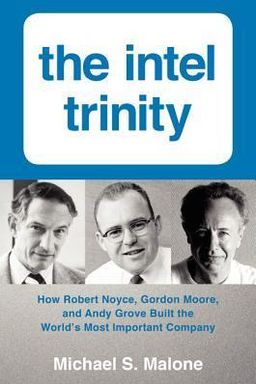
How did a handful of disillusioned scientists build the modern technology world? The story begins with William Shockley and the rebellious young engineers who became the Traitorous Eight. This founding rupture, leading to Fairchild Semiconductor, set the cultural DNA for Silicon Valley: brilliant technical talent, intolerance for poor management, and a fluid network that prizes invention and reinvention over corporate loyalty. The book’s central claim is that technological revolutions aren’t just about discoveries—they depend on human organization, manufacturing insight, and financial ecosystems willing to bet on ideas before the market can see their value.
The Shockley rupture
Shockley’s arrival in Palo Alto was emblematic of postwar scientific prestige. He recruited extraordinary talent, including Robert Noyce, Gordon Moore, Eugene Kleiner, Jay Last, and others. Yet, his paranoia and autocratic control—epitomized by polygraph tests and public humiliation—drove these recruits to mutiny. In leaving to form Fairchild Semiconductor, they not only rejected Shockley’s rule but created a template for the spinout culture that defines the Valley. (Compare this with how Xerox PARC later seeded Apple and Adobe; dissident innovation often arises from failed hierarchies.)
Fairchild and the birth of the ecosystem
Fairchild’s founding, financed through Arthur Rock’s intervention and Sherman Fairchild’s capital, marked the prototype of venture-backed technology firms. Within months the company secured major contracts and validated its technological approach. Fairchild’s success came at a price: rapid internal churn, loose controls, and intense competition. But the instability bred renewal: departing engineers founded dozens of new firms, spreading Fairchild’s technical DNA across Northern California. This phenomenon—the “Fairchildren diaspora”—formed a self-sustaining ecosystem of talent, investors, and suppliers.
Cultural patterns of invention
At Fairchild, the mixture of creative freedom and minimal corporate constraint built a unique prototype of innovation culture—one that valued playfulness, personal initiative, and technical excellence over formal hierarchy. It was also hedonistic: the bar-side legends, poached engineers, and informal loyalties that shaped the Valley’s mythos grew here. These patterns—high autonomy, low bureaucracy, and constant recombination—became self-reinforcing cultural norms that shaped every major semiconductor company to follow, including Intel.
From planar to integrated circuits
Jean Hoerni’s planar process transformed electronics manufacture from craft into scalable industry. By allowing multiple identical circuits to be printed and layered on a wafer, the method solved contamination and scaling issues, making mass production possible. Noyce combined Hoerni’s process with interconnection methods, resulting in the first practical integrated circuit—an invention more consequential than the original transistor. This was the true bridge between laboratory discovery and commercial industry. (Jack Kilby reached a similar conceptual breakthrough at Texas Instruments, but Fairchild’s process advantage made mass manufacture feasible.)
The rise of venture culture
Fairchild’s diaspora meshed naturally with Arthur Rock’s financing methods—personal trust, convertible securities, and investments in people rather than products. That financing model birthed modern venture capital. Instead of top-down corporate labs, the Valley became a marketplace of founders and funders. The daring to back a person’s capability—to bet on potential rather than industrial pedigree—proved decisive. When Noyce and Moore left Fairchild to found Intel in 1968, Rock’s rapid two-day raise reflected this evolved trust infrastructure.
A living pattern of creative destruction
What began as a rebellion against a single manager matured into an ecosystem logic: ideas are mobile, hierarchies are temporary, and success sparks fragmentation rather than permanence. The semiconductor industry’s history demonstrates that technological revolutions thrive on organizing principles—flat hierarchies, open knowledge flows, and risk-tolerant finance—that favor networks over empires. Every generation of Valley innovation—from integrated circuits to microprocessors to the PC—replays that evolution in miniature.