
Idea 1
Disrupting Health Care
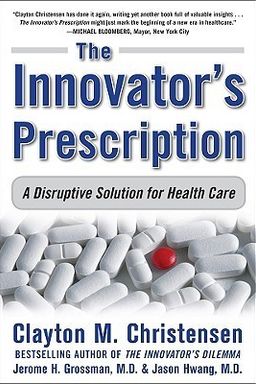
Why does health care remain complex, costly, and inequitable even as technology advances? Clayton Christensen and his collaborators answer with a framework that explains how disruptive innovation—the same force that transformed computing and communications—can finally make health care simpler, cheaper, and more accessible. The book’s argument unfolds through a sequence of revolutions: technological precision, business-model innovation, and value-network realignment.
The core proposition
You see the word “disruption” used everywhere, but here it has a specific meaning: it is not sudden chaos but a predictable pattern. It describes innovations that bring complex, high-cost services within reach of ordinary consumers. Every disruption requires three enablers: a technological tool that simplifies expert work, a business model that can profitably deliver the simplified service, and a value network that supports it. When these align—as they did with PCs against mainframes, or with retail clinics against hospitals—markets shift from elite specialists to widespread access.
Why health care lags
Health care is full of brilliant technologies, but few have scaled affordability because existing institutions lack matching business models. Hospitals are organized as omnibus “solution shops,” designed for intuitive medicine and equipped for every conceivable case. That flexibility makes them expensive and hard to measure. Physicians remain trapped in fee‑for‑service reimbursement that rewards volume, not outcomes. Patients rarely see transparent quality or pricing; insurers and regulations preserve the old equilibrium. The result is chronic inefficiency.
A new vocabulary: business models and clinical types
Christensen and his colleagues map health care into three business types: solution shops for complex diagnosis; value‑adding process (VAP) businesses for standardized, repeatable procedures; and facilitated networks that manage ongoing behavioral or chronic conditions. Mixing these models in one institution creates confusion and cross‑subsidies. The cure is clear separation—let retail clinics and focused hospitals handle rule‑based care, networks manage chronic disease, and solution shops focus on the rare and complex.
Technology’s transformation of medicine
A second lens divides clinical care into intuitive, empirical, and precision stages. Intuitive medicine depends on expert hunches; empirical medicine aggregates evidence into probabilities; precision medicine defines causal mechanisms. Each technological advance—molecular diagnostics, imaging, informatics—moves conditions from intuition toward rules, making them amenable to disruption. Infectious disease care exemplifies this evolution: microscopy, X‑rays, and antibiotics converted hospital‑based intuition into home‑based precision management. Similar shifts now occur in cancer, diabetes, and genetic disorders.
Changing basis of competition
As medicine becomes more precise, competition shifts. Early adopters prize performance and reliability; once services become “good enough,” patients demand convenience and affordability. Retail clinics such as MinuteClinic show how rules‑based primary care no longer competes on prestige but on speed and cost. In these markets, the spelling of “quality” changes to “convenience.”
New orchestrators
Because disruption requires alignment of technology, business model, and value network, someone must integrate the parts. The authors argue that integrated fixed‑fee providers (Kaiser, Geisinger, Intermountain) and self‑insured employers (like Quad/Graphics) are best positioned to orchestrate change. They profit when people stay healthy, so they invest in prevention, data coordination, and low‑cost venues. These actors can redesign incentives, negotiate bundled payments, and create coherent systems where innovation can thrive.
The disruption roadmap
Ultimately, you learn that transformation begins when technologies commoditize expertise, diagnostic tools decentralize from labs to clinics or homes, and reimbursement reforms reward outcomes. Medical devices and analytics will embed knowledge, letting nurses or patients perform tasks once reserved for specialists. Employers and integrated providers will lead because they internalize the whole cost-benefit cycle. Regulators and educators must then adapt—building mastery-based training and reforming licensing to encourage competition instead of protectionism.
The book’s central line is straightforward but profound: disruption makes health care simpler, affordable, and more predictable by aligning technology, business models, and incentives around the patient’s job-to-be-done—rather than preserving complexity built for physicians’ convenience.
Once you grasp that principle, you can interpret every chapter as a stage in constructing an accessible health system—where diagnostic precision replaces guesswork, value-adding processes replace ad hoc treatments, and networks replace individual heroics as the foundation for wellness at scale.