
Idea 1
The Hidden Emotions of the Animal World
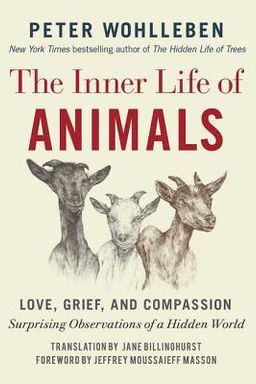
Have you ever looked into an animal’s eyes and wondered what it was thinking? Or if it could feel in the same way you do? In The Inner Life of Animals: Love, Grief, and Compassion—Surprising Observations of a Hidden World, renowned forester and author Peter Wohlleben invites you to reconsider everything you think you know about animals’ emotional lives. Drawing from decades of observing wild and domestic creatures in the forests of Germany, he argues that emotions—love, fear, joy, grief, even shame—are not exclusive to humans. Instead, they are essential, shared traits woven through the entire tapestry of life.
Why Animal Emotions Matter
Our culture often paints animals as biological machines—instinct-driven beings without self-awareness or moral feeling. Wohlleben dismantles this outdated view with both scientific evidence and intimate anecdotes. His goal isn’t to anthropomorphize animals, but to encourage what he calls anthropodenial—the refusal to see connections where they exist. By blending research with personal experiences, he reveals a world of consciousness that mirrors ours more closely than we dare admit.
He shows that animals grieve their dead, plan for the future, make moral judgments, and even suffer psychologically. They display empathy, shifting moods, and complex social hierarchies—and they communicate these emotions through intricate sounds, gestures, and acts. In doing so, Wohlleben challenges the myth that only humans experience deep feeling or intelligence. If anything, our shared emotions are evolutionary tools for survival and connection.
From Science to Sympathy
Wohlleben’s insights rest on solid science as well as storytelling. He cites neurological studies proving that animals—from fish to birds to mammals—possess the neural architecture needed for emotional experience. For instance, fish possess pain receptors and stress responses strikingly similar to those of humans. Birds such as ravens and pigeons perform memory tests and show planning intelligence on par with great apes. Even tiny creatures like fruit flies and slime molds demonstrate forms of problem-solving that recall the roots of consciousness itself.
At the same time, Wohlleben’s anecdotes bring warmth and relatability. He recalls the grief of a mother deer who continues to search for her fawn after hunters take it away, or the satisfaction of wild boar who teach their young to migrate safely across rivers during hunting season. Through such scenes, he paints a picture of animals not as automatons, but as thinking, feeling individuals trying—like us—to make sense of their world.
Blurring the Human-Animal Divide
The book’s central question—“What makes us different?”—is answered with patient humility: not much. Humans, Wohlleben says, are not an exception in nature but a continuation of it. Our love, grief, and joy didn’t appear suddenly in evolution; they developed gradually alongside the same traits in other species. To deny animals these emotions is to misunderstand our own origins.
Throughout the book, you meet creatures that defy human expectations: horses expressing embarrassment, pigs understanding fairness, crows teasing dogs just for fun, and wolves forming friendships with ravens. Fish display compassion, and even bacteria exhibit cooperation that borders on altruism. By recognizing such behaviors as emotional, rather than purely instinctual, we begin to see animals as full participants in life’s drama.
(In spirit, this aligns with the work of biologists like Frans de Waal, whose books Are We Smart Enough to Know How Smart Animals Are? and Mamas Last Hug also argue that emotions are a biological constant, not a human luxury.)
Why This Matters to You
Wohlleben doesn’t just aim to warm your heart—he wants to change your relationship with nature. Understanding animal emotion has ethical implications. If goats, pigs, and even martens can suffer psychologically or feel gratitude, how can we justify factory farming, trophy hunting, or environmental destruction? In the end, Wohlleben calls for a renewed respect for all living beings, grounded in empathy rather than dominance.
“Emotions steer instinctive programming and are vital for all species,” he writes. “Every species experiences them to a greater or lesser degree.”
As you journey through The Inner Life of Animals, you’ll move from affectionate anecdotes to scientific depth, from chickens and goats to ravens and wolves, and finally, to humans and our spiritual kinship with all life. The message is both simple and profound: by acknowledging animals’ inner worlds, we rediscover our own humanity. When we treat animals as sentient partners rather than resources, we enrich not only their lives—but ours as well.