
Idea 1
Mastering the Inner Game: Winning Begins Within
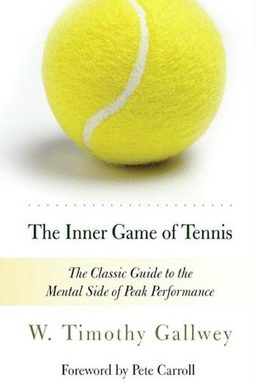
Have you ever wondered why you can know exactly what to do—but somehow can’t do it when it matters most? Whether on a tennis court, in a presentation, or facing a personal challenge, that invisible tug-of-war between knowing and doing defines the core of human performance. In The Inner Game of Tennis, W. Timothy Gallwey argues that the biggest obstacles to excellence are not external opponents or physical limitations, but the internal mental chatter that interferes with our natural abilities. His groundbreaking approach, first introduced in 1974, forever changed not only how people approach tennis, but also how coaches, performers, and leaders around the world think about learning and mastery.
Gallwey contends that performance consists of two games: an outer game—played against opponents, conditions, and measurable goals—and an inner game, played against self-doubt, overthinking, and judgment. While most people spend their lives refining outer skills, few realize that the real battle is internal. When you learn to quiet the mind, trust your intuition, and let your natural abilities express themselves freely, performance becomes effortless and even joyful.
The Two Selves: The Voice and the Doer
A major insight of Gallwey’s philosophy is his distinction between Self 1 and Self 2. Self 1 is the conscious teller—the analytical mind that criticizes, plans, and attempts to control everything. It’s the inner voice that says, “Keep your wrist firm,” or “Don’t miss this shot.” Self 2, on the other hand, is the unconscious doer—the body’s natural intelligence that knows how to perform complex actions smoothly without interference. Gallwey’s central claim is that Self 1’s overbearing control prevents Self 2 from doing what it already knows how to do.
This discovery explains why experienced players often perform worse in competition than in practice. When we’re relaxed and uninhibited, Self 2 performs brilliantly. But as soon as Self 1 starts worrying about mistakes or outcomes, tension increases, movements become rigid, and errors multiply. The secret, Gallwey explains, is not to give Self 1 more information—but to quiet it, freeing Self 2 to act with natural precision.
The Art of Relaxed Concentration
Gallwey’s concept of relaxed concentration lies at the heart of the inner game. Peak performance emerges when concentration is deep but unforced—when the mind is present, aware, and calm. He compares this state to a cat stalking a bird: fully alert but utterly relaxed, moving in harmony with its instincts. This subtle combination of focus and ease, often called “the zone” or “flow” in modern psychology (popularized later by Mihaly Csikszentmihalyi), is accessible not by trying harder, but by not trying—by allowing your natural coordination and awareness to lead the way.
In this sense, Gallwey is not merely teaching tennis technique. He’s offering a method for self-mastery—a way to engage any challenge, professional or personal, with presence and trust. The quieter your inner voice becomes, the more your true capabilities surface.
Beyond the Court: A Universal Philosophy
Though written as a tennis manual, The Inner Game of Tennis transcends sport. Gallwey’s insights apply to any domain involving skill, focus, and performance—public speaking, leadership, music, parenting, or creative work. His later books, such as The Inner Game of Work and The Inner Game of Music, demonstrate how this philosophy of nonjudgmental awareness and trust in the self can transform how we live and learn.
The book’s enduring influence stems from its simplicity. Where most instruction is about doing, Gallwey teaches the power of allowing. By learning to observe without judgment, cultivate trust in Self 2, and focus attention on what is actually happening rather than what you fear or desire, you unlock a higher intelligence already within you.
“The outcome is not the point; the effort to see clearly and to act naturally is.” —W. Timothy Gallwey
As you move through the key ideas ahead, you'll explore how to calm the noisy mind (quieting Self 1), build trust in Self 2’s intelligence, dissolve judgment, master concentration, redefine competition, and finally, carry these principles beyond sport into all areas of life. Gallwey’s timeless message is simple yet revolutionary: your greatest opponent is not across the net, but within your own mind.