
Idea 1
Information as the Fabric of Reality
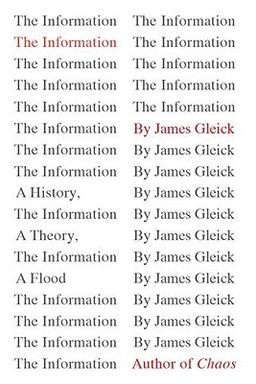
What if you could define everything—communication, biology, physics, thought—through one common language? In his sweeping narrative, James Gleick argues that information isn’t just a tool for engineers; it’s the fundamental building block of modern reality. The book follows the transformation of ‘information’ from a vague idea into a measurable, universal currency — from Shannon’s bit to the digital cloud, from drums in Africa to human cells, and from the telegraph to Wikipedia.
Gleick shows how humans discovered that meaning, noise, and knowledge could all be represented, stored, and transmitted as signals. Once language, writing, and computation became systems for managing uncertainty, they altered how societies think, learn, and evolve. Each chapter reveals a new stage in humanity’s dialogue with information—from oral memory to the algorithm, from physical to digital, from scarcity to glut.
From Sound to Symbol
The story begins with sound: talking drums, oral storytelling, and the biases of human memory. African drummers used redundancy—elaborate phrases and poetic patterns—to overcome ambiguity in tone-based languages. Their ingenuity embodies a principle that later became formalized by Shannon: redundancy counteracts noise. Through writing, humans achieved permanence and abstraction. What Plato feared—dependence on external memory—turned into a leap in analytical power. Writing allowed reflection, logic, and categorical thought—the preconditions for science and philosophy.
Alphabetization, in particular, mechanized thought. By arranging language in arbitrary order, dictionaries transformed words into indexed data. Lexicographers from Cawdrey to Murray didn’t just record English; they structured it. The alphabet became a machine for retrieval—a primitive search algorithm that anticipates modern indexing.
From Wires to Machines
The next leap came when messages traveled without people. The telegraph shrank space and time, turning communication into electrical pulses. Morse and Vail’s codes optimized efficiency through frequency analysis, translating spoken language into signals. Claude Chappe’s semaphores and the early optical telegraph foreshadow digital protocols—a world of limited symbols, codes, and relay systems.
Then came Charles Babbage. His Difference Engine treated numbers as material products—units that could be manufactured. Ada Lovelace intuited something deeper: the Analytical Engine could process symbols, not just quantities. That insight pointed toward the computer, where physical motion encoded logic and written programs directed mechanical minds.
From Logic to Limits
George Boole’s algebra of thought and Shannon’s switching circuits united logic and hardware. Gödel and Turing completed the philosophical circuit—showing that self-reference creates limits. Gödel’s incompleteness theorem proved that even formal systems can’t prove all truths. Turing’s universal machine formalized computation itself but revealed inherent undecidability: some questions are beyond algorithmic reach. Together they created an intellectual ecosystem where machinery could think but never know everything it could express.
From Bits to Biology
Claude Shannon’s 1948 masterpiece condensed all this into mathematics. His bit—the smallest unit of choice—made information measurable. Shannon’s equations unified human speech, telegraph signals, and even genetic codes by expressing them as probabilities and choices. From this foundation arose cybernetics: Wiener's feedback loops connected organisms, computers, and society as systems of control and correction. The same logic that guides a thermostat also explains homeostasis, brain adaptation, and global communication networks.
Physics joined the story when Szilárd and Landauer proved that information has energy cost—erasing a bit releases heat. Biology followed when DNA revealed life as code. Schrödinger’s “aperiodic crystal” and Crick’s Central Dogma transformed heredity into data storage. Evolution could now be read as information flow; replication became computation written in biochemistry.
From Scarcity to Overload
In the digital era, information ceases to be rare. Moore’s law made bytes cheap and data abundant, creating new bottlenecks: attention and meaning. The Web, search engines, and Wikipedia evolve as filters in a cosmic Library of Babel—a humanity that remembers everything must discover how to forget. Google’s PageRank and collaborative curation become adaptive responses to glut, not ignorance. Naming, indexing, and filtering become the survival skills of knowledge work.
Today, quantum information and black hole debates stretch Shannon’s legacy into physics’ frontiers. Qubits, teleportation, and information paradoxes reveal that uncertainty and knowledge govern even the universe’s deepest workings. As Gleick closes, he returns to meaning: having stripped semantics away for precision, humanity must now restore interpretation, purpose, and wisdom to survive the flood.
Core message
Information isn’t just what you send or store—it is what you are. From bits to genes, every system capable of persistence, choice, or communication participates in the story that Gleick tells: the emergence of information as the substance of civilization itself.